Why Tokyo Resists a Single Visit
Tokyo is not a city you decode on one trip. At roughly 14 million people within its 23 special wards, it operates less like a single metropolis and more like dozens of distinct cities laid edge to edge. The tourist circuit - Shibuya crossing, Senso-ji, Akihabara, a robot restaurant - captures maybe 5% of what's here, and not necessarily the most interesting 5%.
Most first-timers leave with a version of Tokyo assembled from itinerary blogs and influencer maps. That version is fine. But it's also nearly identical to what everyone else saw. The city that actually rewards curiosity is the one that takes repetition, a willingness to wander, and the patience to let a single block tell you something before you move on.
If you've already done the highlights and want to know what comes next, this guide is structured around that question. If you haven't visited yet, consider this a reason to plan with more intention from the start - see our guide to building a travel itinerary that actually works for a framework that applies directly.
23
Special wards in central Tokyo
Each ward functions with its own character, commerce, and community - roughly equivalent to a mid-sized city in its own right.
~200
Michelin-starred restaurants in Tokyo
Tokyo has consistently held more Michelin stars than any other city, according to Michelin's annual guides.
6.8M+
Daily Tokyo Metro passengers
Tokyo Metro alone carries over 6.8 million passengers daily, making transit literacy one of the highest-leverage skills a visitor can develop.
The Neighborhoods That Actually Reward Slower Exploration
Skip the debate over Shinjuku vs. Shibuya as a base. For repeat visitors, the more productive question is which mid-tier neighborhoods suit your pace. A few worth knowing:
- Shimokitazawa - A dense grid of vintage clothing, live music venues, and coffee shops operating in repurposed post-war buildings. It has no landmarks, which is the point. Budget at least half a day; most visitors give it forty minutes and don't understand what they missed.
- Yanaka - One of the few areas that survived wartime bombing largely intact. Craft workshops, independent grocers, and a cemetery that doubles as a genuine neighborhood park. Best on a weekday morning.
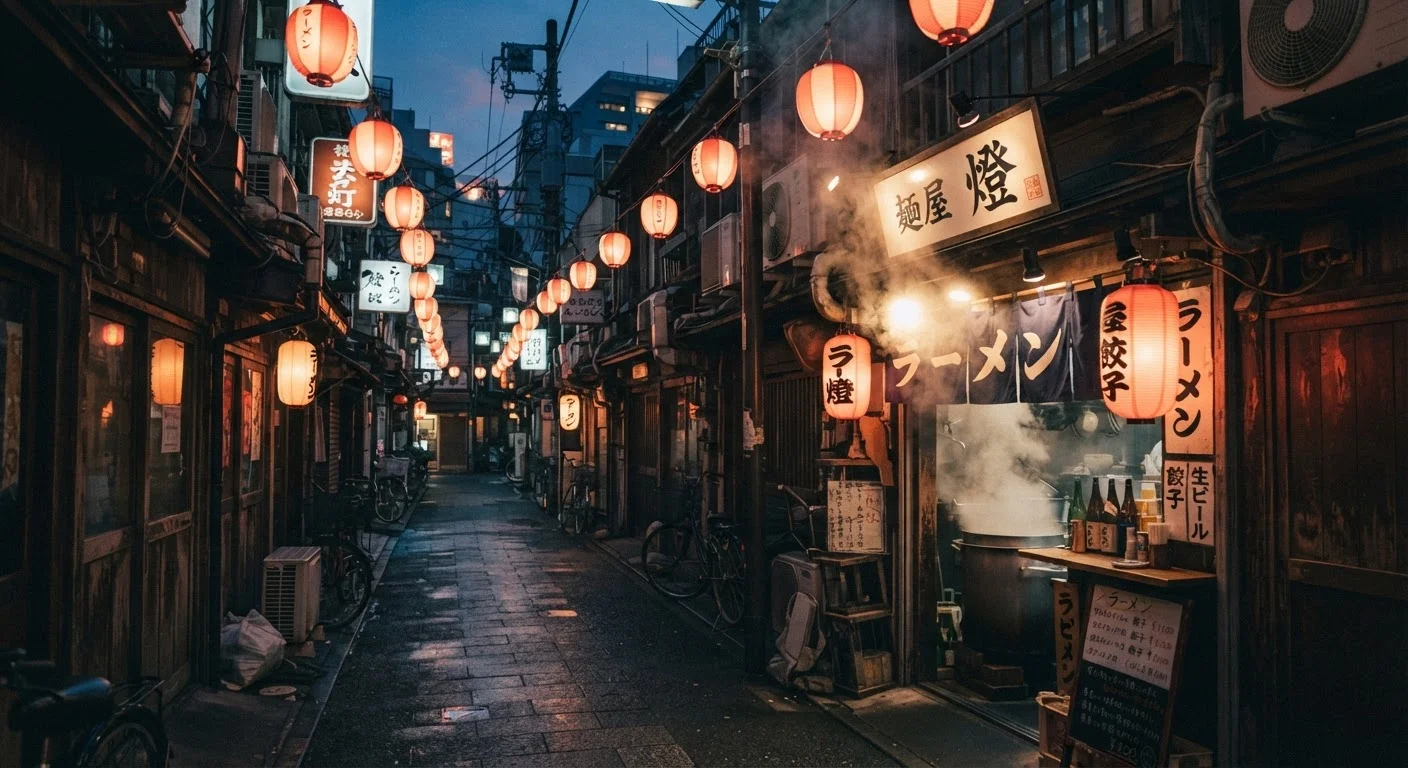
- Koenji - Similar energy to Shimokitazawa but older, scruffier, and less written about. Strong independent music and art presence, and izakayas that close when they feel like it.
- Monzen-Nakacho - A waterfront ward with a functioning shotengai (covered shopping street), several local shrines, and a bar-to-resident ratio that suggests the neighborhood takes evenings seriously.
None of these require more than a single metro line to reach from central Tokyo. The mistake most visitors make is trying to hit all of them in one day. Pick one, stay for three or four hours, and eat there. That approach pays off where the checklist method doesn't.
When choosing a neighborhood base, prioritize proximity to a shotengai (covered shopping street) over proximity to a major station. The daily-life infrastructure around a shotengai tells you more about how a ward functions than any landmark can.
Shotengai are working retail corridors with grocers, hardware stores, and local restaurants - environments that show the city's texture rather than its tourist face.
Book accommodation in a quieter residential ward and commute into busy areas rather than staying in Shinjuku or Shibuya. You'll sleep better, pay less, and understand the city's geography more accurately.
Visitors who base themselves in central tourist hubs often develop a skewed mental map of Tokyo that overweights the most commercial 10% of the city.
Food Strategy Beyond the Obvious
Tokyo's food reputation is well-earned - it holds more Michelin stars than any other city - but the Michelin metric is an odd lens for understanding how locals actually eat. The more useful frame is category and format.
Ramen, soba, tonkatsu, yakitori, and kaiseki are not interchangeable experiences. Each has a distinct culture, price range, and physical setting. Knowing what you're walking into before you arrive (what to order, how seating works, whether reservations are expected) is the difference between a confident meal and an anxious one.
For budget-conscious eating, the depachika - basement food halls in department stores - are genuinely extraordinary and almost always overlooked by tourists focused on restaurant recommendations. Isetan in Shinjuku and Mitsukoshi in Ginza both have multiple floors of prepared foods, confectionery, and regional specialties at prices well below comparable standalone restaurants.
Use Depachika as a Food Orientation Tool
Before committing to a restaurant neighborhood, spend thirty minutes in a depachika basement. The range of regional Japanese food on display gives you a working vocabulary for cuisines and formats you may not have encountered yet. It's also a low-pressure environment to try things before ordering a full meal you're uncertain about.
For a deeper cultural immersion around food and accommodation, our guide to Japan's ryokan experience covers etiquette and expectations that translate directly into how you'll approach meals outside Tokyo as well.
How to Navigate Without Over-Planning
Tokyo's transit system is genuinely one of the world's most legible once you understand that it operates across multiple competing networks (JR, Tokyo Metro, Toei, private lines) with overlapping but non-interchangeable passes. This is not a reason to avoid transit - it's a reason to spend twenty minutes understanding it before you arrive rather than figuring it out hungry at a ticket gate.
The practical answer for most visitors is an IC card (Suica or Pasmo), loaded with cash and used as a tap-in/tap-out card across nearly all networks and convenience stores. It removes most of the friction immediately.
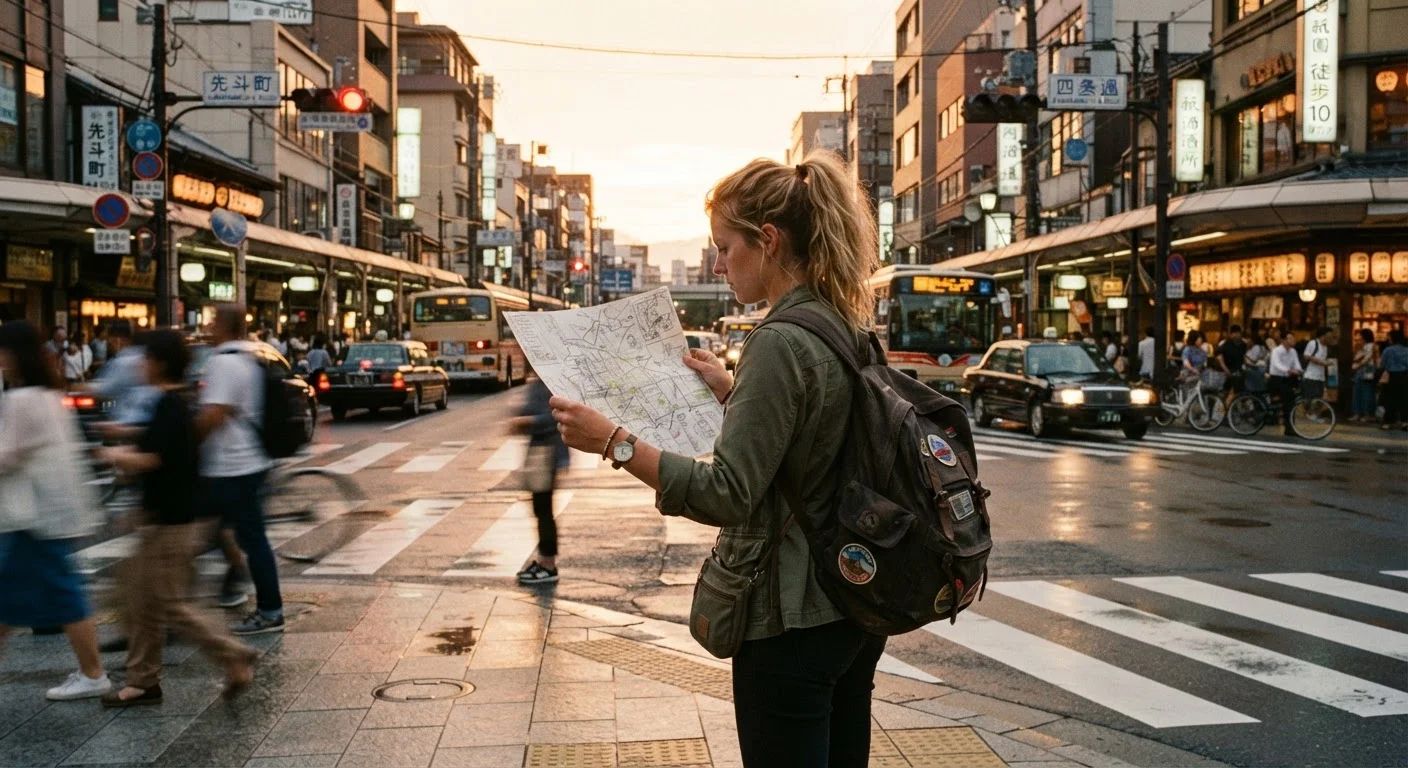
Beyond transit, the most productive navigation habit in Tokyo is walking between metro stops rather than automatically re-boarding. The above-ground city between stations is frequently more interesting than the destination, and distances that look far on a subway map are often fifteen minutes on foot.
IC Card Compatibility Note
Suica and Pasmo cards are accepted interchangeably across most Tokyo transit networks and can be topped up at any station. As of recent years, digital versions can be added to compatible smartphones - verify current availability with your device and carrier before travel, as this feature has had intermittent international compatibility issues.
For a clear-eyed view of what happens when this kind of advance preparation gets skipped entirely, see when arriving with no plan works and when it doesn't - Tokyo is a city where even light preparation pays significant dividends.
What Changes on a Second or Third Trip
The most common report from repeat Tokyo visitors is that the city gets less overwhelming and more legible. The sensory intensity that makes a first visit exhausting becomes manageable once you have mental anchors - neighborhoods you recognize, transit routes you've walked, a handful of places you already know you like.
That familiarity creates space for the less obvious things: following a neighborhood festival you didn't know existed, discovering a bookshop that has no English signage and doesn't need it, sitting in a public bath (sento) long enough to understand why the ritual matters.
These are not activities that require special access or local connections. They require time and the willingness to set aside the itinerary for an afternoon. Tokyo rewards that trade-off more consistently than most cities its size.
“The city is not hiding anything from you. It's just waiting for you to stop moving long enough to notice what's already there.”
— Travel Smarter Editorial Team, Editors with cumulative repeat visits to Tokyo
If earlier trips felt like Tokyo was too much to process, that's a design problem, not a destination problem. A tighter geographic scope, a slower pace, and an honest acknowledgment of your energy limits will produce a fundamentally different experience. The cities that consistently disappoint first-timers tend to be ones that require this kind of adjustment but don't announce it. Tokyo, at least, rewards the effort visibly.
Tokyo Metro Route Map (Official)
The official Tokyo Metro route map, available in English, is the clearest single document for understanding how the network overlaps with JR and private lines. Essential pre-trip reading.
Japan National Tourism Organization (JNTO)
JNTO publishes current, authoritative guidance on regional travel, seasonal events, and practical logistics. More reliable than aggregator travel sites for foundational destination information.
Itinerary Planning Framework
A structured approach to daily trip planning that balances sightseeing, meals, and buffer time - particularly useful for Tokyo given its scale and density.