
Where the Money Actually Goes in Each Model
The cost gap between slow travel and country-hopping isn't about one being inherently frugal and the other wasteful. It's about which cost categories dominate in each model.
In slow travel, accommodation is your biggest lever. A hotel at $120/night becomes a monthly apartment rental at $40-60/night equivalent in many mid-cost cities - that's real savings at scale. Add in a kitchen and you eliminate restaurant meals, which typically account for 25-35% of a traveler's daily budget. The trade-off: you're paying for time. Slow travel only delivers these savings if you actually stay long enough to unlock weekly or monthly rates.
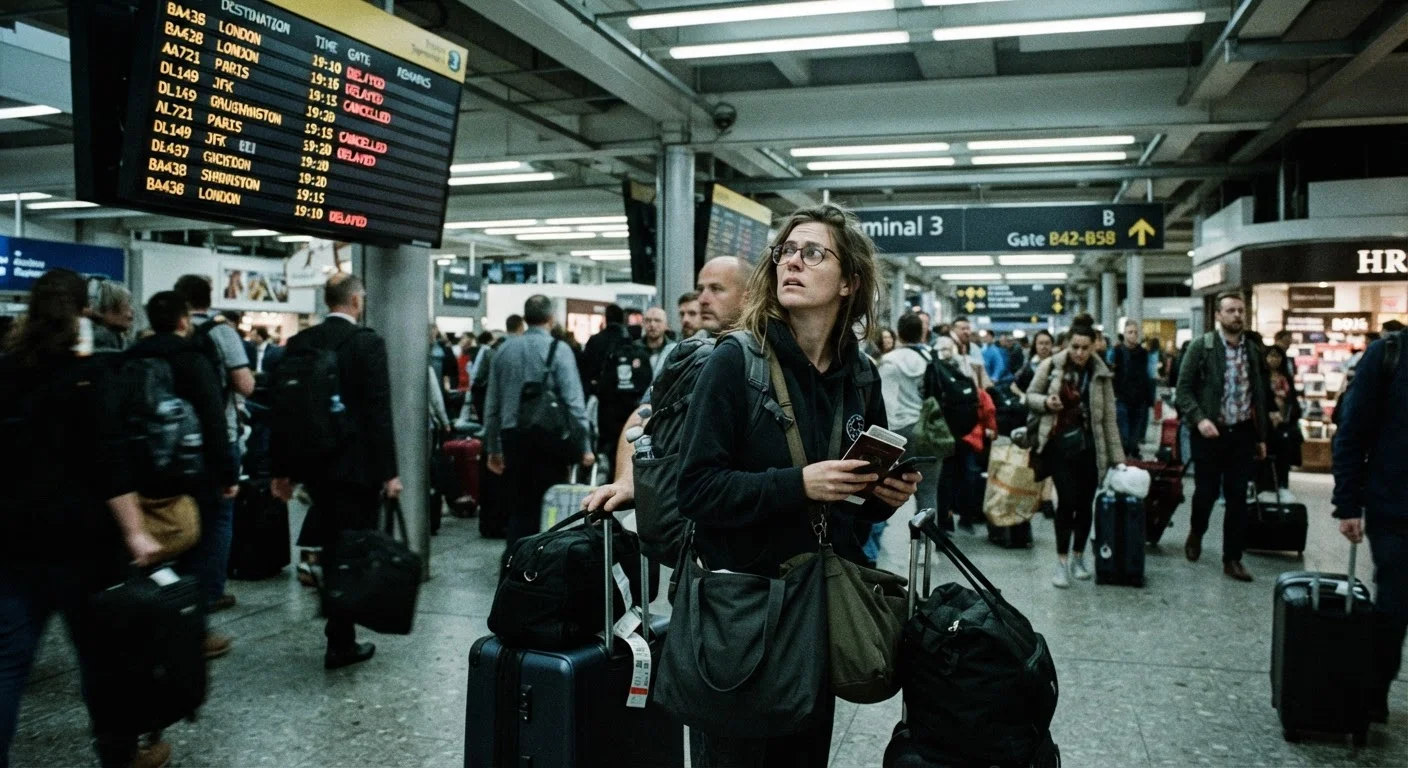
Country-hopping front-loads costs into transport and logistics. Every border crossing means a new flight or train ticket, often booked with less lead time than ideal. Visa fees, airport transfers, and the premium of checking into a new place every few days compound quickly. Research from travel cost aggregators consistently shows that accommodation booked 1-2 nights at a time costs 40-60% more per night than the same property booked for a week or longer.
| Criterion | Slow Travel | Country-Hopping |
|---|---|---|
| Accommodation cost/night | Lower (weekly/monthly rates) | Higher (nightly hotel pricing) |
| Inter-destination transport | Minimal (one arrival, one departure) | High (multiple flights or trains) |
| Food costs | Lower (kitchen access, local markets) | Higher (restaurants for every meal) |
| Visa/entry fees | Single country entry | Multiple potential fees |
| Ideal trip length | 14+ days per destination | 10-14 days total |
| Geographic coverage | Deep, single destination | Broad, multiple destinations |
| Logistics complexity | Low after arrival | High, ongoing throughout trip |
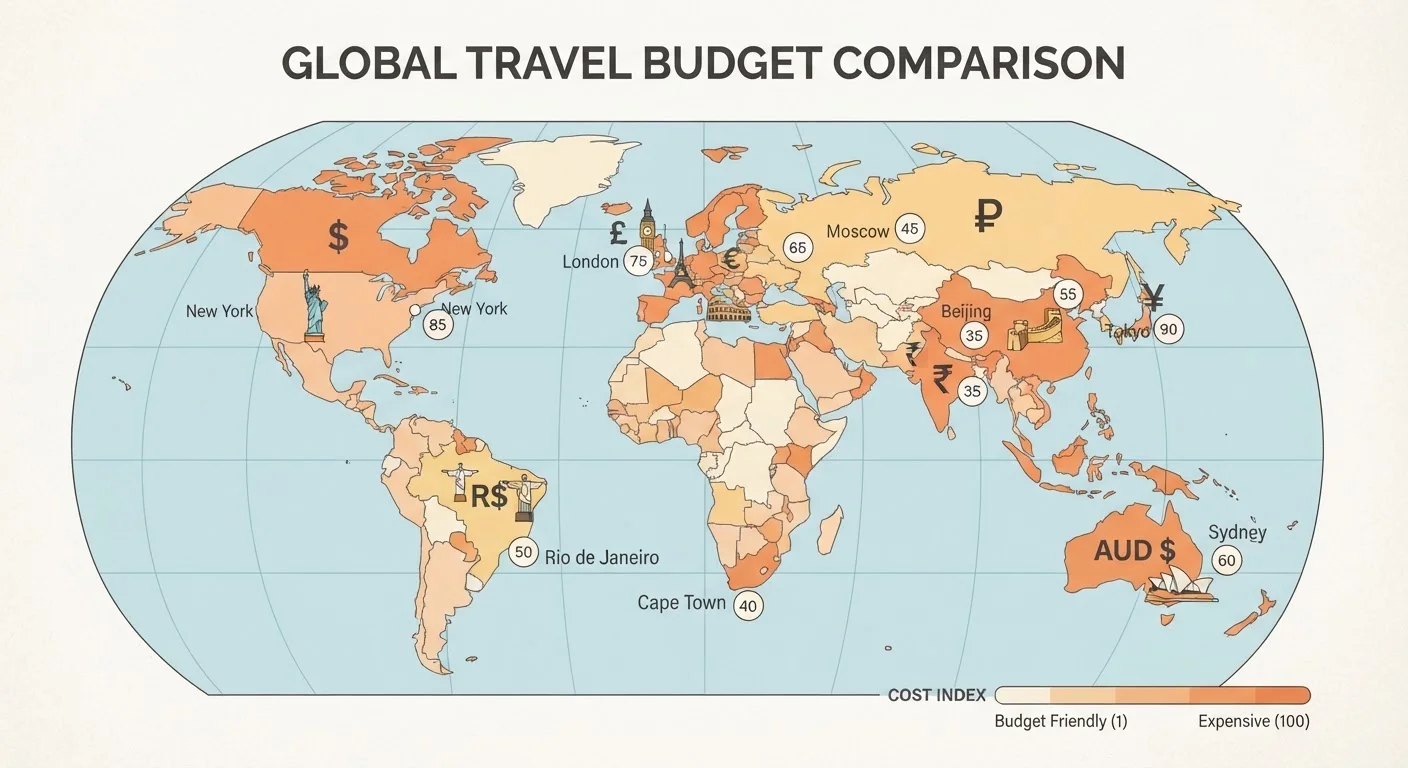
The destination itself is a bigger cost driver than most travelers account for. As our guide on destination cost structures explains, purchasing power parity can make a month in Southeast Asia cheaper than a week in Western Europe regardless of your travel style.
The Hidden Costs Country-Hoppers Underestimate
Country-hopping has a specific set of costs that rarely appear in planning spreadsheets until after the trip.
Visa Stacking Is a Real Cost
If your country-hopping route crosses into regions where US passport holders need advance visas - parts of Asia, Africa, or Central Asia - visa costs can add $50-$200 per country. Always verify current entry requirements directly with official embassy or government sources before booking, as rules change frequently and without notice.
- Entry and exit fees: Some countries charge arrival or departure taxes not included in airfare. These range from nominal to over $50 per person.
- Onward transport within each destination: You arrive in a new country, and suddenly you need to get from the airport to the city center, then out to a day-trip location. These micro-transport costs accumulate.
- Decision fatigue spending: Constantly navigating new environments increases impulse purchases - a guided tour you didn't plan for, a bag you bought because you didn't realize you'd need it. Spontaneous decisions consistently cost more than planned ones.
- Communication costs: New SIM cards or roaming charges at every border add a friction cost that slow travelers largely avoid.
None of these individually break a budget, but together they routinely add $15-30 per day to a country-hopper's real cost - a figure that only shows up when you reconcile receipts after the trip.
When Slow Travel Stops Being Cheap
Slow travel isn't automatically the frugal choice. Two scenarios flip the math.
First: high cost-of-living destinations. Spending a month in Tokyo, Zurich, or London unlocks weekly apartment rates but does nothing to lower grocery prices, transit costs, or the cultural pull toward expensive dining. If you're slow-traveling somewhere expensive, you're extending your exposure to that cost base, not escaping it.
Second: short trips rebranded as slow travel. Booking a one-week stay in one city and calling it slow travel doesn't capture the pricing benefits. Most weekly rental discounts kick in meaningfully at 14+ days; monthly discounts require 28-30 days. A 7-night apartment stay often costs the same or more than a comparable hotel once cleaning fees are factored in.
For young professionals with 10 days of PTO, the honest answer is that slow travel's financial advantages mostly don't apply. You don't have the time horizon to unlock them. In that scenario, a well-planned structured itinerary across two or three nearby destinations may deliver better value per day of vacation used. Consider how flexible versus rigid planning affects both your experience and your costs before committing to either model.
40-60%
Extra cost per night for last-minute bookings
Travel cost research consistently shows that accommodation booked 1-2 nights in advance costs significantly more per night than week-long or monthly bookings at the same property.
25-35%
Share of travel budget spent on food
Estimates from budget travel researchers suggest meals and drinks typically consume roughly a quarter to a third of a traveler's total daily spend when eating out for every meal.