Why Pet Dental Health Is a Bigger Deal Than You Think
Dental disease is consistently ranked among the most commonly diagnosed conditions in companion animals - yet it remains one of the most under-addressed by pet owners. According to the American Veterinary Medical Association (AVMA), periodontal disease affects an estimated 80% of dogs and 70% of cats by the time they reach three years of age. Despite these figures, many pets go years without any targeted oral care.
The disconnect is understandable. Unlike a limping leg or a skin condition, dental disease is largely invisible in its early stages. Pets don't complain of toothaches in any recognizable way, and bad breath - often dismissed as just a "dog thing" - is actually one of the earliest clinical signs of bacterial accumulation. Knowing what's happening below the gum line, and why it matters, is the first step toward changing that.
80%
Dogs with periodontal disease by age 3
According to the American Veterinary Medical Association (AVMA), the majority of dogs show signs of dental disease by their third year.
20-60%
Adult cats affected by tooth resorption
Feline tooth resorption is a distinct, poorly understood condition found in a substantial portion of adult cats, per veterinary dental literature.
Day 1-3
Days for plaque to mineralize into tartar
Plaque hardens into calculus within just days of forming, underscoring why daily brushing is the recommended standard.
How Periodontal Disease Develops
The process begins with plaque - a soft, sticky film of bacteria that forms on tooth surfaces within hours of eating. If not removed, plaque mineralizes within days into tartar (also called calculus), a hardened deposit that cannot be brushed away and requires professional tools to remove. As tartar accumulates along and beneath the gum line, it creates an environment where anaerobic bacteria thrive.
This bacterial activity triggers an inflammatory immune response in the surrounding gingival (gum) tissue - the condition known as gingivitis. At this stage, the process is still reversible. But left untreated, the inflammation progresses into true periodontal disease: the destruction of the periodontal ligament and alveolar bone that anchor each tooth. Teeth loosen, abscesses form, and chronic pain sets in - often with no outward behavioral change from the pet.
Pain Doesn't Always Look Like Pain
Pets with significant dental disease rarely stop eating or show obvious distress, which leads many owners to assume their pet is comfortable. In reality, animals are biologically wired to mask pain as a survival behavior. Reluctance to chew hard food, favoring one side of the mouth, or increased drooling can be subtle indicators worth discussing with a vet.
Cats present unique challenges. Feline tooth resorption (FTR) - a condition where the tooth structure is progressively destroyed from within - is distinct from periodontal disease and affects an estimated 20-60% of adult cats. Its cause remains incompletely understood, making regular oral examination by a veterinarian essential for early detection.
The Systemic Connection: Mouth to Body
The mouth is not an isolated system. When the gum barrier is compromised by chronic inflammation, bacteria and their byproducts can enter the bloodstream - a process called bacteremia. Research in veterinary medicine has linked periodontal disease to pathological changes in the kidneys, liver, and heart, with the cardiac connection drawing particular attention.
Studies published in veterinary cardiology literature suggest associations between periodontitis and endocarditis (infection of heart valves), as well as accelerated progression of pre-existing heart disease in dogs. The mechanisms parallel those studied in human medicine, where oral inflammation is considered a contributing risk factor for cardiovascular and metabolic conditions. While causation is difficult to establish definitively in either species, the biological plausibility is well-supported.
This is why dental health fits squarely within a broader preventive care framework. See our guide to what vets check during wellness visits to understand how oral assessment fits into a complete health picture.
“Periodontal disease is the most prevalent disease we find in veterinary patients - and the most undertreated. The mouth is a window to the rest of the body, and what happens there doesn't stay there.”
— Jan Bellows, Board-certified veterinary dentist and diplomate of the American Veterinary Dental College
At-Home Dental Care: What Actually Works
Daily tooth brushing with a pet-specific toothpaste is the single most evidence-supported home intervention available. Human toothpaste is inappropriate - it contains fluoride and xylitol, both toxic to pets. The mechanical action of bristles on tooth surfaces disrupts plaque before it can mineralize, which is why frequency matters more than technique perfection.
For pets that won't tolerate a brush, dental wipes, finger brushes, and certain water additives offer partial benefits - but none match brushing's plaque-removal efficacy. The Veterinary Oral Health Council (VOHC) maintains a list of products that have met their standards for reducing plaque or tartar in controlled trials; this is a useful starting benchmark when evaluating options.
Start dental brushing habits as early as possible - ideally in puppyhood or kittenhood. Animals habituated to oral handling before 16 weeks of age are significantly more tolerant of brushing as adults.
The socialization window for young animals is a critical period during which repeated, positive oral handling establishes lasting tolerance, reducing resistance throughout adulthood.
When evaluating dental chews or additives, look specifically for the VOHC seal rather than relying on marketing claims. 'Helps clean teeth' and 'clinically proven to reduce plaque' are not equivalent statements.
The Veterinary Oral Health Council evaluates products against defined efficacy standards, making their approval mark a more reliable quality signal than general advertising language.
Dental chews and toys can contribute to mechanical cleaning if used consistently, but their efficacy varies considerably by product and the individual animal's chewing behavior. Diet composition also plays a role: some prescription dental diets are formulated to increase tooth contact and reduce plaque adherence, though these are best discussed with a veterinarian. For a practical home routine that fits dental care alongside other grooming tasks, our at-home grooming guide offers a structured approach.
Professional Cleanings and What to Expect
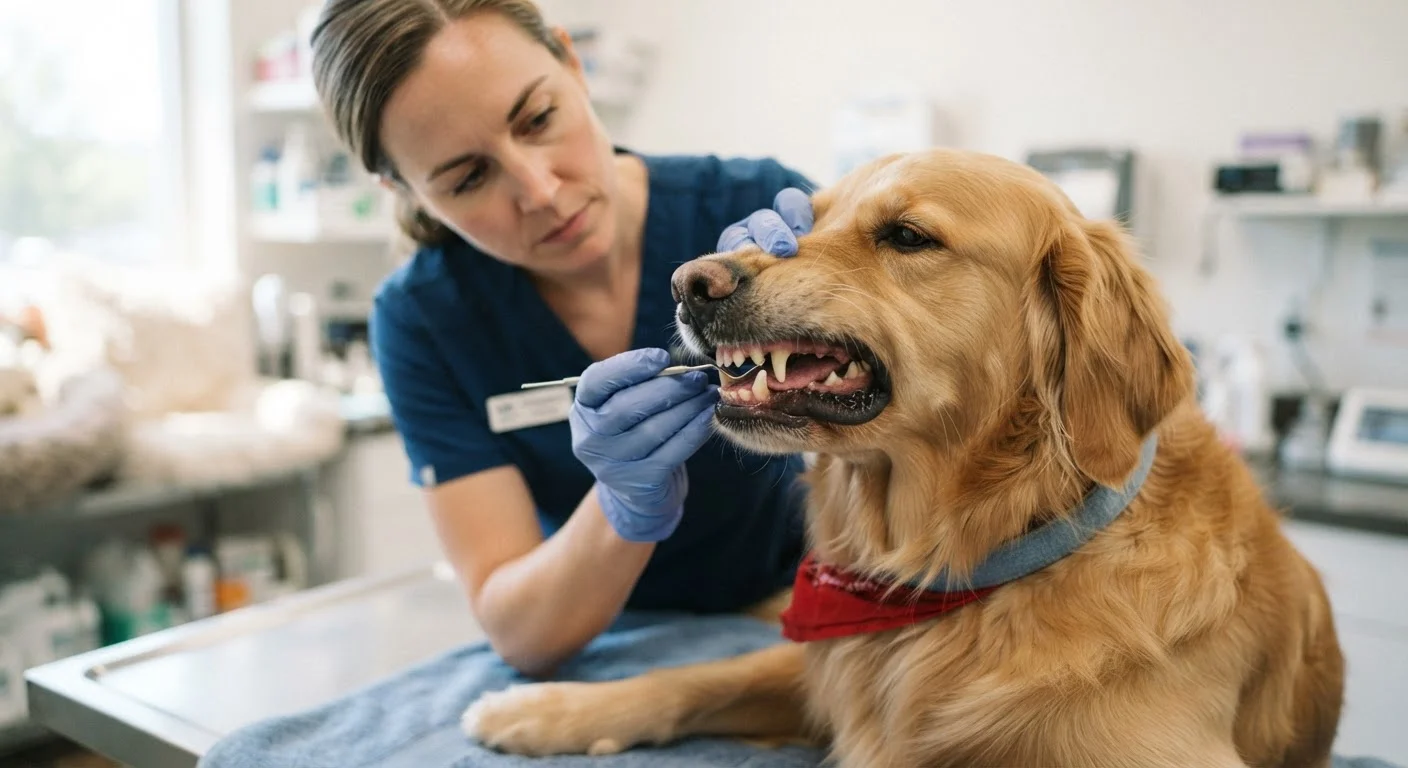
Even with diligent home care, professional dental cleanings are a necessary component of oral health maintenance. Unlike the "anesthesia-free" dental scaling offered by some grooming services - a practice that the AVMA and American Animal Hospital Association (AAHA) explicitly caution against - proper veterinary dental cleanings are performed under general anesthesia. This allows the veterinarian or veterinary dentist to safely scale both above and below the gum line, probe for periodontal pockets, and take dental radiographs to assess tooth root health.
Subgingival (below the gum line) disease cannot be adequately assessed or treated in a conscious animal. Anesthesia-free cleanings remove visible tartar but leave subgingival disease untouched while creating a cosmetically cleaner appearance - a combination that can delay appropriate treatment.
Anesthesia-Free Dental Scaling Is Not a Safe Alternative
Procedures marketed as 'anesthesia-free dental cleanings' are explicitly cautioned against by the AVMA and AAHA. They are unable to address disease below the gum line - where the most damaging processes occur - and the stress of restraint in a conscious animal carries its own risks. A cosmetically cleaner tooth surface does not equal oral health. Discuss concerns about anesthesia risk with your veterinarian; pre-anesthetic bloodwork and careful monitoring make modern veterinary dental anesthesia safer than many owners fear.
Frequency of professional cleaning depends on the individual animal: breed, age, diet, home care consistency, and genetic predisposition all factor in. Smaller breeds and brachycephalic (flat-faced) dogs tend to have more crowded dentition and faster tartar accumulation, often requiring more frequent professional attention. Your veterinarian is best positioned to recommend a schedule based on your pet's oral health history.
Building Dental Care Into Your Routine
Consistency is the foundation of effective dental care. Introducing toothbrushing gradually - starting with just letting the pet sniff and lick the toothpaste, then slowly introducing the brush - improves long-term compliance significantly. Pairing the routine with positive reinforcement makes it sustainable for both pet and owner.
Integrating dental checks into monthly care habits is a practical way to stay ahead of problems. Our monthly pet care checklist includes dental care as a recurring task alongside nutrition, grooming, and behavioral observations. If you're establishing care habits for a new companion, our preventive care guide for new pets covers dental health within the full preventive framework from day one.
Make Brushing a Positive Ritual
Use a small amount of pet-safe, flavored toothpaste to make brushing more appealing. Chicken and beef flavors are widely accepted by dogs; fish-based options often work well for cats. Keep sessions short - 30 to 60 seconds - and follow up with calm praise or a brief play session to build a positive association over time.
Dental health is not a standalone concern - it connects to nutrition, hydration, grooming, and overall wellness. Staying curious about the science, and working with a veterinarian who takes oral health seriously, puts you in the best position to keep your pet comfortable throughout their life.
This article is for general informational and educational purposes only and is not a substitute for professional veterinary advice, diagnosis, or treatment. Always consult a licensed veterinarian regarding your pet's specific health needs.