Why the Early Weeks Are Unlike Any Other
Young mammals don't enter the world as blank slates, but they do enter it with a temporary biological disposition toward openness. During the socialisation window, a puppy or kitten's nervous system is literally wired to categorise novel stimuli as safe rather than suspicious - an evolutionary adaptation that accelerates social integration into the family group. Once that period closes, the nervous system shifts its default stance, and anything unfamiliar is evaluated with far more caution.
This isn't simply a matter of personality or willingness to learn. The change is neurological. Cortical threat-detection pathways mature, fear memories become more durable, and the animal's repertoire of "known" versus "unknown" becomes increasingly fixed. Understanding this helps explain why a dog that never encountered children during its first three months may remain wary of them for life - even after years of gentle exposure as an adult.
For owners and breeders alike, this means the weeks before a puppy or kitten typically enters a new home carry enormous weight. See our attachment research overview for related context on how early bonds shape long-term behaviour.
The Puppy Window: 3 to 12-14 Weeks
In dogs, researchers and veterinary behaviourists generally identify the primary sensitive period as running from approximately 3 weeks to somewhere between 12 and 14 weeks. This breaks down into overlapping sub-phases. Between 3 and 5 weeks, puppies begin interacting with littermates and their environment in earnest. From roughly 5 to 12 weeks, the window is at its most receptive - this is when exposure to sounds, surfaces, humans of different ages, other animals, car rides, grooming, and handling pays the greatest dividends.
3-14 wks
Puppy primary socialisation window
Veterinary behaviour literature consistently identifies this span as the period of greatest neural receptivity to social learning in dogs.
2-7 wks
Kitten sensitive period for socialisation
Research in feline behaviour, including work cited by the American Association of Feline Practitioners, places the kitten window earlier and shorter than that of dogs.
8 weeks
Typical puppy adoption age
Most puppies enter new homes at 8 weeks - the midpoint of their window - meaning the adopter inherits both opportunity and responsibility simultaneously.
The final weeks of the window, from about 8 to 14 weeks, overlap with what some researchers call the first fear imprint period - a phase when a single significantly frightening event can produce lasting sensitisation. This makes the timing and quality of socialisation just as important as its breadth. A puppy that experiences a painful or terrifying event involving children during this phase may generalise that fear far more rapidly than an adult dog would.
One practical implication: many puppies arrive in their new homes at 8 weeks - right in the middle of their most impressionable period and their first fear-sensitive phase simultaneously. The early weeks in a new home are not a time for over-stimulation, but they are absolutely a time for gentle, positive, varied exposure. For a deeper look at how training concepts connect to this, see why generalisation must be trained deliberately.
The Kitten Window: Shorter, Earlier, Often Missed
Kittens present a more compressed challenge. Their sensitive period runs from approximately 2 to 7 weeks - meaning the bulk of it occurs before most people ever meet their kitten. By the time a kitten is adopted at the conventional 8-10 weeks, the window has largely closed. What happened in those early weeks - whether they were handled by humans, exposed to household sounds, socialised with other cats and species - is already determining their social architecture.
This places enormous responsibility on breeders and, particularly, on the foster carers and shelter staff who raise orphaned or feral-born kittens. A kitten raised without human contact before 7 weeks does not simply need more time to adjust - it may have a fundamentally different threat-response profile that no amount of patience alone will fully reverse. Conversely, kittens handled regularly and positively from the first weeks of life tend to be demonstrably more confident, more tolerant of handling, and more socially flexible as adults.
What Good Socialisation Actually Looks Like
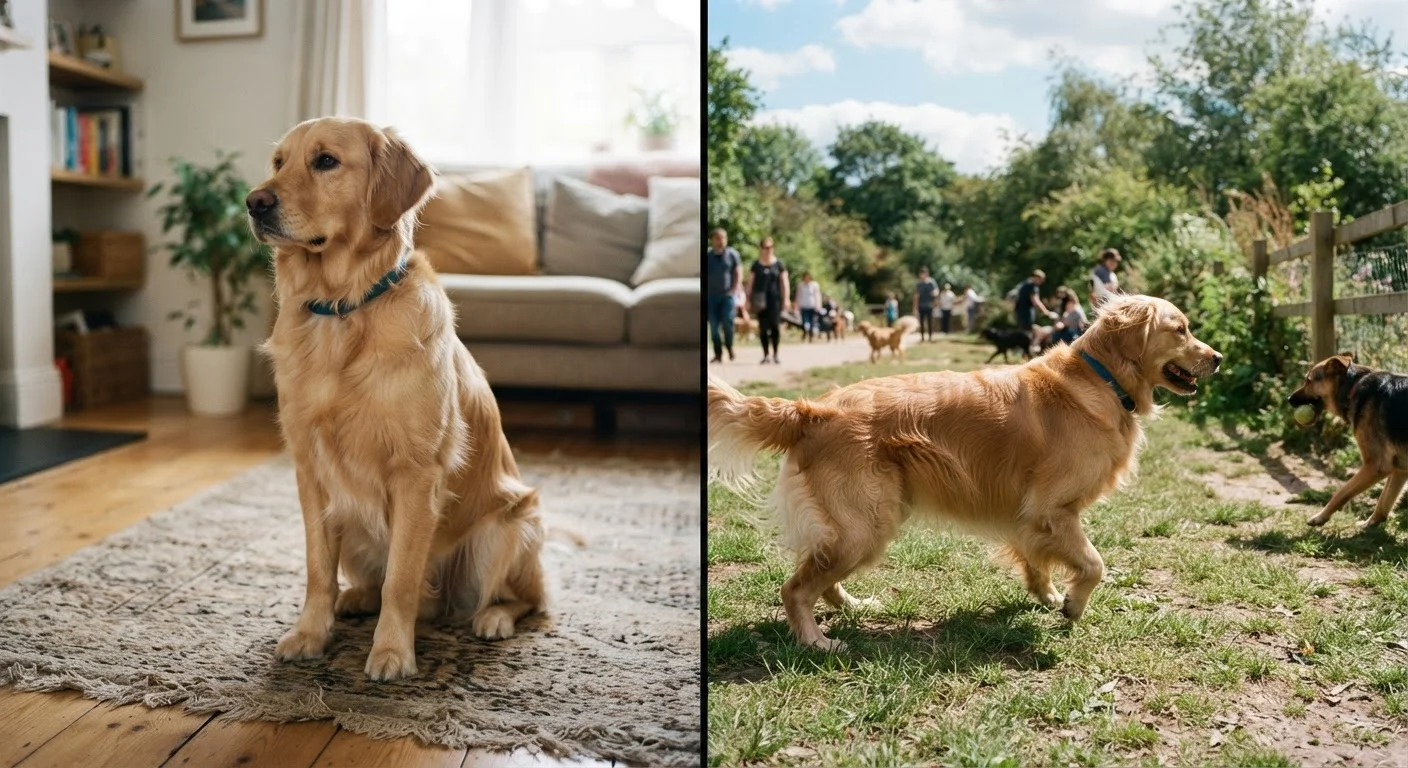
Socialisation is not synonymous with exposure. The distinction matters enormously. Exposure means the animal encountered something. Socialisation means the animal formed a positive or neutral association with it. Dragging a fearful puppy into a busy dog park is exposure; it is not socialisation - and depending on the puppy's response, it may actively worsen long-term outcomes.
Use the 'Three Ds' to Pace Exposure
Manage socialisation intensity using Distance, Duration, and Distraction level. Start with a fearful or new stimulus far away, for short periods, with minimal competing stimulation. Only reduce distance or add complexity once the animal displays consistently relaxed body language. Rushing any of these dimensions risks creating the sensitisation you're trying to prevent.
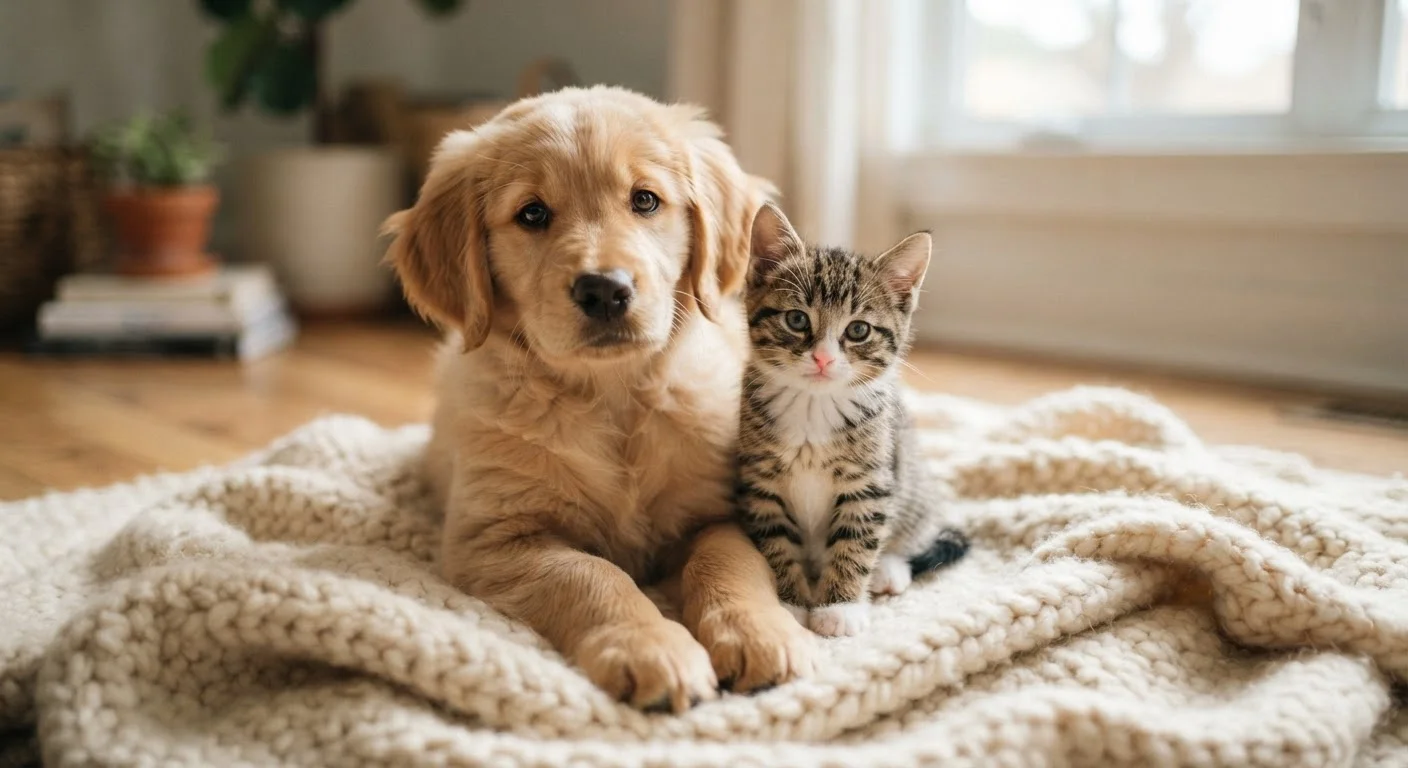
Effective socialisation during the window involves three principles: gradual intensity, positive pairing, and the animal's ability to retreat or disengage. A kitten meeting a calm, gentle dog while on familiar territory and allowed to leave when it chooses is a very different experience from the same kitten being held while the dog investigates. The former builds tolerance; the latter may build fear.
Owners who want to go deeper on reading their pet's signals during these encounters - the flattened ears, the slow blink, the lip-lick - will find our guide to misread pet behaviours a useful companion resource.
When the Window Has Already Closed
Not every pet arrives with an optimal socialisation history, and that reality deserves honest framing. An adult dog or cat that missed critical early exposure can improve substantially with patient, structured counter-conditioning work - pairing previously fearful stimuli with reliably positive outcomes over many repetitions. But this process is slower, less complete, and often requires professional support.
The goal shifts from building a foundation to modifying an already-established one. That is harder work, but it is not futile. Many animals with poor early socialisation go on to live full, manageable lives when their owners understand the animal's specific thresholds and design their environment accordingly. Our article on creating a behaviour-aware home environment offers practical guidance on exactly that kind of thoughtful design.
“The socialisation period is not simply a training opportunity - it is a biological event. What we do and fail to do during those weeks writes itself into the animal's nervous system in ways that persist long after the window has closed.”
— Ian Dunbar, Veterinarian and animal behaviourist, pioneer of puppy socialisation science
This article is for general educational purposes and does not constitute veterinary or behavioural advice. Always consult a qualified veterinarian or certified animal behaviourist for guidance specific to your pet's needs.