Why a Small Percentage Is a Big Deal
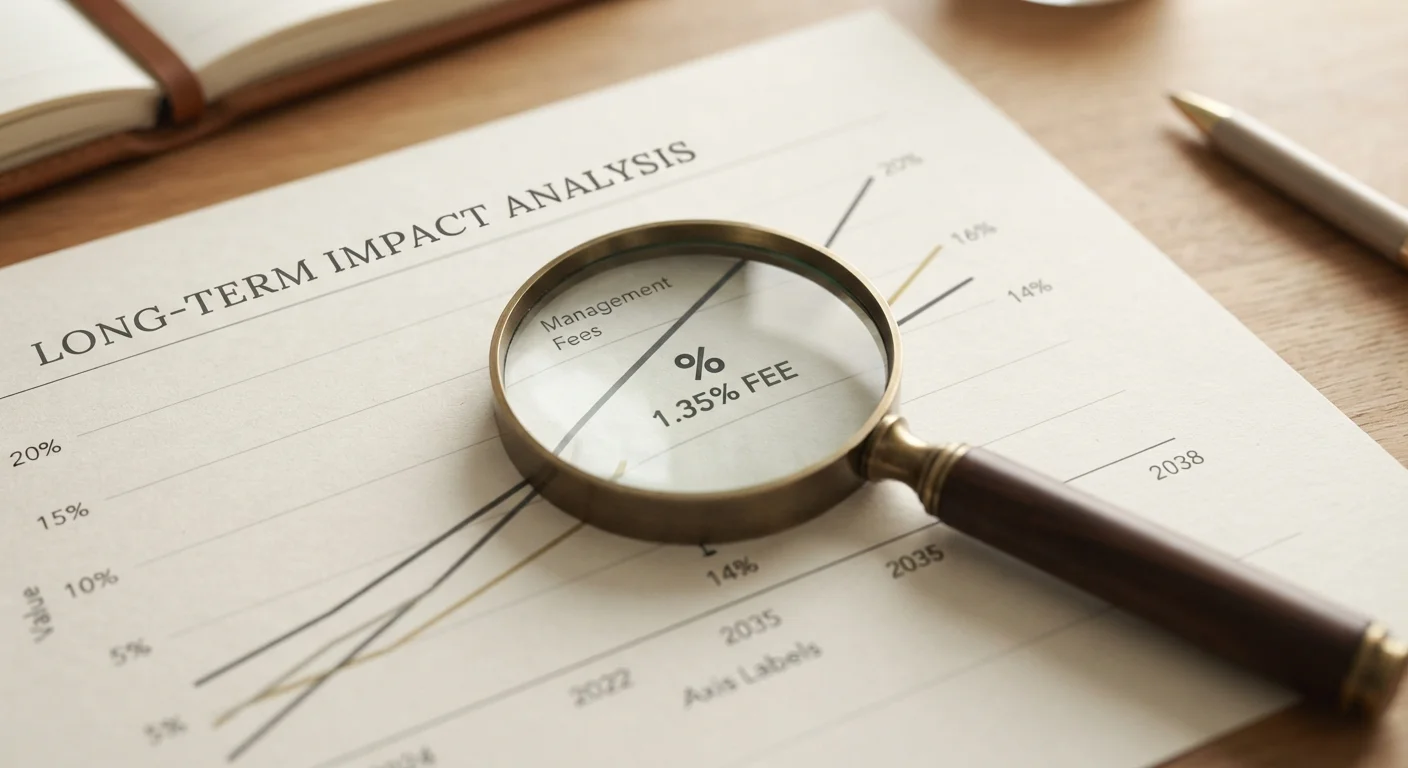
Percentages feel abstract until you attach a dollar amount to them. Suppose you invest $50,000 and earn an average annual return of 7% over 30 years. With no fees, that grows to roughly $380,000. Add a 1% annual fee - reducing your net return to 6% - and you end up closer to $287,000. That single percentage point costs you nearly $93,000 over the life of the investment.
The reason the damage is so severe is the same mechanism that makes investing worthwhile in the first place: compounding. Every dollar paid in fees is a dollar that can no longer grow. As your balance increases, the fee's absolute dollar amount increases too, silently accelerating the drag on your wealth. For a deeper look at how compounding works in your favor - and against you - see how compound interest actually works.
$93,000
Lost to a 1% fee over 30 years
Based on a $50,000 initial investment growing at 7% gross vs. 6% net - a purely illustrative calculation demonstrating compounding fee drag.
0.03%-1.5%+
Typical expense ratio range across fund types
Passive index funds often sit below 0.10%; actively managed funds frequently exceed 0.75%, according to industry data tracked by Morningstar.
40%
Of 401(k) participants unaware of plan fees
A FINRA Investor Education Foundation study found a substantial share of retirement savers did not know what fees they were paying inside their workplace plans.
The Three Fee Types You're Most Likely Paying
Most investors encounter fees across three categories:
- Expense ratio: An annual percentage charged by a mutual fund or ETF to cover operating costs. It is deducted automatically from fund assets, so it never appears as a line item on your statement - making it easy to overlook.
- Advisory or management fee: Charged by a human adviser or robo-adviser, typically ranging from 0.25% to 1% of assets under management per year. On a $100,000 portfolio, even 0.50% equals $500 annually.
- Transaction or trading costs: Commissions on buying or selling individual securities. Many major brokerages have eliminated commissions on stock and ETF trades, but they can still appear in certain fund types or account structures.
There are also less visible costs - bid-ask spreads on thinly traded securities, sales loads (front-end or back-end charges on some mutual funds), and fund turnover costs that don't show up in the expense ratio but still affect returns. To understand how to decode these figures in fund documentation, see reading a fund factsheet without the jargon.
Do a Quick Fee Audit Today
Log into your brokerage or retirement account and locate the expense ratio for each fund you hold. Write down the percentage and multiply it by your current balance to see the annual dollar cost. If any fund exceeds 0.75%, research whether a lower-cost alternative with similar exposure exists within the same account.
How to Find, Compare, and Question Fees
You are entitled to clear fee information before you invest. Here's where to look and what to ask:
- Read the fund's prospectus or factsheet. The expense ratio appears prominently; so does any sales load. Factsheets often include a hypothetical cost table showing the dollar impact of fees over 1, 3, 5, and 10 years.
- Check your plan's fee disclosure. 401(k) participants must receive annual fee disclosures under Department of Labor regulations. Look for the 404a-5 disclosure your plan administrator is required to provide.
- Ask your adviser for a full fee breakdown. Registered investment advisers are required to provide a Form ADV Part 2A, which details their fee structure. If an adviser is vague about total costs, that is a meaningful red flag.
- Use the SEC's EDGAR database. Fund filings are publicly searchable at sec.gov, allowing you to verify expense ratios and load structures independently.
Ignoring fees is one of the investing habits that compounds quietly into major long-term damage. For a broader look at similar pitfalls, see early investing errors that undermine long-term returns. Also worth noting: investment fees are just one category of silent financial drain - hidden costs that drain savings without you noticing explores how subscription creep and convenience fees operate by the same logic.
Higher Fees Don't Mean Better Returns
Decades of research - including studies by S&P Dow Jones Indices and Morningstar - consistently show that actively managed funds, as a group, underperform their benchmark indices net of fees over long time horizons. A higher expense ratio reflects the fund's cost structure, not a reliable signal of superior performance. This doesn't mean active management never adds value, but the fee hurdle is real and mathematically significant.
This article is for general informational and educational purposes only and does not constitute personalized investment, tax, or legal advice. Past investment performance does not guarantee future results. Consult a qualified financial adviser or tax professional before making decisions about your specific financial situation.