
Why Asset Classes Matter Before Anything Else
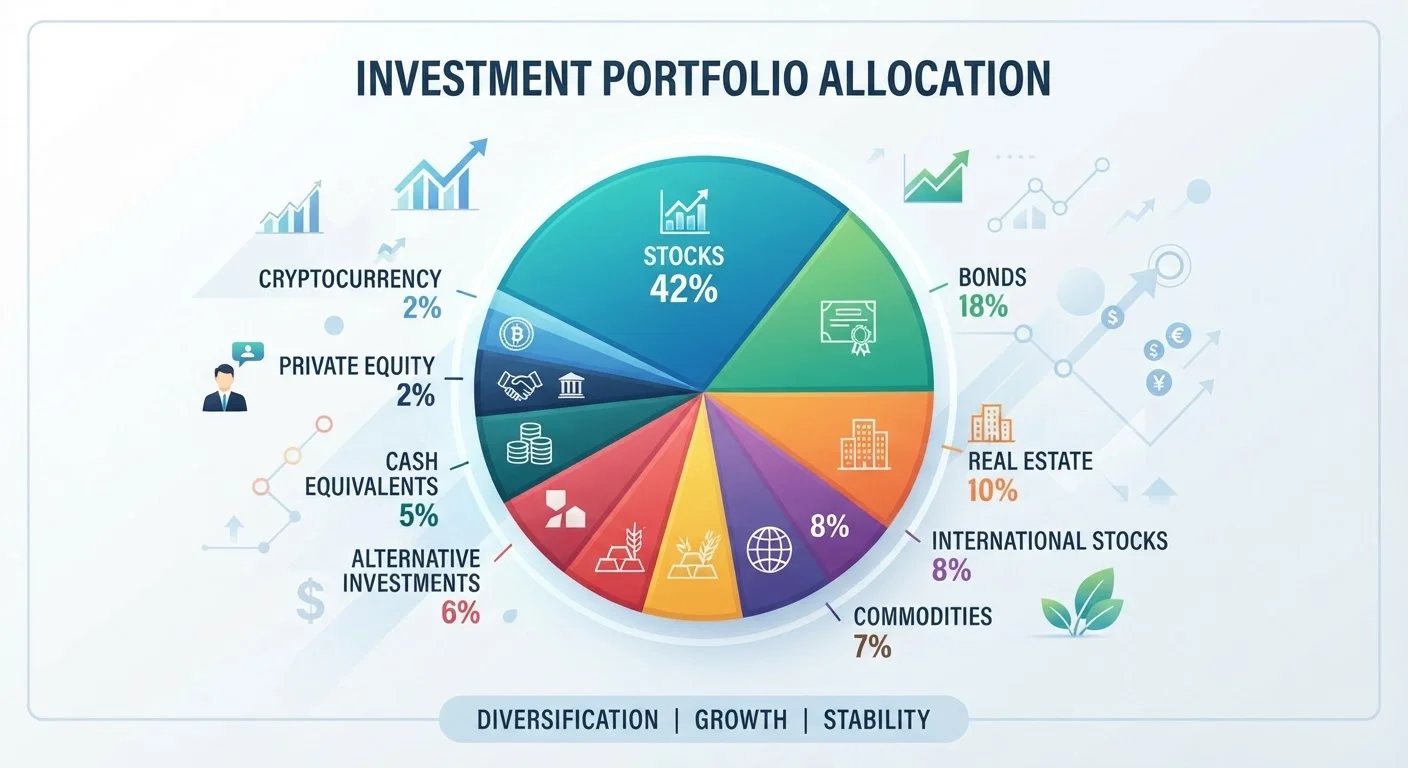
Before you choose a fund, open a brokerage account, or decide how much to invest, you need to understand what you're actually buying. Almost every investment product - no matter how complex it sounds - is built from three foundational asset classes: stocks, bonds, and cash equivalents. Each behaves differently, carries different risk, and plays a different role in a portfolio.
Skipping this step is why many young investors end up with a collection of accounts that don't work together. Once you can identify what each asset class does, choosing between options becomes far less overwhelming. See our guide to key investing terms for definitions that complement this breakdown.
Stocks: Ownership With Upside and Downside
When you buy a stock, you're purchasing a small ownership stake in a company. If the company grows and becomes more profitable, the value of your share typically rises. If it struggles, your share loses value. This direct link to business performance is what makes stocks both the highest-potential and highest-volatility asset class of the three.
Over long periods, stocks have historically provided the strongest returns among the core asset classes - but that comes with meaningful short-term swings. A portfolio that held only U.S. large-cap stocks would have experienced multiple periods of 30-50% drawdowns, according to historical market data. That's the trade-off: higher potential growth in exchange for higher uncertainty.
For young professionals with a long time horizon, stocks are typically the primary growth engine of a portfolio. How much of your portfolio should be in stocks depends on your goals and risk tolerance - not a single universal formula. See how asset allocation should shift over time for a structured framework.
Asset class
A broad category of investments that share similar characteristics and behave similarly in the market. Stocks, bonds, and cash are the three primary asset classes.
Equity (stock)
A security representing partial ownership of a company. Stockholders may benefit from price appreciation and dividends but also bear the risk of loss.
Bond (fixed income)
A debt instrument where the investor lends money to an issuer - a government or corporation - in exchange for periodic interest payments and return of principal at maturity.
Coupon rate
The annual interest rate paid by a bond issuer to bondholders, expressed as a percentage of the bond's face value.
Cash equivalents
Highly liquid, low-risk instruments such as money market funds, Treasury bills, and high-yield savings accounts that preserve capital but typically offer modest returns.
Volatility
The degree to which an asset's price fluctuates over time. Higher volatility means larger swings in value - both up and down.
Bonds and Cash: Stability and Trade-Offs
Bonds are loans you extend to a government or corporation. In return, the borrower agrees to pay you interest (the coupon) over a set period and return the principal at maturity. Because the income stream is contractually fixed, bonds are generally less volatile than stocks - but they're not risk-free. Interest rate changes, inflation, and borrower creditworthiness all affect bond prices and real returns.
Bonds typically serve two purposes in a portfolio: dampening overall volatility and providing income. When stock markets fall sharply, high-quality bonds (such as U.S. Treasuries) have often - though not always - held their value or risen, partially offsetting equity losses. That cushioning effect is why true diversification usually means holding multiple asset classes, not just many stocks.
Cash and cash equivalents - savings accounts, money market funds, Treasury bills - offer the highest liquidity and lowest volatility, but the lowest long-term growth. Their role in a portfolio is principally stability and accessibility, not wealth-building. Make sure your emergency fund is fully funded (see building an emergency fund) before treating cash as an investment strategy.
3
Core asset classes that underpin virtually every investment product
Stocks, bonds, and cash equivalents form the foundation of modern portfolio construction, as recognized by standard financial education frameworks.
~30-50%
Historical drawdown range for equity-only portfolios during major downturns
Based on historical U.S. large-cap market data across multiple significant bear markets; past performance does not predict future results.
Once you understand these three classes, the logical next step is exploring how to access them efficiently. Index funds vs. actively managed funds is a natural continuation - both fund types use these same building blocks but in very different ways.
This article is for general informational and educational purposes only and does not constitute personalized investment, tax, or legal advice. Investing involves risk, including potential loss of principal. Consult a qualified financial professional before making decisions about your own circumstances.