Why the Wrapper Matters as Much as the Investment
When most people start investing, they focus on what to buy - funds, ETFs, shares. But the account you hold those investments in determines how much of your return you actually keep. Two portfolios holding identical assets can produce meaningfully different after-tax outcomes depending on their wrapper.
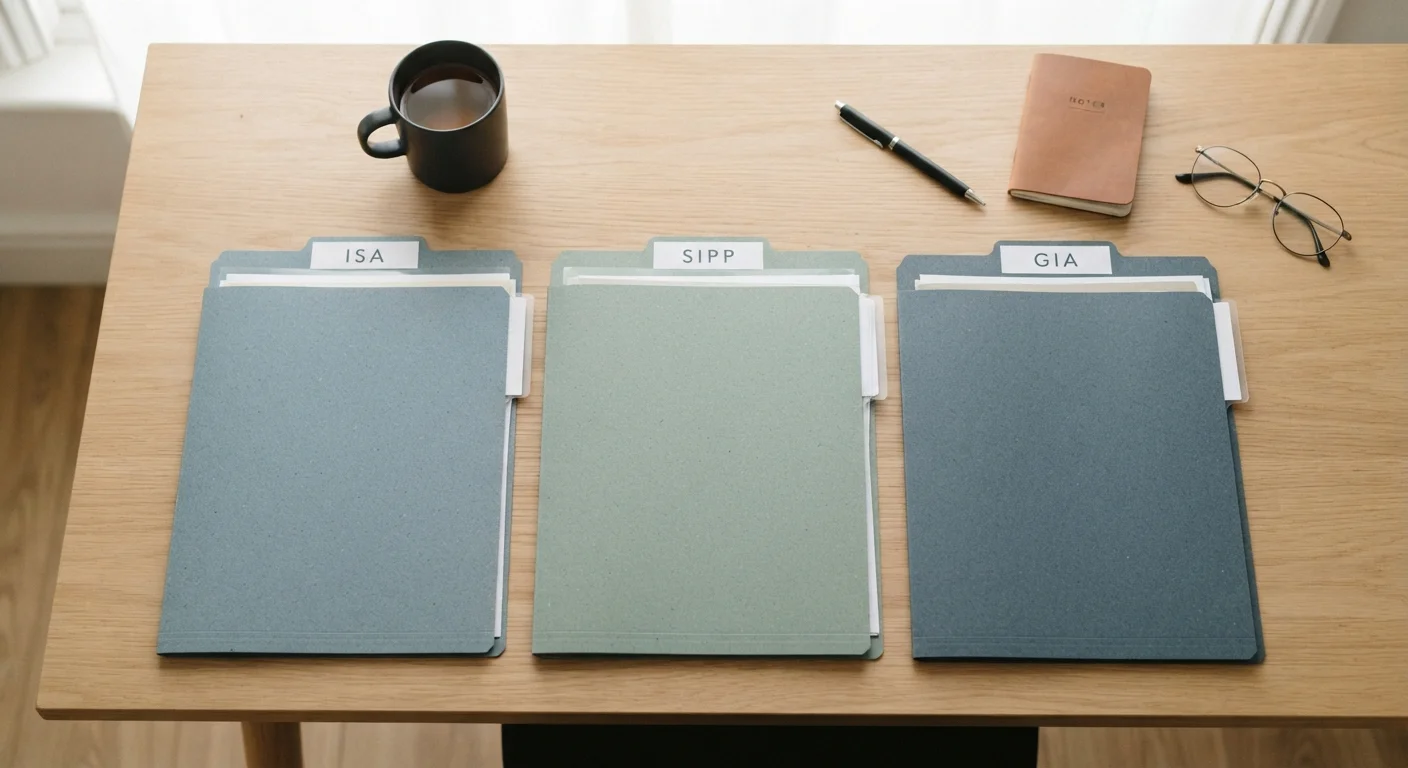
In the UK, the three main options are the Individual Savings Account (ISA), the Self-Invested Personal Pension (SIPP), and the General Investment Account (GIA). Each one handles tax differently, restricts access differently, and suits a different set of goals. Understanding those distinctions is a foundational investing skill - and it's where strategy begins, before you've picked a single fund. See our guide to portfolio building blocks if you want a primer on what you'd actually hold inside these wrappers.
ISAs: Tax-Free Growth With No Lock-In
An ISA is the most versatile tax wrapper available to UK residents. You can contribute up to £20,000 per tax year across all ISA types combined, and any growth - dividends, interest, or capital gains - is completely free from UK tax. There is no tax on withdrawal either.
The main variants worth knowing:
- Stocks and Shares ISA: Holds funds, ETFs, shares, and bonds. Best for medium-to-long-term goals where you want market exposure and tax-free compounding.
- Cash ISA: Holds savings at a fixed or variable interest rate. Lower growth potential but useful for short-term goals or emergency reserves.
- Lifetime ISA (LISA): Available to those aged 18-39, contributes up to £4,000 per year toward a first home or retirement, with a 25% government bonus on contributions. A 25% withdrawal penalty applies if you withdraw for any other purpose before age 60, which effectively erodes the bonus and part of your own savings - so the goal lock-in here is real.
The ISA's key advantage is flexibility: you can access your money at any time without penalty (except the LISA). That makes it the natural home for any goal with a timeline shorter than retirement, from a house deposit to a career break fund. Once invested, the wrapper follows the money - you don't need to re-shelter growth each year.
Use the ISA for Goals With a Timeline
If you have a specific goal in mind - a house deposit in five years, a sabbatical fund - the Stocks and Shares ISA is almost always the right first wrapper. It grows tax-free, you can access it without penalty, and unused allowance from previous years cannot be carried forward, so using it consistently matters. Even modest annual contributions benefit significantly from sheltered compounding over a decade or more.
SIPPs: Tax Relief Now, Access Later
A Self-Invested Personal Pension wraps your retirement savings in a structure that provides upfront tax relief on contributions. For a basic-rate taxpayer, every £80 contributed effectively becomes £100 in the pension - HMRC adds 20% relief automatically. Higher-rate and additional-rate taxpayers can claim further relief through their Self Assessment tax return.
The annual contribution limit is either your entire UK earnings for the year or £60,000 (the 2024/25 Annual Allowance), whichever is lower. There is also a carry-forward rule allowing unused allowance from the previous three tax years to be used in the current year, subject to conditions.
The trade-off is access. You cannot withdraw SIPP funds until age 57 (this rises from 55 to 57 in 2028 under current legislation). At that point, up to 25% is typically available as a tax-free lump sum; the remainder is drawn as taxable income. This lock-in is not a bug - it enforces the retirement purpose the tax relief is designed to support.
The SIPP Is Not an Emergency Fund
Tax relief makes the SIPP look attractive on paper, but once money goes in, it is effectively inaccessible for decades. Withdrawing early is not possible under current UK rules - there is no hardship exemption for early access the way some other countries' pension systems offer. Make sure your ISA and liquid savings are adequately funded before over-contributing to a pension you cannot reach.
For young professionals with variable income or ongoing financial commitments, the SIPP's inflexibility is worth taking seriously. Contributions should generally come from surplus funds you genuinely won't need before retirement - not money that might need to serve an intermediate goal.
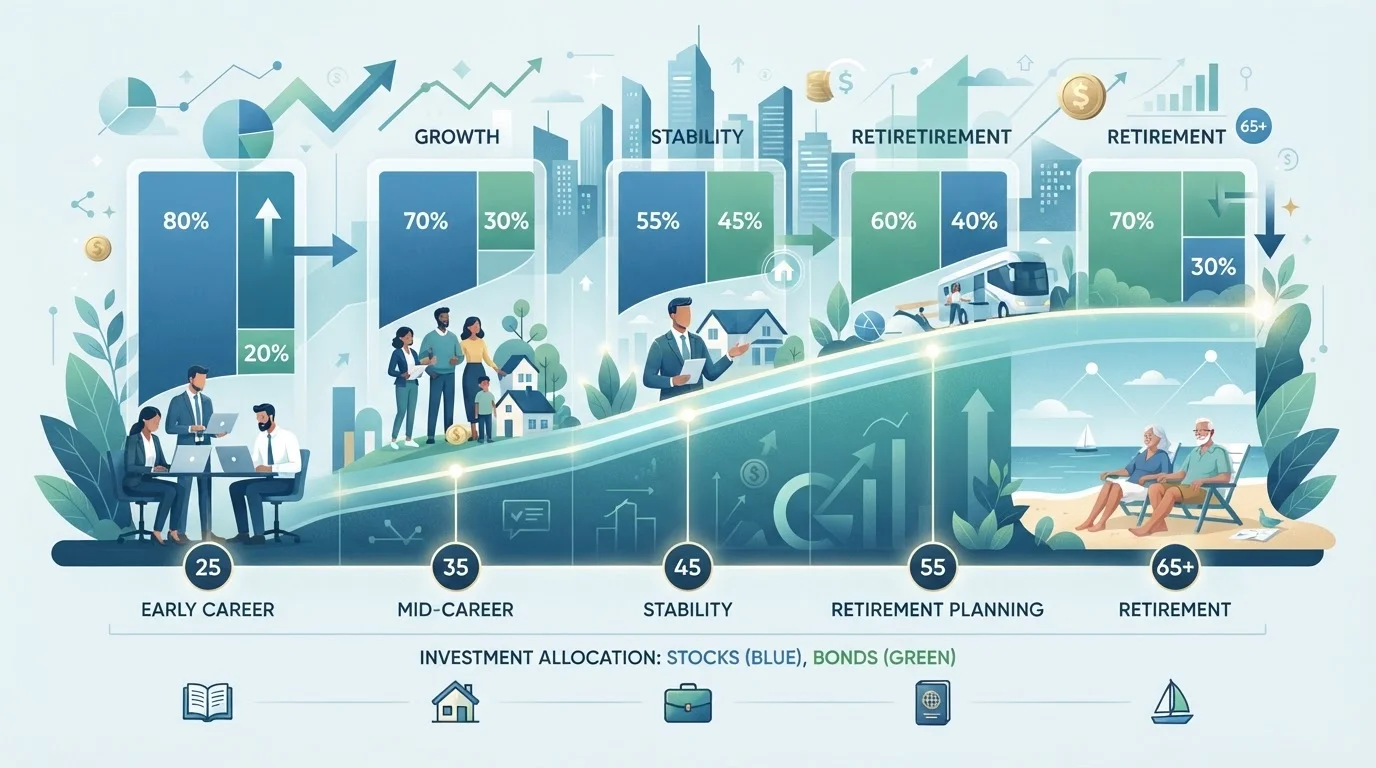
Those who want to understand how to allocate across different time horizons should read our framework for long-term asset allocation.
General Investment Accounts: No Limits, No Shelter
A General Investment Account has no annual contribution cap and no restrictions on access. That sounds appealing - but it also offers no tax sheltering. Dividends are subject to income tax above the £500 dividend allowance (2024/25 figure), and gains above the £3,000 annual CGT exemption (2024/25) are subject to Capital Gains Tax.
That makes the GIA a third-tier tool rather than a starting point. Its value is as an overflow vehicle: once your ISA allowance is used and your pension contributions are optimised, the GIA lets you continue investing without an artificial ceiling. It's also useful for holding assets you may want to gift, as transfers between spouses can be used to manage CGT liability.
Smart GIA use involves keeping it tax-aware: favouring accumulation funds over income-distributing ones where possible, using annual CGT allowances methodically, and considering whether to bed-and-ISA (sell and repurchase inside an ISA) each April to gradually shift holdings into a sheltered wrapper.
Before opening any of these accounts, it's worth reviewing our practical checklist for setting up a brokerage account to make sure your structure is right from day one.
Side-by-Side: Matching Wrapper to Goal
The comparison below summarises the key structural differences. Use it as a decision framework, not a definitive rule - your tax situation and specific goals should shape how you apply it.
| ISA | Lifetime ISA | SIPP | General Investment Account | |
|---|---|---|---|---|
| Annual contribution limit | £20,000 | £4,000 (counts toward ISA limit) | £60,000 or 100% of earnings | No limit |
| Tax on growth | None | None | None (until withdrawal) | Income tax on dividends; CGT on gains above allowance |
| Tax on withdrawal | None | None (qualifying withdrawals) | Taxable as income (except 25% tax-free lump sum) | No withdrawal tax, but gains may be taxable on disposal |
| Access restrictions | Anytime | First home or age 60+ (25% penalty otherwise) | Age 57+ (from 2028) | Anytime |
| Government incentive | None | 25% bonus on contributions | Tax relief at marginal rate | None |
| Best suited for | Medium-term or flexible goals | First home deposit or retirement top-up | Long-term retirement saving | Overflow investing after ISA/SIPP maximised |
A practical sequencing approach for most young professionals: contribute enough to a workplace pension or SIPP to capture any employer match (that's an immediate return with no market risk), then fill the ISA allowance for flexible goals, and treat the GIA as the final layer once those are exhausted. For investment fund selection within these wrappers, our comparison of index funds versus actively managed funds is a useful next read.
£20,000
ISA annual allowance per person
The ISA allowance has been frozen at £20,000 since the 2017/18 tax year, per HMRC guidance.
25%
Government bonus on Lifetime ISA contributions
HMRC adds a 25% bonus on up to £4,000 per year for eligible first-time buyers and retirement savers aged 18-39.
£60,000
SIPP Annual Allowance (2024/25)
The pension Annual Allowance rose from £40,000 to £60,000 in April 2023, according to HMRC pension tax relief guidance.