Why Plant Labels Feel Like a Foreign Language
Pick up any plant from a garden center and you're immediately confronted with a dense cluster of terms: USDA Zone 5-9, full sun to partial shade, deadhead for continuous bloom. For first-time growers, this shorthand can feel more intimidating than helpful.
The good news is that once you decode the core vocabulary, every label becomes a clear set of instructions - not a pop quiz. This reference guide walks through the terms you'll encounter most often, grouped by category, so you can look up what you need and get back to planting.
For a deeper look at how light descriptors translate to real growing conditions, see Reading Your Garden's Light, which covers how to assess your actual space before committing to a plant.
| Zones on the USDA map | 13 (1a through 13b) (USDA Plant Hardiness Zone Map) |
| Full sun minimum | 6 hours of direct sunlight per day |
| Partial shade range | 3-6 hours of direct sunlight per day |
| Annual lifespan | One growing season |
| Perennial lifespan | Three or more years |
| Biennial lifespan | Two growing seasons |
Lifespan Terms: Annual, Perennial, Biennial
These three words describe how long a plant naturally lives - and they have major implications for how much effort you'll invest each season.
Annual
A plant that completes its entire life cycle - germination, flowering, seed production, and death - within a single growing season. You replant annuals each year.
Perennial
A plant that lives for more than two years, dying back in winter (in most climates) and returning in spring from its root system. Perennials are a longer-term investment in your garden.
Biennial
A plant that takes two growing seasons to complete its cycle: foliage grows in year one, then it flowers, sets seed, and dies in year two. Foxglove and hollyhock are common examples.
Hardiness Zone
A USDA-assigned geographic designation based on a region's average annual minimum winter temperature. It indicates which plants can survive outdoors through winter in that location.
Deadheading
The practice of removing faded or spent flowers from a plant to redirect energy toward new blooms rather than seed development.
Naturalizes
Describes a plant's tendency to spread and establish itself over time without ongoing intervention, effectively becoming a self-sustaining presence in the landscape.
Drought-tolerant
A label indicating a plant can survive extended dry periods once it has established a root system. It does not mean the plant thrives on neglect during its first growing season.
Self-seeding
A characteristic where a plant drops viable seeds that germinate and grow the following season without deliberate planting. This can be a feature or a nuisance depending on your garden goals.
A practical note: tender perennials are plants that behave as perennials in warm climates but die in frost, so they're often sold and treated as annuals in colder US regions. Geraniums and impatiens are common examples. The label may say perennial without clarifying this - always cross-reference with the hardiness zone information.
Hardiness Zones and What They Tell You
The USDA Plant Hardiness Zone Map divides the US into 13 zones based on average annual minimum winter temperatures. Plant labels typically list a zone range (e.g., Zones 4-8), indicating where a plant can survive year-round without protection.
If your zone falls within that range, the plant should overwinter in your garden without special intervention. If you're colder than the listed minimum zone, you can still grow the plant - but treat it as an annual or bring it indoors before frost.
Find Your Zone Before You Buy
The USDA Plant Hardiness Zone Map is freely available online and searchable by zip code. Knowing your zone before you visit the garden center - not after - saves you from buying plants that won't survive your winters. Your local cooperative extension office is also a reliable resource for region-specific planting advice.
Zone alone doesn't capture everything. Microclimates - created by walls, pavement, bodies of water, or elevation - can make a specific spot in your yard warmer or colder than your official zone suggests. A south-facing brick wall, for instance, can extend what you're able to grow.
Light and Water Requirements
These descriptors appear on nearly every label and are worth getting right before you place a single plant in the ground.
- Full sun: Minimum 6 hours of direct sunlight per day. Most edibles and many flowering plants require this.
- Partial sun / Partial shade: 3-6 hours of direct sun. These terms are sometimes used interchangeably, but partial sun leans toward more light, partial shade toward less.
- Full shade: Fewer than 3 hours of direct sun. Note that shade doesn't mean darkness - indirect, bright light still counts.
For watering, labels use terms like drought-tolerant (survives dry spells once established), consistently moist (needs regular watering and well-draining soil), and average water needs (weekly watering in normal conditions). These aren't precise schedules - they're guides that you'll adjust based on your climate, pot size, and season.
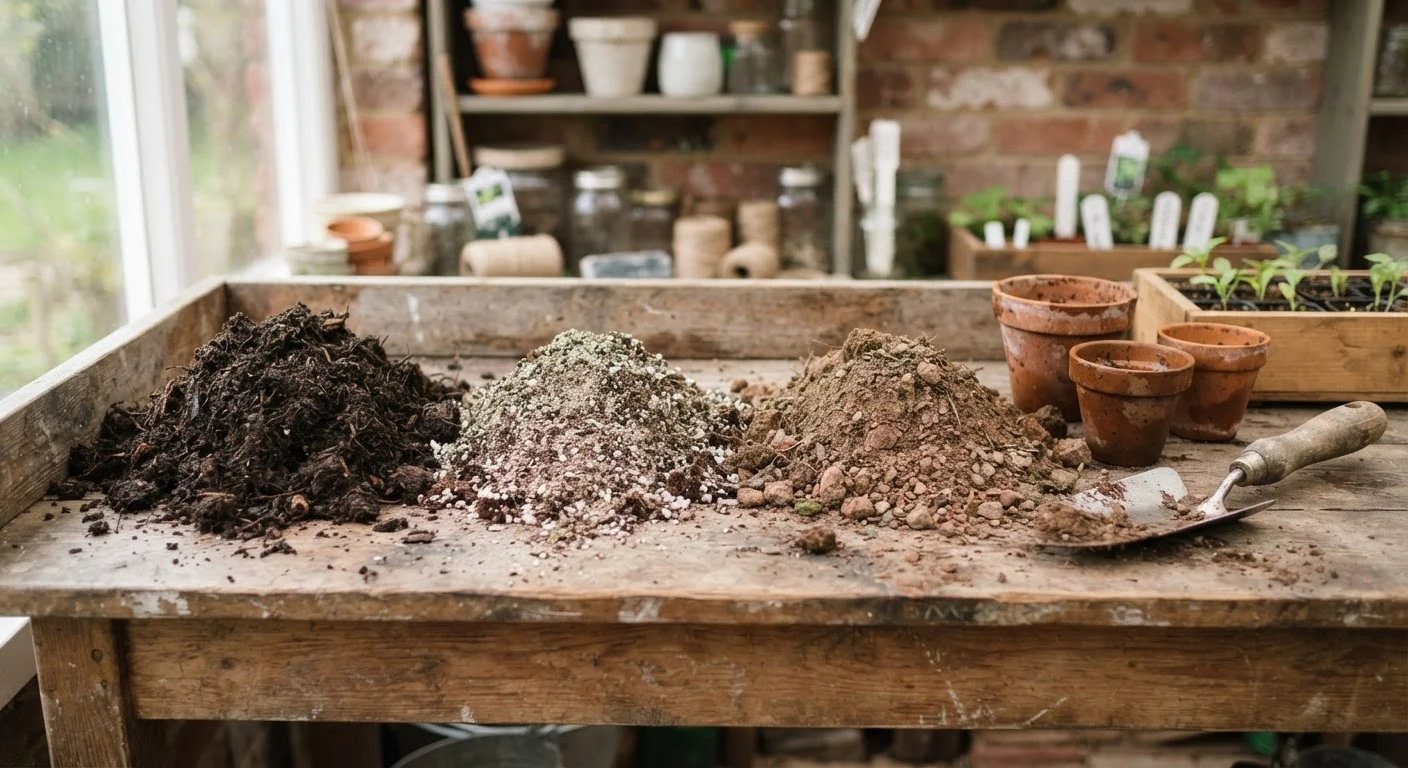
Understanding what goes into your containers matters here too. See Soil, Compost, and Potting Mix for a breakdown of how different growing media affect moisture retention and drainage.
Spacing, Mature Size, and Maintenance Terms
The numbers on a plant label - height, spread, spacing - describe the plant at full maturity, not at purchase. A small 4-inch pot labeled 36 inches tall, 24-inch spread will eventually need that much real estate.
Common maintenance terms you'll see:
- Deadheading: Removing spent flowers to encourage continued blooming rather than seed production.
- Self-seeding: The plant drops seeds that sprout the following year - useful in some contexts, invasive in others.
- Naturalizes: Spreads on its own over time, filling in an area without intervention. Can be desirable in wilder spaces, problematic in tidy beds.
- Deer resistant: Less appealing to deer - not deer-proof. No plant is guaranteed safe in high-deer-pressure areas.
13
USDA hardiness zones across the continental US
The USDA Plant Hardiness Zone Map is the standard reference used by gardeners and growers nationwide to determine which plants are most likely to survive winter conditions in a given location.
6+ hrs
Daily sunlight needed for 'full sun' plants
Most vegetable crops and many flowering perennials require at least six hours of direct sun per day to produce well; less light typically reduces both yield and bloom.
Labels use these terms to give you a snapshot of the plant's personality. The more familiar you become with the vocabulary, the faster you can assess whether a plant suits your space, schedule, and climate - which is exactly what confident gardening looks like.