The Core Reason: Every Buyer Has a Different Cost Structure
When you receive three different trade-in offers for the same car, it isn't because one appraiser is wrong. It's because each buyer has a distinct set of costs and goals baked into what they're willing to pay.
A franchised dealership selling your vehicle on its lot must account for inspection fees, any reconditioning work, potential warranty obligations, the cost of holding inventory, and a target profit margin when it eventually sells. A smaller independent dealer may have lower overhead but also a narrower resale network. An online car-buying platform runs a more standardized process and often prices that efficiency into a faster - though not always higher - offer.
Understanding how depreciation shapes used car pricing provides the foundation here: your vehicle's wholesale value and its retail value are not the same number, and trade-in offers sit closer to the wholesale end of that spectrum.
$1,000-$3,000+
Typical spread between competing trade-in offers
Industry appraisers and consumer advocates consistently note that shopping multiple buyers for the same vehicle regularly produces variation in this range, sometimes wider in volatile wholesale markets.
15-20%
Approximate wholesale-to-retail gap on used vehicles
The difference between what a dealer pays for a vehicle and what they sell it for reflects reconditioning, overhead, and profit - this structural gap is why trade-in offers are lower than retail asking prices.
The Variables That Move the Number
Several concrete factors cause the same vehicle to receive different offers on the same day:
- Mileage and condition: Higher mileage and visible wear translate directly into estimated reconditioning costs, which buyers subtract from their offer.
- Local market demand: A pickup truck trades higher at a dealer in a region where trucks sell quickly. A dealer overstocked with that body style will offer less because reselling it takes longer.
- Wholesale auction benchmarks: Most appraisers reference current wholesale auction data to set a floor. When auction prices shift - as they do with fuel prices, economic cycles, or supply changes - trade-in offers move with them.
- The buyer's current inventory: A dealer who just sold their last certified pre-owned sedan may be eager for yours; one sitting on a lot full of them is not.
- Vehicle history: Accident records, number of previous owners, and service documentation all factor into how confidently a buyer can price the vehicle for resale.
How to Use This Knowledge Practically
Getting a range of offers before committing is the most straightforward way to anchor your expectations. Online valuation tools can provide a useful starting reference, though actual offers may differ based on the inspection of your specific vehicle.
One of the most effective tactics is keeping the trade-in negotiation separate from the negotiation on the vehicle you're purchasing. When both are bundled into a single monthly payment conversation, it becomes harder to evaluate whether either number is reasonable. Our article on common car negotiation myths explains how bundled figures can obscure true costs.
It's also worth knowing that trade-in offers can sometimes be applied toward your purchase in a way that reduces taxable transaction value in many states - a legitimate financial consideration that may partially offset the gap between a trade-in price and a private-party price. Confirm how your state handles this with a tax professional or your state's DMV resources before factoring it into your math.
Get at Least Three Offers Before Deciding
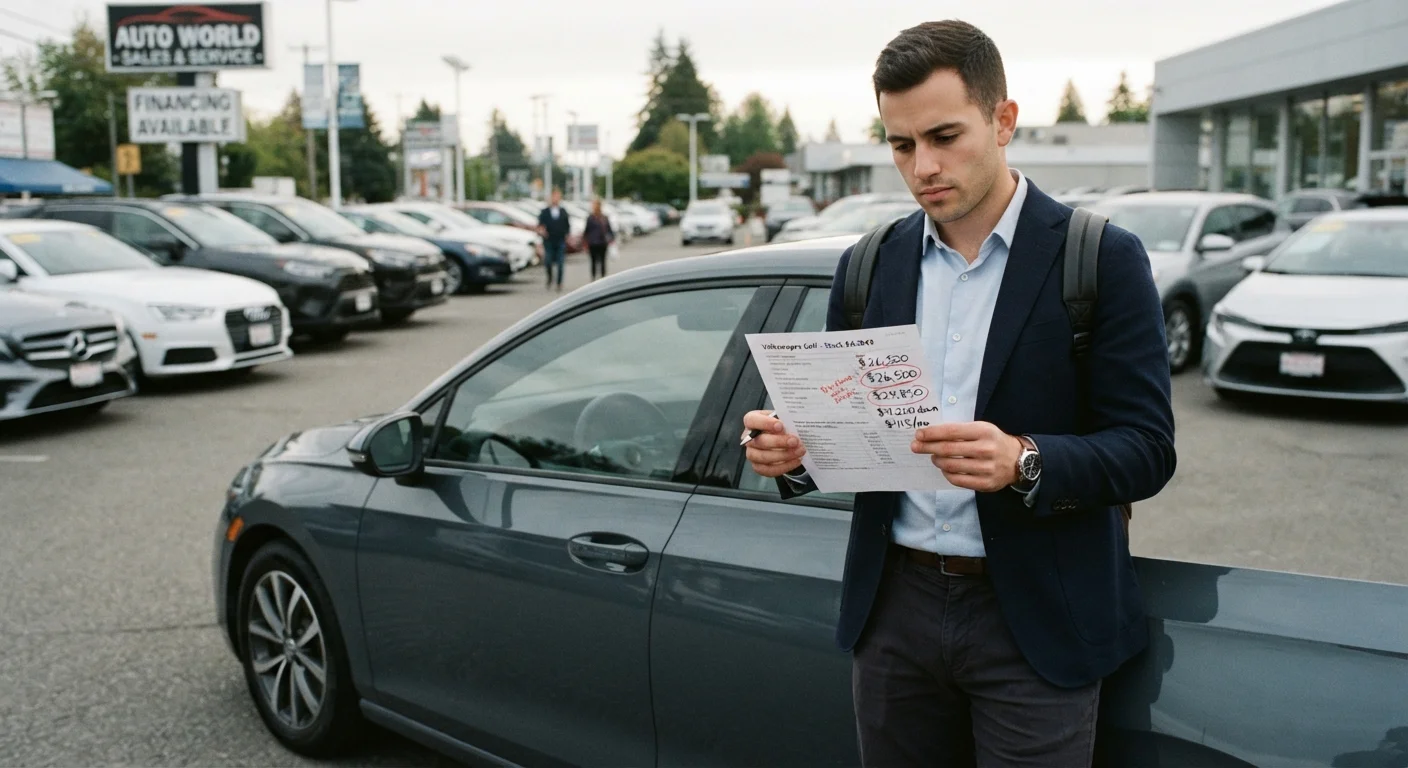
Approach multiple buyers - at least one franchised dealer, one independent or online buyer, and ideally a regional dealer with different inventory needs. Three data points give you a realistic range and a stronger negotiating position. Document each offer in writing, including any conditions attached to it.
For broader context on how vehicle pricing works at the point of sale, see how window sticker numbers break down.
Trade-In vs. Private Sale: The Real Trade-Off
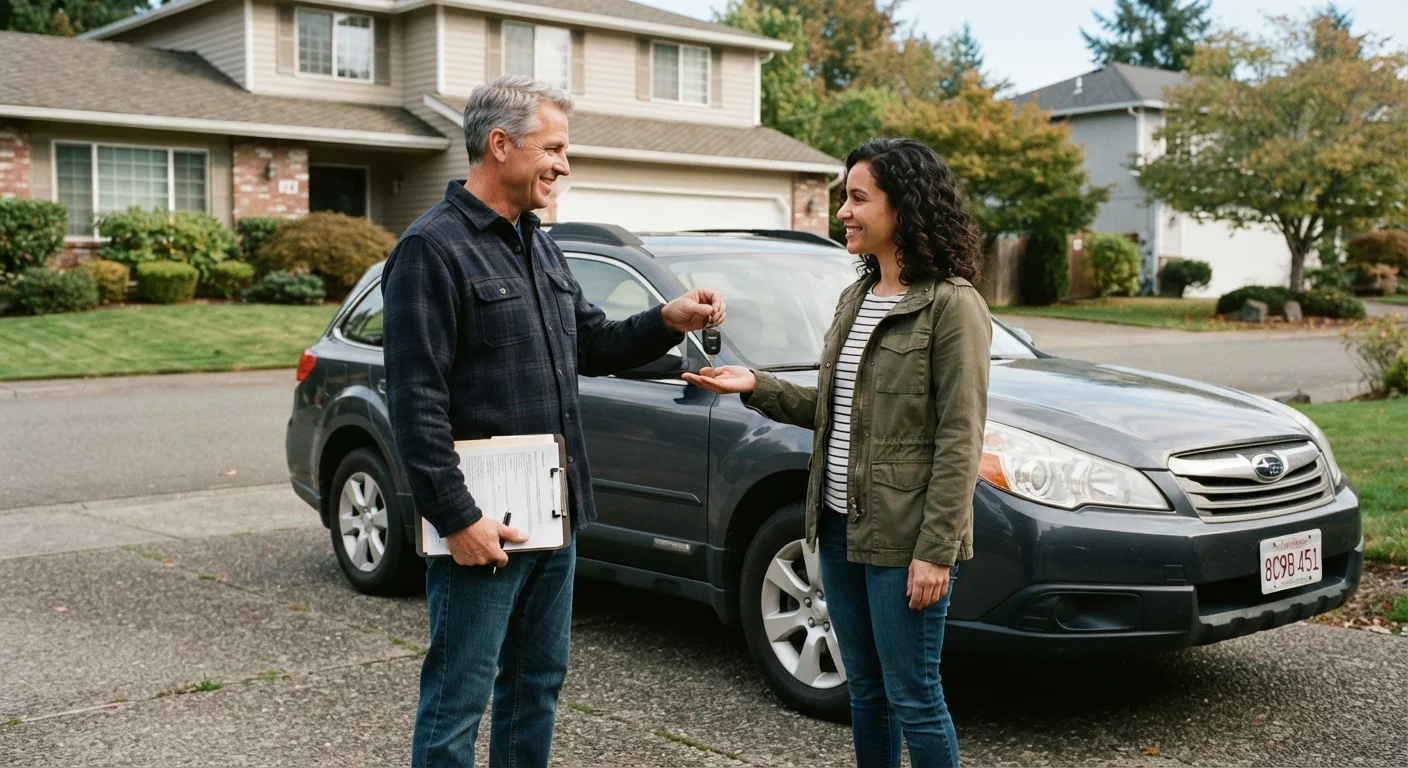
A private sale almost always produces a higher dollar amount than a trade-in offer. The reason is straightforward: you're removing the middleman and their margin. But that comes with real costs of your own - time spent advertising, fielding inquiries, arranging viewings, and handling the paperwork of a title transfer, all while assuming the risk of accepting a bad check or navigating a buyer dispute.
The decision isn't purely financial. If your time is constrained or you're buying and selling simultaneously, the convenience of a trade-in has genuine value. If maximizing return matters more and you have the bandwidth for the process, a private sale is worth considering. Buying a car privately outlines what that process actually looks like in practice.
“The trade-in is not a gift or a loss - it's a transaction with its own economics. Treat it as a separate deal and you'll be in a much better position to evaluate whether any offer is fair.”
— Cars & Driving Editorial Team, Automotive Consumer Education
Neither path is inherently superior - the right choice depends on your priorities, timeline, and comfort with the private sale process.