
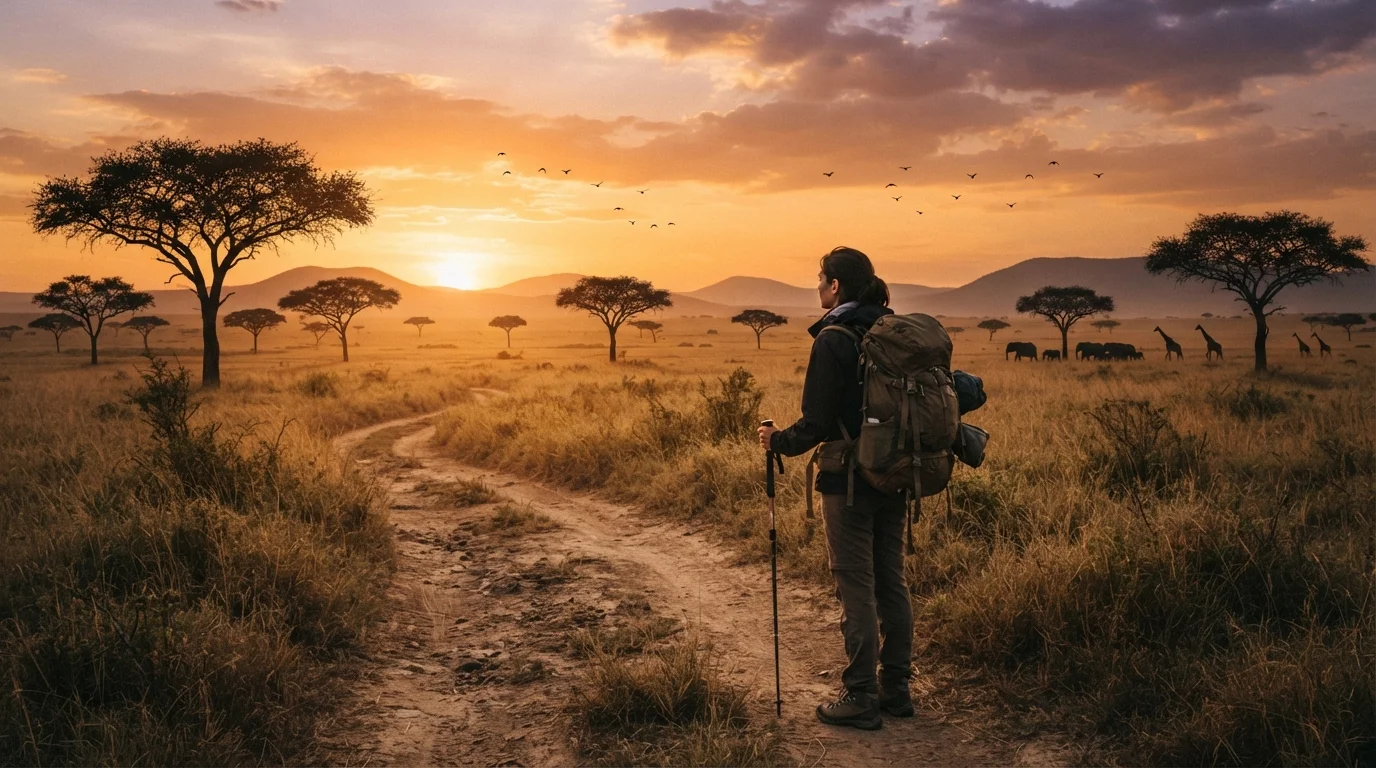
Why These Myths Persist - and Why They Matter
Search "solo travel East Africa" online and you'll surface a tangle of forum posts oscillating between uncritical enthusiasm and alarming warnings. Neither extreme is particularly useful for a professional with two weeks of PTO trying to make a sound decision.
The myths that circulate about East Africa - covering safety, cost, logistics, and solo suitability - are sticky precisely because they contain partial truths. A country with genuine security challenges in certain border zones gets painted as entirely off-limits. Safari costs that are real at the luxury end get applied across the board. The result: capable, curious travelers rule out a region based on incomplete information.
This piece works through the most common misconceptions with evidence and practical framing. For a broader foundation on solo trip logistics, see our solo travel planning guide.
Myth
East Africa is too dangerous for solo travelers. The whole region is high-risk.
Fact
Risk in East Africa is highly localized. Several countries and tourist corridors have strong safety records for international visitors.
"East Africa" spans more than a dozen countries with dramatically different security profiles. Kenya's national parks, Rwanda's capital Kigali, and Tanzania's northern safari circuit have hosted millions of international visitors with well-documented safety records. Lumping the entire region under a single danger label reflects map-level thinking, not ground-level reality.
That said, genuine risks exist in specific areas - certain border regions, parts of Ethiopia, and areas adjacent to active conflicts. The practical approach is simple: check your government's official travel advisory for each country and specific region you plan to visit, not a generalized forum post. Differentiate between the country overall and the specific area you'll be in.
Myth
Solo travelers can't do a safari - it requires a private tour or group package.
Fact
Many operators offer join-in group safaris that allow solo travelers to book individual spots at shared rates.
The private vehicle safari model exists and is expensive - but it's not the only model. Overland group operators and lodge-based shared safari departures allow solo travelers to join scheduled trips, splitting vehicle and guide costs across multiple participants. This structure has existed for decades and is a standard way budget-conscious travelers access game parks in Kenya and Tanzania.
The trade-off is scheduling flexibility: you're working around departure dates rather than setting your own itinerary. For travelers willing to plan ahead, this is a straightforward constraint to manage. It's also worth noting that many lodges in national parks offer standard rates regardless of group size - the "single supplement" issue that inflates costs in some travel contexts is less universal here than travelers assume. See the broader budget travel myths overview for context on how these cost assumptions form.
Myth
East Africa is only for wealthy travelers - it's prohibitively expensive.
Fact
Costs span a wide range. Safari lodges are expensive; budget camping, shared transport, and city stays are not.
The high-end safari lodge market sets prices that are genuinely steep - often several hundred dollars per person per night. But this represents one end of a wide spectrum. Budget camping inside national parks, guesthouses in Nairobi or Arusha, and shared minibus transport (matatus) exist at price points comparable to other developing-world destinations.
The honest version: a quality wildlife experience in a major game reserve will cost more than equivalent days in Southeast Asia. But a two-week trip that includes a few safari days, city time, and budget accommodation is achievable without an extraordinary budget. The key is separating the "once-in-a-trip" splurge items from the everyday costs, which are low.
Myth
Solo female travelers are not safe in East Africa.
Fact
Women travel solo throughout East Africa regularly. Preparation and cultural awareness are the real differentiators.
Solo female travel in East Africa is common and documented extensively in travel communities. Countries like Rwanda and Tanzania are frequently cited by female travelers as feeling relatively safe and respectful in tourist areas. This doesn't mean risks are zero - street harassment exists in some cities, and cultural norms around dress and behavior vary by location.
The practical approach mirrors solo female travel anywhere: research the specific city or region, understand local dress norms, use vetted accommodation, avoid poorly lit areas at night, and connect with local knowledge through guesthouses or tour operators. Treating East Africa as categorically unsafe for women doesn't hold up against the volume of documented solo female travel experience in the region.
Myth
Getting visas and entry sorted for East Africa is a bureaucratic nightmare.
Fact
Several East African nations offer e-visas or visa-on-arrival, and the East Africa Tourist Visa covers three countries with one application.
The East Africa Tourist Visa - covering Kenya, Uganda, and Rwanda - allows a single application for multi-country travel, which simplifies logistics considerably for travelers planning a regional trip. Tanzania operates a separate visa process. Most major East African tourist destinations offer e-visa systems that allow applications before departure.
Requirements do change, and processing times and fees vary. The actionable step is straightforward: check the official embassy or immigration authority website for each country on your itinerary several months before travel. Don't rely on travel blogs for current visa requirements - verify directly with official sources.
Planning Your East Africa Trip Without the Noise
Once the myths are cleared away, what remains is a logistics problem - and a solvable one. Countries like Kenya, Tanzania, Rwanda, and Uganda have developed tourism infrastructure specifically because international visitors have been arriving for decades. Reputable local operators, organized overland routes, and shared group safari models exist precisely to serve travelers who aren't arriving with a private guide and an open budget.
Budget realities still apply: a safari is not a cheap day trip, and your total costs will include items many travelers underestimate. Our piece on overlooked travel expenses covers the line items - visa fees, internal transfers, park entry fees - that quietly inflate East Africa trip budgets. For a sharper view of what solo travel costs relative to group options, the solo travel cost breakdown is worth reading before you book.
1.5M+
International arrivals to Kenya annually
Kenya Tourism Board figures from recent years show consistent international visitor volumes, reflecting established tourist infrastructure.
Top 10
Kigali ranked among Africa's safest cities
Rwanda's capital Kigali has repeatedly ranked among the safest and cleanest cities on the African continent in regional surveys.
East Africa rewards travelers who do the specific research - checking current government travel advisories, verifying entry requirements directly with embassies, and reading recent trip reports from travelers with similar profiles and risk tolerances. The region doesn't fit a single verdict. Treat it like the diverse, multi-country destination it actually is.
Always Check Official Travel Advisories
Conditions in specific countries and border regions can change quickly. Before booking any East Africa trip, check your government's current travel advisory for each country on your itinerary - not just the region broadly. The U.S. State Department, UK Foreign Office, and equivalent agencies publish country-specific advisories that distinguish between safe tourist areas and higher-risk zones.
This article is for general informational purposes only. Entry requirements, visa rules, and safety conditions change. Always verify current travel advisories with your government's official travel authority and confirm visa requirements with the relevant embassies before booking.