Why Currency Fees Add Up Faster Than You Expect
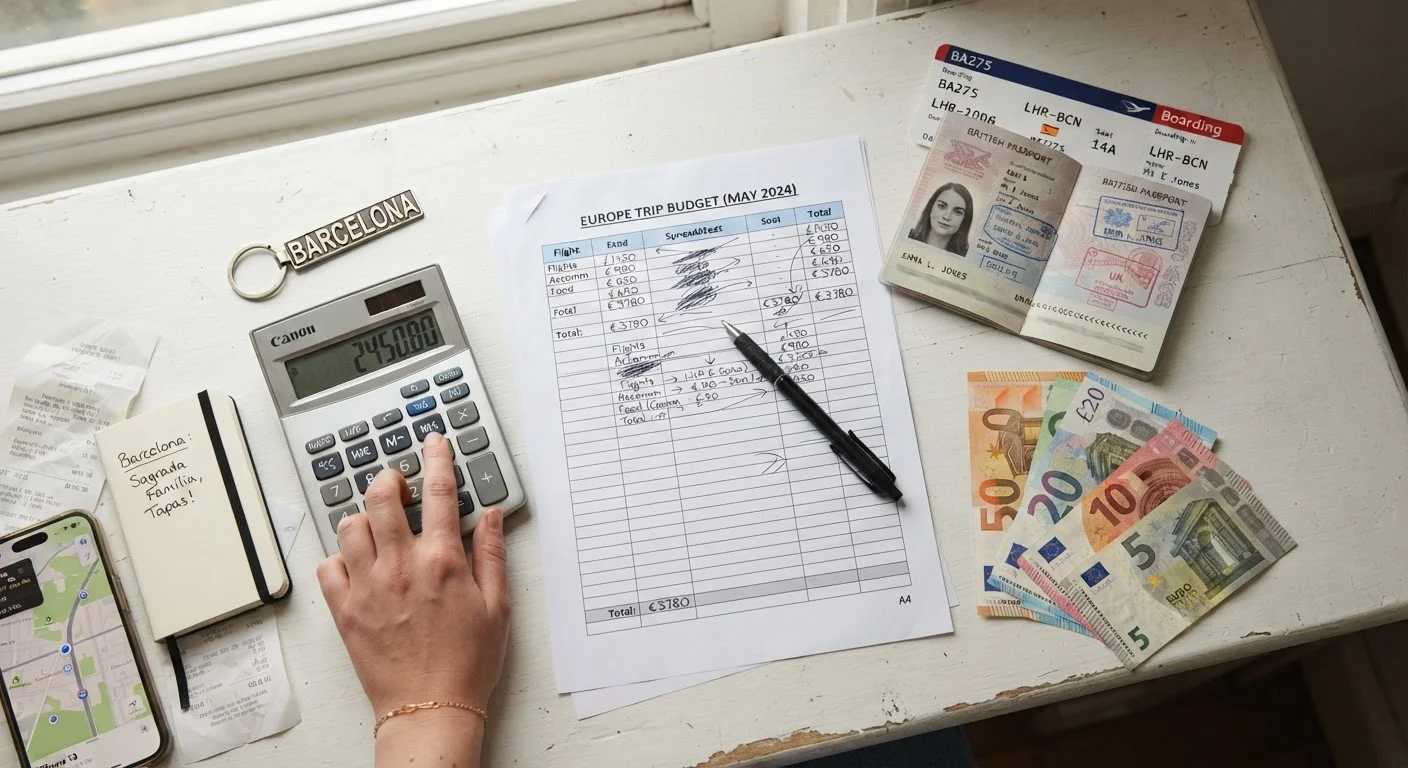
Foreign exchange costs aren't one big charge - they're a dozen small cuts that bleed your travel fund quietly. Between transaction fees, unfavorable exchange rates, ATM surcharges, and conversion markups, it's common to lose 5-8% of every dollar you convert if you're not paying attention. On a $3,000 trip, that's up to $240 gone before you've spent a cent on experiences.
The mechanics matter here. Every time you pay in a foreign currency, two things happen: your bank or card network applies an exchange rate (which may or may not reflect the real market rate), and a fee layer - sometimes several - gets added on top. Understanding which layer costs you the most is how you start cutting it. See our guide to hidden travel costs for a broader picture of what most travelers miss before departure.
5-8%
Typical total cost of uninformed currency conversion
Combining unfavorable exchange rates, ATM fees, and foreign transaction fees can cost travelers 5-8% of every dollar converted, according to general industry estimates from consumer finance analysts.
3-7%
Extra cost added by dynamic currency conversion
Consumer finance research and banking industry analyses consistently show that dynamic currency conversion markups typically fall in the 3-7% range above prevailing network exchange rates.
The Worst Ways to Exchange Currency (And Why People Still Use Them)
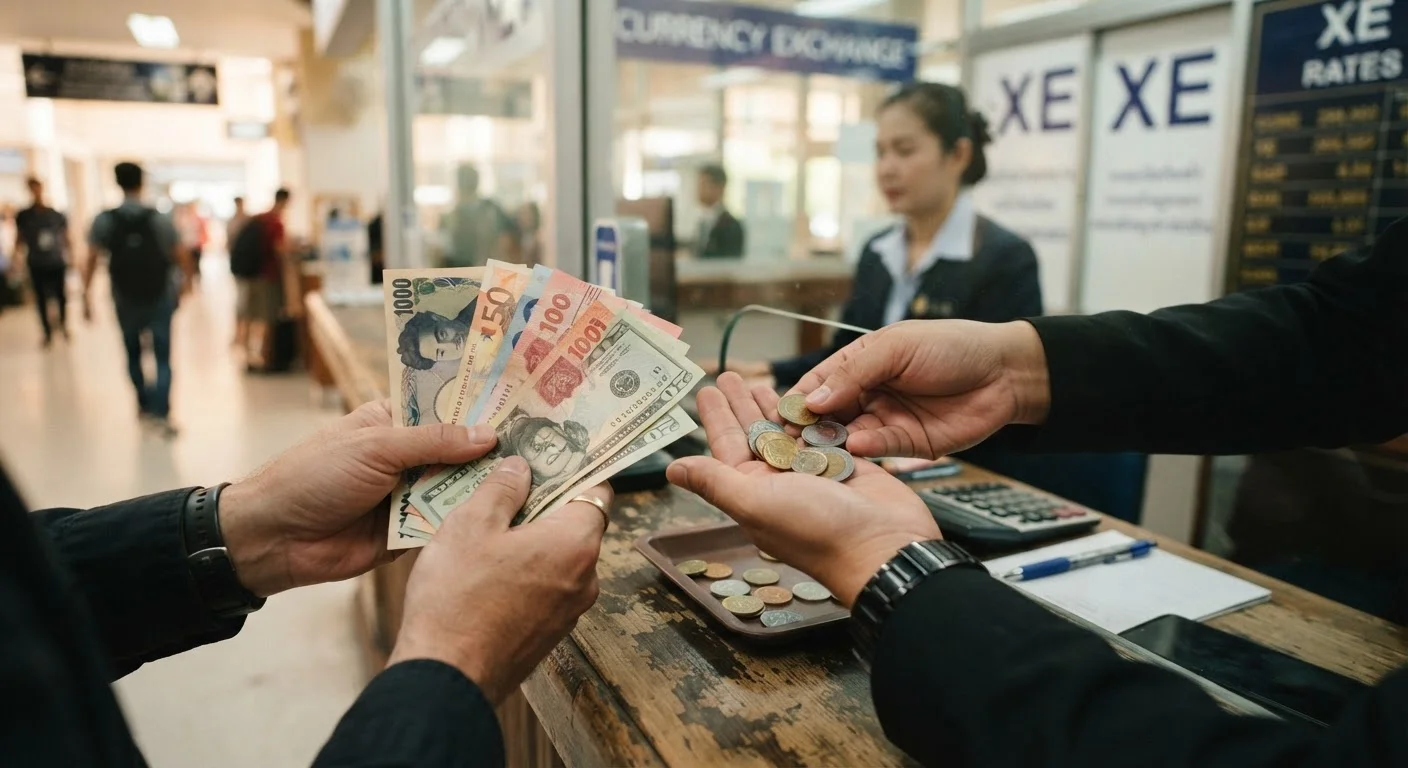
Airport kiosks and hotel exchange desks are engineered for convenience, not value. Their margins are wide - sometimes 10-15% above the interbank rate - because they know you're time-pressed and have few alternatives. The same applies to currency exchange shops in tourist-heavy neighborhoods. The large "0% commission" signs are marketing; the markup is baked into the rate itself.
Ordering currency from your home bank before departure is slightly better, but still rarely competitive. You'll get a decent rate compared to an airport kiosk, but you're still paying for the bank's margin and delivery logistics. Reserve this option only for currencies that are difficult to obtain via ATM at your destination.
When Local Cash Is Hard to Find
For destinations where ATM coverage is sparse or unreliable - some parts of Sub-Saharan Africa, rural Central Asia, or smaller island nations - ordering a modest amount of local currency from your bank's foreign currency service before departure is a reasonable backup. The rate won't be ideal, but having any cash on arrival is better than scrambling. Treat it as an emergency buffer, not your primary strategy.
Best Practices for Handling Foreign Currency
The following approaches, applied together, will substantially reduce what you lose to exchange fees on any international trip.
Use ATMs in your destination's local bank network for cash withdrawals.
ATMs connected to major local bank networks typically apply rates close to the interbank rate - the closest thing to a "real" exchange rate. This beats every other walk-up option. The key is selecting ATMs affiliated with established banks rather than standalone machines in tourist zones, which often charge higher fees and apply worse rates.
Open a checking account or debit card that reimburses ATM fees and waives foreign transaction fees before you travel.
Many traditional checking accounts charge both a foreign transaction fee (typically 1-3%) and pass along ATM operator fees. Accounts designed for travelers often reimburse third-party ATM charges and charge zero foreign transaction fees, eliminating two cost layers at once.
Carry a credit card with no foreign transaction fees for larger purchases.
Credit card networks (Visa, Mastercard) apply exchange rates very close to the interbank rate, making them an efficient way to pay for hotels, restaurants, and larger purchases abroad - provided the card doesn't add a foreign transaction surcharge on top. A card with no foreign transaction fee captures the network rate without the added cost layer.
Notify your bank and card issuers before departing.
Banks frequently flag international transactions as potentially fraudulent and freeze accounts mid-trip. A quick notification - done online or by phone - prevents this and ensures your access to funds isn't interrupted at the worst possible moment.
Withdraw larger, less frequent amounts rather than many small withdrawals.
Most ATM fees are flat charges per transaction, not percentage-based. Withdrawing a larger sum once costs the same flat fee as withdrawing a small sum multiple times - so consolidating withdrawals reduces your total fee burden.
Research ATM availability and any local cash norms at your destination before you travel.
Some destinations are heavily cash-dependent (rural areas of Japan, parts of Southeast Asia, smaller European towns), while others are nearly card-only. Knowing this in advance lets you plan your withdrawal strategy rather than scrambling at arrival.
Dynamic Currency Conversion: Always Say No
When you pay by card abroad, merchants and ATMs sometimes offer to charge you in your home currency instead of the local one - this is called dynamic currency conversion (DCC). It sounds helpful. It isn't. The entity processing the conversion sets the rate, and it's almost always worse than what your bank would charge. Research consistently shows DCC adds 3-7% to transactions.
The prompt may appear on a payment terminal or ATM screen and can be worded in ways designed to make the home-currency option seem like the safer choice. Always select the local currency option. If an ATM forces DCC without asking, cancel and use a different machine. This single habit can save meaningful money on longer trips.
DCC Rules Vary by Terminal and Country
Not all payment terminals offer dynamic currency conversion, and in some countries the practice is less common. In others - particularly tourist-heavy destinations in Europe - it's extremely widespread at hotel checkouts and popular restaurants. Getting in the habit of checking the receipt before you tap or insert your card takes seconds and can prevent an automatic DCC charge from going unnoticed.
For a deeper understanding of how your card products interact with exchange rates, see our explainer on travel credit cards. And if you want to stress-test your full trip budget before you leave, the pre-trip financial checklist is a practical starting point.
Quick Moves You Can Make Before Your Next Trip
Most of the heavy lifting on currency fees happens before you land, not after. The right card, a bit of research, and one call to your bank are all it takes to put yourself in a much stronger position.
Currency exchange fees are the same category of quiet drain as subscription creep and convenience charges back home - easily overlooked individually, significant in aggregate. Our piece on hidden costs that drain savings covers how the same principles apply to everyday financial life.