Why Preparation Is Half the Work
Most training failures happen before a single cue is given. The environment isn't ready, the pet is overstimulated, the treats are low-value, or the owner is rushed. Science-based training - grounded in operant conditioning and classical learning theory - works best when the conditions for learning are deliberately set up. Think of it as priming a system: when the variables are controlled, behavior change happens faster and sticks longer.
This checklist applies whether you're working with a dog, cat, rabbit, or parrot. The core principles of positive reinforcement training are species-flexible; the preparation steps are nearly universal. For a deeper look at how your home environment shapes your pet's behavior day-to-day, see Building a Behaviour-Aware Environment for Your Pet.
Environment
Timing and State
Rewards and Reinforcers
Owner Mindset and Goals
Tools You'll Want Ready
Having the right tools within arm's reach prevents mid-session interruptions that break your pet's focus and yours. You don't need an elaborate kit - but a few essentials make a measurable difference.
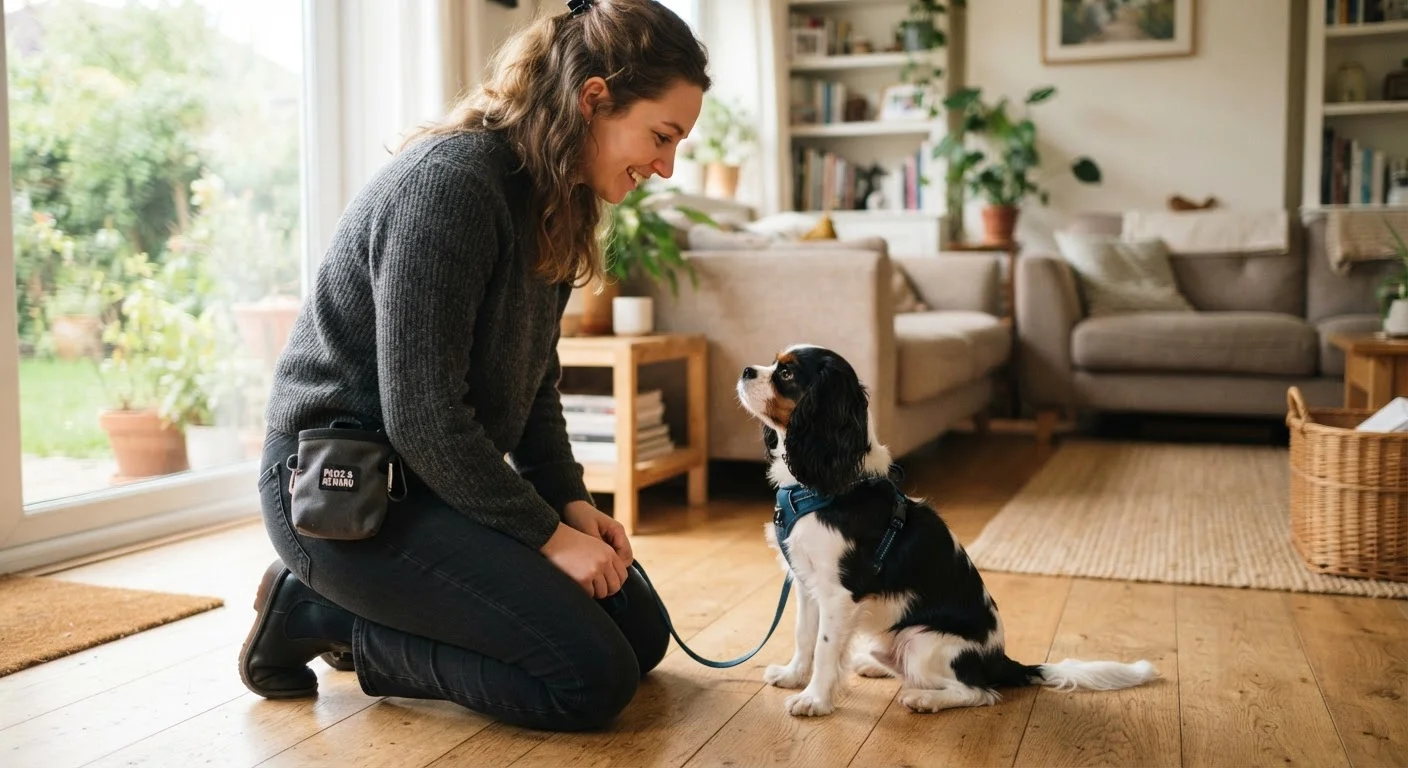
Treat pouch or small bowl
Keeps high-value food rewards accessible hands-free so you can mark and deliver reinforcement within 1-2 seconds.
Clicker or marker word
Provides a precise, consistent event marker that bridges the gap between the desired behavior and the reward.
Long line or leash (dogs)
Maintains safety and limits rehearsal of unwanted behaviors in early training stages without using aversive restraint.
Target stick
A low-pressure luring tool that guides movement and teaches position cues across many species including cats, dogs, and birds.
Session log (notebook or phone app)
Tracks what was practiced, success rate, and observations to help you build on progress across sessions.
If your pet has a history of fear or anxiety around training contexts, review your tool choices carefully. High-pressure tools or equipment that restricts movement can undermine trust. See Training a Pet with Fear or Anxiety for humane, evidence-based techniques tailored to more sensitive animals.
Setting the Right Conditions
Even the best-designed session will underperform if the environment is working against you. Noise, movement, other animals, and temperature all affect a pet's ability to attend and process information. Before each session, do a quick environmental scan.
High Arousal Undermines Learning
A highly aroused pet - one that is barking, lunging, vocalizing excessively, or unable to orient to you - is above their optimal learning threshold. Pushing through this state rarely produces durable behavior change. Give the animal time to settle, reduce environmental triggers, and begin with very easy, familiar behaviors to bring arousal down before introducing anything new.
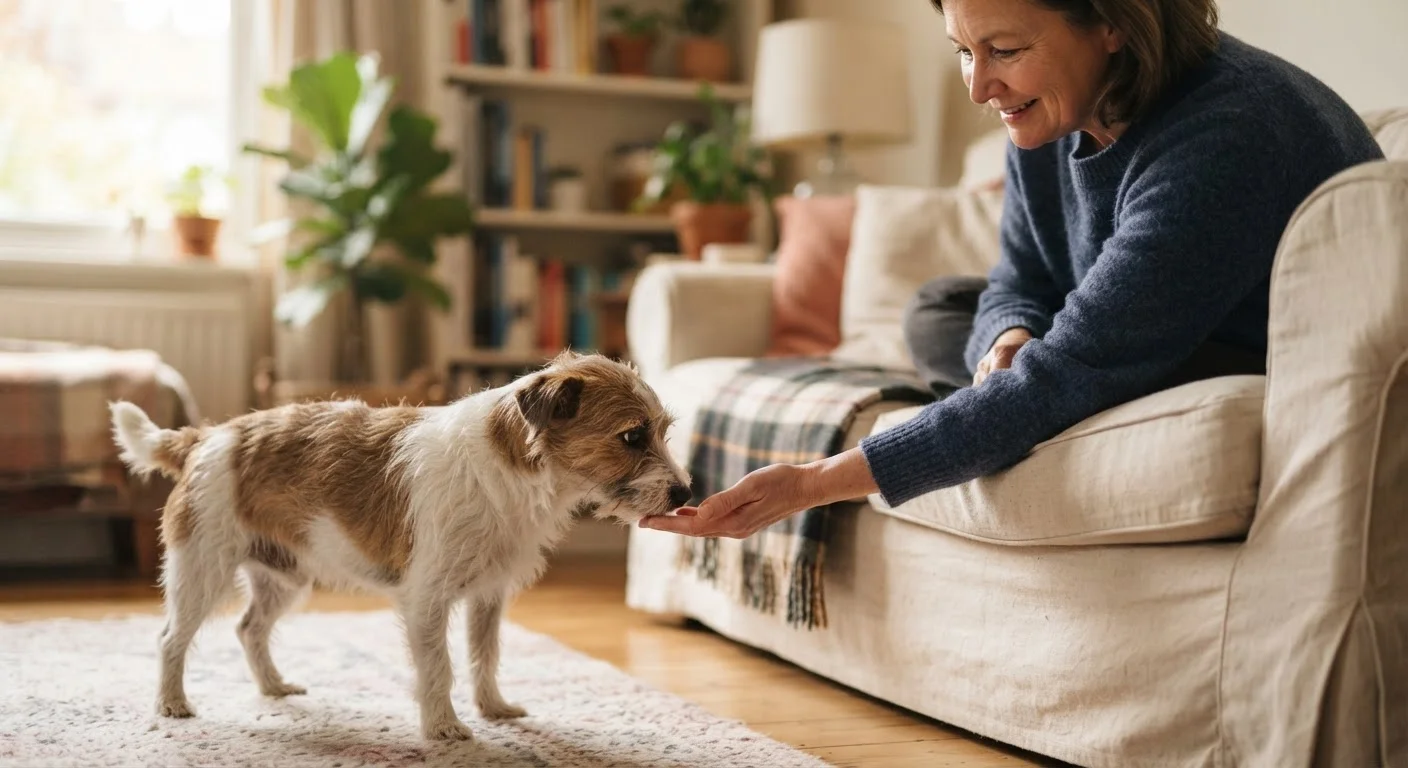
Timing relative to meals matters too. Most pets learn best when moderately hungry - treats hold higher value - but not so hungry that arousal is elevated and focus is difficult. A session roughly an hour before a regular meal is a reliable starting point for many animals.
Your own state is part of the environment. If you're stressed, distracted, or in a hurry, your pet will read that. Animals are highly attuned to human body language, vocal tone, and micro-expressions. Arriving mentally ready is not a soft suggestion - it's a behavioral variable. For more on how structured preparation primes learning, the same logic applies in human skill-building: pre-learning preparation consistently improves outcomes by reducing cognitive friction before the session begins.
Never Punish During a Training Session
Aversive consequences - physical corrections, yelling, alpha rolls, or spray bottles - introduce fear and conflict into the learning context. Research in animal learning consistently shows that punishment-based methods increase stress, suppress behavior broadly (including desirable behavior), and damage the human-animal bond. If a behavior isn't happening, the answer is always to adjust your approach, reinforcer value, or environment - not to escalate pressure.