What an Emergency Fund Actually Does
Think of an emergency fund as a financial shock absorber. When something unexpected hits - your transmission fails, your hours get cut, or you face a surprise medical co-pay - this dedicated savings pool absorbs the impact instead of your credit card or rent money. Without one, even a modest setback can trigger a cycle of high-interest debt that takes months or years to escape.
The key word is unexpected. An emergency fund is not a general savings account, a vacation fund, or a buffer for overspending. It exists for costs that are unplanned, necessary, and time-sensitive. This distinction matters because the moment it blurs, the fund gets depleted and loses its protective function.
It's also worth separating emergency funds from sinking funds, which are savings you deliberately build toward a known future cost (like a car registration or holiday spending). These two tools serve very different roles. See our comparison of sinking funds vs. emergency funds to understand how to use each correctly.
~37%
Americans who couldn't cover a $400 emergency with cash
According to the Federal Reserve's Report on the Economic Well-Being of U.S. Households, a significant share of adults would need to borrow or sell something to cover an unexpected $400 expense.
3-6 months
Recommended essential expenses to keep in reserve
This benchmark is widely cited by the Consumer Financial Protection Bureau (CFPB) and personal finance educators as a baseline for a functional emergency fund.
How Much Is Enough?
The three-to-six-month rule is the most widely cited benchmark, but it isn't one-size-fits-all. Three months of essential expenses may be sufficient if you have a stable salaried job, no dependents, and employer-sponsored disability coverage. Six months or more makes sense if you're self-employed, work on contract, have children, or work in a sector with frequent layoffs.
Essential expenses - not your full monthly spending - are what you're covering. That means rent or mortgage, utilities, groceries, insurance premiums, transportation, and minimum debt payments. Streaming subscriptions and dining out don't count for this calculation.
If the full target feels impossibly far away right now, start with a mini-goal: $500 to $1,000. That amount alone covers most common single emergencies and dramatically reduces the pressure to reach for credit. Our article on how much your emergency fund should hold unpacks this decision in detail.
Start With a $1,000 Mini-Goal
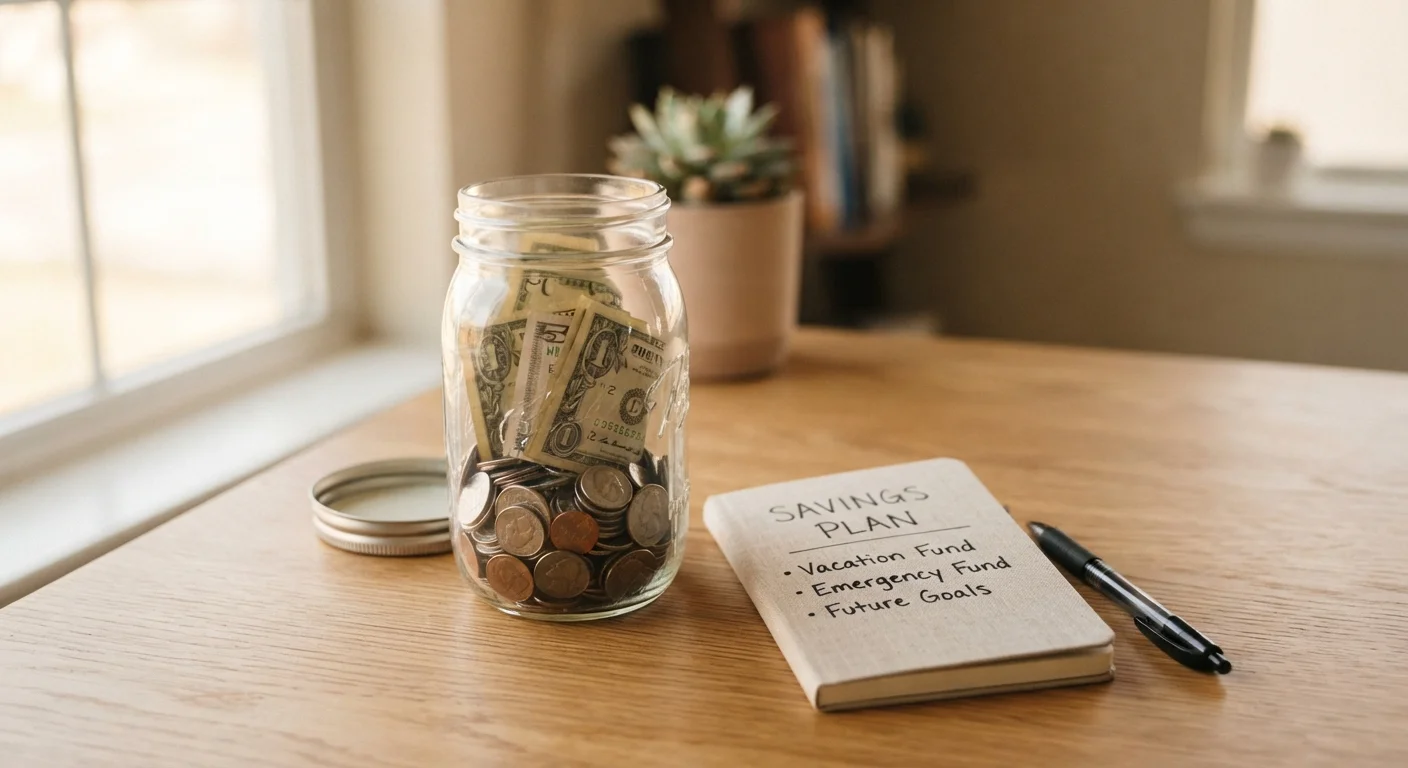
If three to six months of expenses feels overwhelming, begin with a $500-$1,000 target. This smaller goal is achievable within a few months for most people and provides a meaningful safety net against the most common single-event emergencies. Once you hit it, extend your target incrementally - progress builds momentum.
Where to Keep It and How to Start
Your emergency fund needs two qualities above all others: liquidity (you can access it within a day or two without penalties) and separation (it isn't sitting in your everyday checking account where it blends with spending money). A high-yield savings account or money market account at an FDIC-insured institution satisfies both conditions. For a deeper look at the trade-offs between those two account types, see our guide on where your emergency fund should live.
Avoid keeping emergency savings in investment accounts or retirement vehicles like a 401(k) or IRA. Market fluctuations could reduce the balance precisely when you need it most, and early withdrawals from retirement accounts typically trigger taxes and penalties.
Starting the fund is often the hardest part. Automating a fixed transfer - even $25 per paycheck - to a dedicated account removes friction and builds the habit. If you're working with a tight budget, our guide to building your first emergency fund on a tight budget walks through practical strategies step by step.
Your Emergency Fund in the Bigger Financial Picture
An emergency fund isn't a destination - it's infrastructure. Once yours is funded, it quietly works in the background, giving you the stability to pursue other financial goals without being derailed by life's inevitable surprises.
Many financial educators place emergency savings before aggressive debt payoff beyond minimums and certainly before non-retirement investing. The logic is simple: a market downturn, a layoff, or an unexpected bill shouldn't force you to liquidate investments at a loss or take on new debt. The fund is what makes other financial progress stick.
Your savings target should also evolve. A fund that was adequate when you were single and renting may be insufficient after buying a home or having children. Revisit your balance when your life changes significantly. Our checklist for when your emergency fund needs a rethink can help you assess whether your current cushion still fits. Once your safety net is solid, explore investing fundamentals to start growing long-term wealth with confidence.
This article is for general informational and educational purposes only and does not constitute personalized financial advice. Consult a qualified financial professional for guidance specific to your situation.