
Two Different Questions About Risk
Most investing conversations collapse "risk" into a single concept, but there are actually two distinct questions worth asking before you put money to work:
- How much volatility am I emotionally comfortable with?
- How much loss can my financial situation actually absorb?
The first is risk tolerance. The second is risk capacity. Conflating them is one of the most common errors young investors make - and it often surfaces at the worst possible time: during a market downturn.
Risk tolerance is subjective and behavioral. It reflects your psychological response to watching an account balance drop - your sleep quality, your impulse to sell, your confidence in staying the course. It can be influenced by personality, past experience with money, and even recent market news.
Risk capacity, by contrast, is objective and structural. It is determined by concrete financial factors: the stability of your income, how much liquid savings you have, outstanding debts, your investment time horizon, and any near-term financial obligations. These factors define a real ceiling on how much risk is appropriate, regardless of how you feel about it.
| Criterion | Risk Tolerance | Risk Capacity |
|---|---|---|
| Nature | Psychological / subjective | Financial / objective |
| What it measures | Emotional comfort with volatility | Ability to absorb financial loss |
| Key inputs | Personality, past experience, sentiment | Income, savings, debts, time horizon |
| Can it change? | Yes - with experience and education | Yes - with changes in financial situation |
| Role in planning | Sets preference and behavioral guardrails | Sets the objective ceiling on risk |
| Common mistake | Overestimating tolerance in bull markets | Ignoring it when tolerance feels high |
Why the Gap Between Them Is Dangerous
Problems arise when tolerance and capacity diverge - and they frequently do.
Consider a common scenario: a 27-year-old with a high risk tolerance who feels energized by market volatility, but who also carries significant student debt, has a three-month emergency fund (below the commonly recommended three-to-six months), and expects a major expense within 18 months. Their tolerance may signal "aggressive growth portfolio," but their capacity says otherwise. If the market drops 25% and they need cash, they may be forced to sell at a loss - exactly the outcome a sound strategy is supposed to prevent.
The reverse is also a concern. Someone with genuinely high risk capacity - stable income, no near-term cash needs, a 25-year horizon - but low risk tolerance may under-invest out of anxiety, potentially leaving meaningful long-term growth on the table. Neither misalignment is harmless.
~50%
Investors who sold equities during 2020 market drop
Research from Dalbar and behavioral finance studies consistently shows a significant share of retail investors make emotionally driven sell decisions during sharp downturns, often crystallizing losses.
3-6 months
Emergency fund threshold affecting risk capacity
The Consumer Financial Protection Bureau (CFPB) and most financial planning guidance identify three to six months of essential expenses in liquid savings as a baseline for financial stability before taking on investment risk.
This is why many financial professionals treat capacity as the binding constraint. Tolerance can shift with education, experience, and coaching. Capacity is governed by math. As one framework used by financial planners puts it: tolerance sets your preference, capacity sets your limit.
For a deeper look at how asset mix should reflect both dimensions over time, see our framework for thinking about asset allocation across a working life.
How to Assess Both - Practically
Assessing risk tolerance typically involves structured questionnaires - most brokerage platforms offer one at account opening. These ask scenario-based questions: How would you react if your portfolio dropped 20% in a year? These tools are imperfect but useful as a starting point. Treat them as directional, not definitive.
Assessing risk capacity requires a financial audit. Work through these factors:
- Income stability: Is your income salaried and predictable, or variable and project-based?
- Emergency fund: Do you have three to six months of essential expenses in liquid savings?
- Debt load: High-interest debt reduces capacity significantly - those obligations are a guaranteed "return" of a different kind when paid down.
- Time horizon: Money needed within five years generally cannot sustain the volatility of equity-heavy portfolios.
- Near-term obligations: A planned home purchase, career transition, or family expense changes your capacity even if it doesn't change your tolerance.
Getting your spending structure right is also foundational here - our explainer on the difference between a budget and a spending plan outlines how to frame your cash flow picture more accurately.
Risk Assessments Aren't One-and-Done
Many investors complete a risk questionnaire once - at account opening - and never revisit it. Both tolerance and capacity evolve with life circumstances. A promotion, a new dependent, a shift to freelance work, or paying off a major debt all change the picture. Building a habit of reviewing both at least annually, or after any major financial event, keeps your strategy grounded in your actual situation rather than a snapshot from years ago.
Once you have both assessments, the more conservative result should guide your strategy. If your capacity is lower than your tolerance, your portfolio should reflect capacity - at least until your financial foundation strengthens. And both should be revisited after any major life change: a new job, marriage, a child, or a significant shift in income.
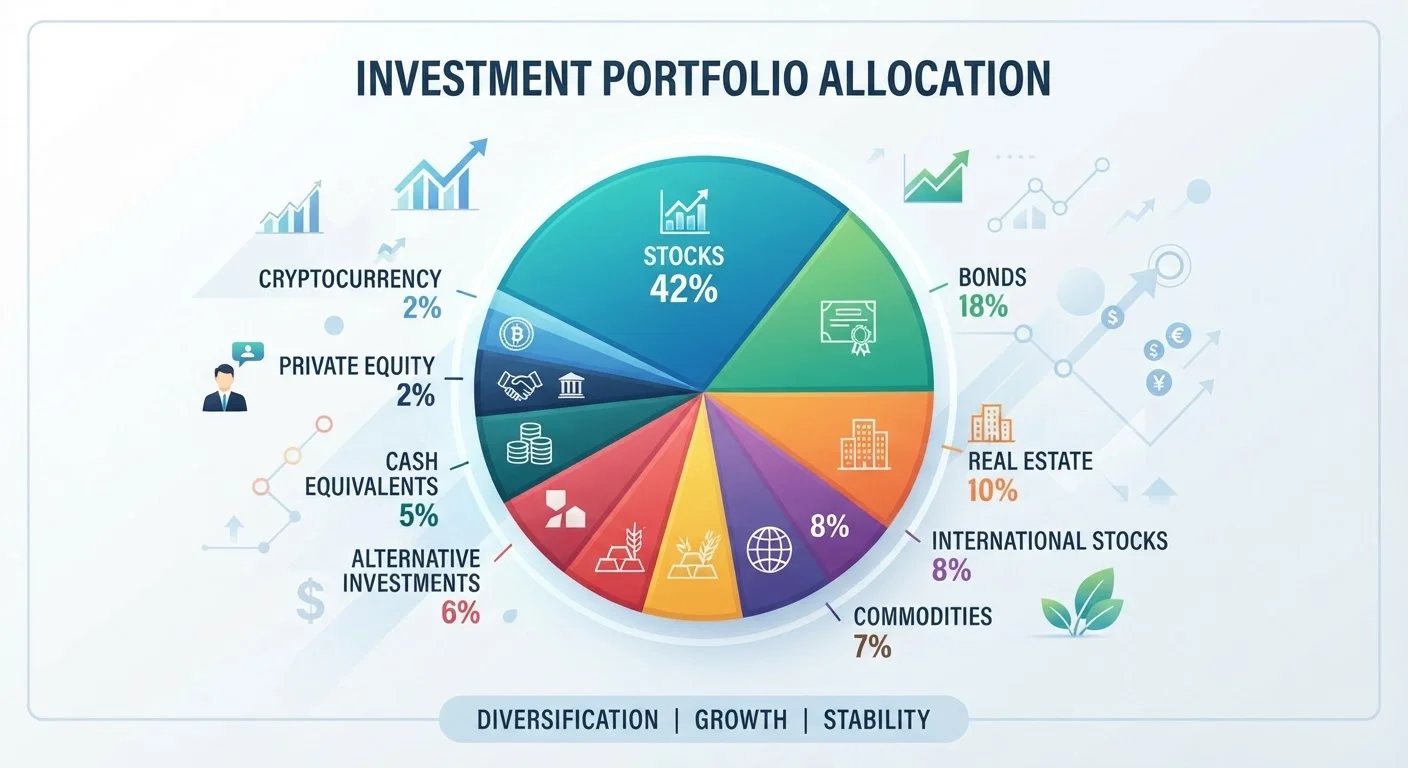
Pairing an honest risk assessment with true diversification is what turns a theoretical framework into a portfolio built to last.
This article is for general informational and educational purposes only and does not constitute personalized financial, investment, or legal advice. Please consult a qualified, licensed financial professional before making decisions about your own financial circumstances.