Why Small Drips Cause Outsized Damage
It's easy to underestimate a slow leak. A slight weep at a supply line connection, a hairline crack in a drain fitting, or a faucet that drips once a second doesn't look urgent. But water is persistent - it follows gravity, wicks into porous materials, and accumulates in hidden spaces where airflow is minimal and evaporation is slow.
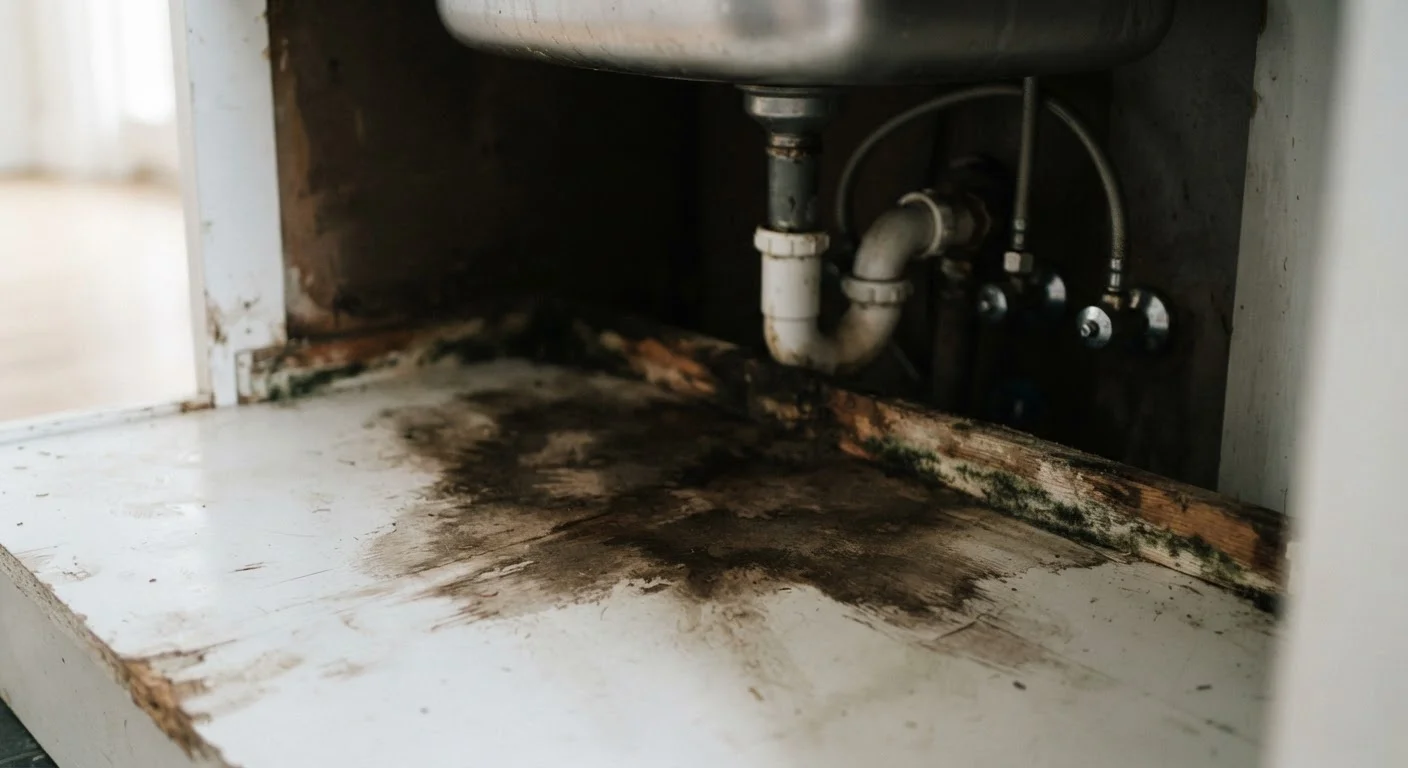
The real danger isn't the water you see; it's the water that soaks silently into cabinet floors, subfloor sheathing, and wall cavities. Particleboard - the material used in most prefabricated kitchen and bathroom cabinets - swells and crumbles after sustained moisture exposure. Once that structural layer is compromised, the cabinet effectively has no floor, and adjacent walls begin bearing loads they weren't designed to carry.
This is why slow leaks frequently produce repair bills that far exceed what a burst pipe might cause. A burst pipe is detected immediately. A slow leak behind a bathroom vanity can go unnoticed for six months, quietly rotting the subfloor underneath.
Slow Leaks vs. Sudden Water Damage
Many homeowners insurance policies treat slow leaks differently from sudden water damage events. Damage resulting from a long-term, gradual leak is frequently classified as a maintenance issue and excluded from coverage, whereas a sudden pipe burst may be covered. This distinction makes early detection not just a structural concern but a financial one. Review your policy language and speak with your insurer if you're unsure how leak-related claims are handled under your specific plan.
The Mould Timeline You Need to Understand
Mould doesn't wait. On organic materials like drywall paper and wood framing, mould spores can germinate and form visible colonies within 24 to 48 hours of sustained moisture exposure. Once established, mould spreads through porous materials even after the original leak is fixed - because the spores are already embedded in the substrate.
The practical implication: a leak that's been dripping for even a week beneath your bathroom sink may require more than just tightening a fitting. The cabinet base and the drywall behind it may already need remediation. This is why the repair scope for a slow leak is often unpredictable until you actually pull things apart.
Addressing mould in a contained area - like the interior of a single cabinet - is generally manageable as a careful DIY project using appropriate respiratory protection and antimicrobial treatment. But mould that has spread inside wall cavities or beneath flooring typically warrants a professional assessment. The common DIY myths around home repairs often lead homeowners to underestimate how far mould can spread before it becomes visible.
Act Within the First 48 Hours
If you discover any moisture intrusion, prioritise drying the area within 48 hours to stay ahead of mould establishment. Use a portable fan or dehumidifier directed at the affected area and remove any saturated materials - such as cabinet shelf liners or cardboard stored under the sink - immediately. Speed matters more than a perfect repair plan at this stage.
How to Detect a Slow Leak Before It Escalates
Most slow leaks are detectable long before they cause severe damage - the problem is that homeowners rarely look. Building a simple inspection habit takes ten minutes per month and pays dividends far beyond plumbing.
- Open cabinet doors under sinks and physically feel the cabinet floor for soft spots, swelling, or any discolouration. A flashlight helps enormously.
- Check your water meter by shutting off every faucet and appliance in the home and reading the meter. Wait 15 minutes without using any water and read it again. Movement indicates an active leak somewhere in the system.
- Look at ceilings below bathrooms for faint yellowish rings - these are dried water stains that indicate past or ongoing leaks from the floor above.
- Feel along baseboards near bathrooms and kitchens for soft or spongy drywall, which signals moisture intrusion at the wall base.
Early detection is the single most cost-effective action a homeowner can take. The planning framework for prioritising home repairs places leak prevention and detection near the top of any maintenance hierarchy - and for good reason. Just as hidden costs quietly erode a financial safety net, slow leaks quietly erode the structural integrity of your home before any alarm sounds.
3,000+
Gallons wasted annually by a single dripping faucet
According to the U.S. Environmental Protection Agency, a faucet dripping once per second wastes more than 3,000 gallons of water per year.
24-48 hrs
Time for mould to begin growing on wet drywall
The EPA and FEMA both note that mould can begin establishing on wet porous building materials within 24 to 48 hours of moisture exposure.
10%
US homes with leaks wasting 90+ gallons daily
The EPA's WaterSense program estimates that roughly 10 percent of US homes have leaks that waste 90 gallons or more per day.
What to Do When You Find One
If you discover a slow leak, the first step is to stop the water - either by shutting off the supply valve under the fixture or the main water shutoff for the home. Then assess the damage honestly before deciding on a repair path.
Accessible leak points - like a loose compression fitting under a bathroom sink or a worn faucet washer - are reasonable DIY repairs for someone comfortable with basic tools. Replace the fitting or washer, dry the area thoroughly with a fan, and monitor it for several days. If you find rot or mould on the cabinet floor, cut out and replace the damaged section rather than painting over it.
Leaks inside walls, beneath slab flooring, or near electrical panels are a different category entirely. These require a licensed plumber, and in many jurisdictions, work that touches supply lines inside walls may require a permit. Do not attempt to open walls near electrical wiring without first shutting off the circuit and confirming the area is safe - or better, leave that work to a qualified professional.
Whatever the scope, document the damage with photographs before any repair work begins. This record is useful if you need to file an insurance claim or get repair quotes from contractors. For a grounded view of what home repair costs actually involve, see the guide to home improvement budgeting before committing to a course of action.
This article is for general informational purposes only and does not constitute professional plumbing, construction, or safety advice. Always consult a licensed plumber or contractor for work involving structural elements, pressurised supply lines, or any hazardous conditions. Verify local permit requirements before undertaking any repair work.