
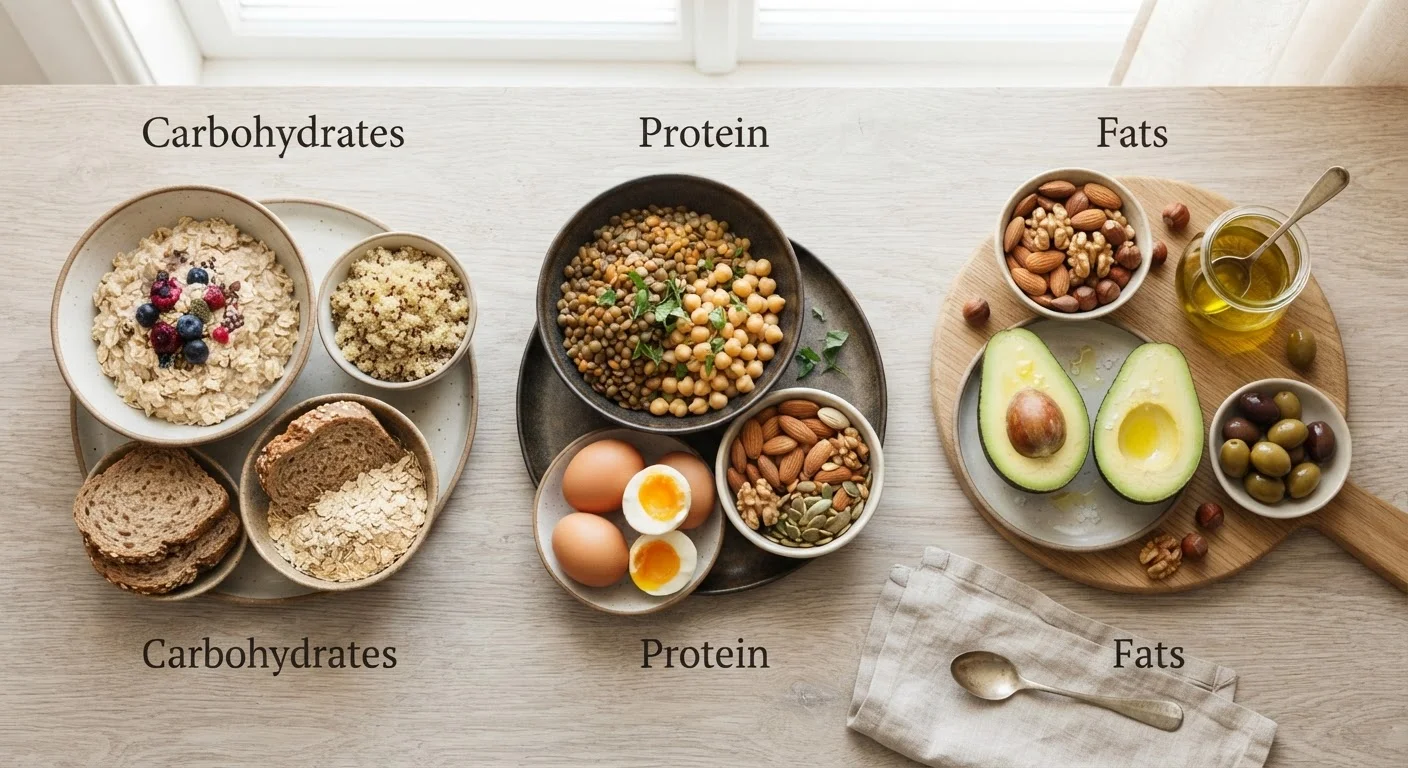
Why Macronutrients Matter
Nutrition headlines cycle through heroes and villains - fat is dangerous, then carbs are the enemy, then protein is everything. Behind the noise, the underlying science has been consistent: your body needs all three macronutrients to function well. Understanding what each one actually does cuts through the confusion and makes everyday food decisions far less stressful.
Macronutrients are not interchangeable. They fuel different systems, trigger different hormonal responses, and support different structural needs. The goal of a sound diet is not to minimize any one macro but to get meaningful amounts of each from high-quality sources.
45-65%
Recommended share of daily calories from carbohydrates
According to the Dietary Guidelines for Americans, carbohydrates should make up nearly half of total daily caloric intake for most adults.
10-35%
Recommended daily calorie range from protein
The Institute of Medicine's Acceptable Macronutrient Distribution Range for protein spans 10-35% of total calories, reflecting variation across lifestyles and health goals.
20-35%
Recommended daily calorie range from fat
The Dietary Guidelines for Americans recommend that fat comprise 20-35% of total daily calories for adults, emphasizing unsaturated fat sources.
Carbohydrates: Your Body's Default Fuel
Carbohydrates break down into glucose, which your cells - and especially your brain - use as their primary energy currency. During digestion, carbs are converted to blood glucose, prompting the pancreas to release insulin, which shuttles glucose into cells for immediate use or stores it as glycogen in the liver and muscles for later.
Not all carbohydrates behave the same way. Simple carbohydrates (sugars) digest quickly, producing a rapid rise in blood glucose. Complex carbohydrates - found in whole grains, legumes, and vegetables - digest more slowly, providing steadier energy and delivering dietary fiber, which supports gut health and satiety.
Fiber is technically a carbohydrate, but humans lack the enzymes to fully digest it. It feeds beneficial gut bacteria, slows glucose absorption, and helps regulate cholesterol levels. Cutting carbs entirely also typically means cutting fiber, which carries its own downstream effects.
Choose Carb Quality Over Quantity
Rather than counting grams, focus on the source: whole grains, legumes, fruits, and vegetables deliver fiber and micronutrients alongside their carbohydrate content. Heavily processed carbs - white bread, sugary beverages - provide energy with minimal nutritional support. Swapping even one refined-carb choice per day for a whole-food alternative is a meaningful, sustainable upgrade.
Protein: Structure, Repair, and Far More
Protein is made of amino acids - 20 in total, nine of which are considered essential because the body cannot synthesize them and must obtain them from food. These building blocks are used to construct and repair muscle tissue, produce enzymes that drive virtually every biochemical reaction, synthesize hormones like insulin and glucagon, and support immune function through antibody production.
Animal proteins (meat, fish, eggs, dairy) are considered complete because they contain all nine essential amino acids in adequate proportions. Most plant proteins are incomplete individually, but eating a variety of plant foods throughout the day reliably covers all essential amino acids without requiring careful meal-by-meal combining.
Protein also has a higher thermic effect than carbs or fat - meaning your body uses more energy to digest and process it. This contributes to the satiety associated with protein-rich meals, though it does not make protein a weight-loss solution on its own.
“Protein is the most satiating macronutrient, and there is strong evidence that higher protein intakes support muscle maintenance during weight loss - but the overall dietary pattern still matters more than any single nutrient.”
— Christopher Gardner, Professor of Medicine and nutrition researcher at Stanford University
Fat: Essential, Not Optional
Dietary fat has been unfairly stigmatized for decades. In reality, fat is indispensable: it enables absorption of fat-soluble vitamins (A, D, E, and K), forms the structural basis of every cell membrane in your body, and is a precursor to steroid hormones including estrogen, testosterone, and cortisol.
Fats are classified by their chemical structure. Unsaturated fats - found in olive oil, nuts, seeds, avocados, and fatty fish - are associated with cardiovascular and anti-inflammatory benefits in the research literature. Saturated fats, found in animal products and some tropical oils, have a more nuanced relationship with health that is still actively studied. Trans fats (industrially produced) are associated with elevated cardiovascular risk and are largely phased out of the US food supply.
Fat is also the densest energy source at roughly 9 calories per gram, which is why small amounts contribute meaningfully to caloric intake. This density is a feature, not a flaw - it explains why fat-rich foods are satiating and why essential fatty acids (omega-3 and omega-6) are so metabolically potent.
For context on how water interacts with fat digestion and overall nutrient absorption, see our guide to hydration and nutrition.
Omega-3 Fatty Acids: A Notable Subtype
Omega-3 fatty acids - found in fatty fish (salmon, sardines, mackerel), flaxseed, chia seeds, and walnuts - are a category of polyunsaturated fat that the body cannot produce in adequate amounts on its own. Research consistently associates omega-3 intake with cardiovascular and anti-inflammatory benefits. Most Americans consume more omega-6 fatty acids than omega-3s; increasing omega-3-rich foods is a practical way to shift that ratio.
Putting It All Together
No macronutrient operates in isolation. A meal combining complex carbohydrates, lean protein, and healthy fat digests more slowly, sustains energy longer, and delivers a broader spectrum of micronutrients than a meal heavily weighted toward any single macro. This is why understanding micronutrients matters alongside macros - both layers of nutrition reinforce each other.
Rather than focusing on elimination or extreme ratios, the most evidence-supported approach is to prioritize whole-food sources of each macro, maintain variety across your diet, and adjust based on your activity level and how you feel. If you have a health condition or specific performance goals, working with a registered dietitian is the most reliable path to personalized guidance.
This article is for general informational and educational purposes only and does not constitute medical or dietary advice. Consult a qualified healthcare professional or registered dietitian for guidance specific to your health needs.