
Water as a Nutritional Partner, Not an Afterthought
When most people think about eating well, they focus on macronutrients, meal timing, or food quality - all reasonable priorities. But water rarely gets the same attention, even though it's directly involved in almost every step the body takes to extract value from food.
Water makes up the bulk of saliva, which begins breaking down carbohydrates before food even reaches the stomach. It forms part of the gastric fluids that digest protein, and it carries nutrients across the intestinal wall and into the bloodstream. Think of it less as a beverage and more as the medium in which nutrition actually happens.
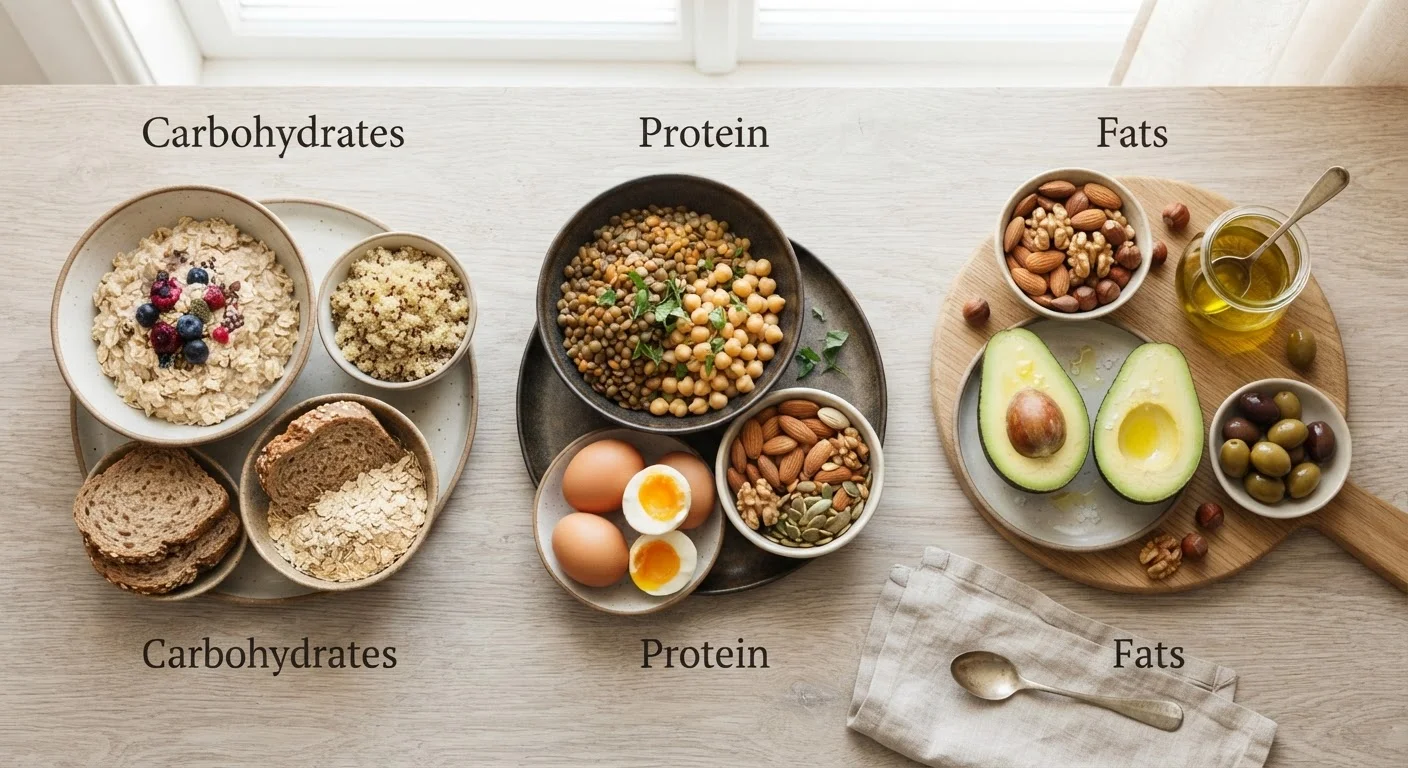
For a deeper look at how individual nutrients function once absorbed, see our guide to macronutrients.
~60%
Water content of the adult human body
The U.S. Geological Survey estimates that water makes up approximately 60% of total body weight in adults, underscoring its foundational role in all physiological processes.
20%+
Daily fluid intake from food sources
The National Academies of Sciences, Engineering, and Medicine estimates that food contributes roughly 20% or more of total daily water intake in people who eat a diet rich in fruits and vegetables.
1-2%
Body water loss linked to measurable performance decline
Research in exercise physiology has found that fluid losses as small as 1-2% of body weight can begin to impair physical and cognitive performance in some individuals.
How Dehydration Interferes with Nutrient Absorption
Even mild dehydration - the kind that sets in during a long meeting without a water bottle - can affect how efficiently the body absorbs and uses nutrients. Water-soluble vitamins, including the B vitamins and vitamin C, rely on adequate hydration to move through the intestinal lining and travel to cells where they're needed. When fluid levels drop, that transport becomes less effective.
Fiber is another area where hydration matters directly. Soluble fiber absorbs water to form a gel that slows digestion and helps regulate blood sugar; without enough fluid, this process is compromised. Insoluble fiber, which supports bowel regularity, also depends on water to do its job. Our deep dive into dietary fiber explains this connection in more detail.
The kidneys are responsible for filtering metabolic waste and maintaining electrolyte balance - both of which require adequate hydration. When fluid intake is consistently low, the kidneys concentrate urine to conserve water, which can reduce their capacity to regulate minerals like sodium, potassium, and magnesium.
Build Hydration Into Your Eating Habits
One of the simplest ways to stay consistently hydrated is to link water intake to meals and snacks you're already having. Keeping a reusable water bottle at your desk and drinking a glass before each meal creates low-effort structure that doesn't require tracking or willpower. If you exercise regularly, adjust upward - especially in warmer months.
Hydration, Metabolism, and Appetite Signals
Water is involved in metabolic reactions at the cellular level. A process called hydrolysis - literally 'water-splitting' - is how the body breaks macronutrients into usable units: starches into sugars, proteins into amino acids, fats into fatty acids. Every one of these reactions requires water as a reactant, not just a bystander.
There's also a well-documented overlap between hunger and thirst signals. Both sensations are partly governed by the hypothalamus, and mild dehydration can be misread as hunger. This doesn't mean thirst should be treated as a weight management tool - that framing oversimplifies and can be counterproductive. But it does underscore why hydration is part of understanding your body's signals accurately.
For a broader look at nutrition fundamentals, including how to interpret conflicting guidance you see online, our nutrition myths article is a useful companion read.
“Water is the driving force of all nature - and in the body, it is the medium through which the chemistry of life is carried out. Without it, digestion, transport, and metabolism simply cannot proceed.”
— Institute of Medicine Panel on Dietary Reference Intakes for Water, Scientific advisory body, National Academies of Sciences, Engineering, and Medicine
Practical Ways to Connect Hydration with Your Diet
The most sustainable hydration strategy tends to be one that builds water into the structure of your day rather than relying on thirst as a cue. By the time thirst is noticeable, mild dehydration is often already present - particularly during cognitively demanding work.
- Eat water-rich foods consistently. Cucumbers, celery, oranges, strawberries, and cooked oatmeal all contribute meaningful amounts of fluid alongside nutrients. This is one area where eating well and staying hydrated reinforce each other directly.
- Pair water with meals and snacks. Making this a habit ensures fluid intake is distributed across the day, supporting digestion at each eating occasion.
- Monitor urine color as a simple marker. Pale yellow generally indicates adequate hydration; dark amber suggests more fluid is needed. This isn't a diagnostic tool, but it's a practical real-time signal.
- Adjust for activity and environment. Exercise, heat, and high altitudes all increase fluid losses. Diets high in protein or sodium also increase water requirements somewhat.
Hydration is also relevant to gut health. The microbiome depends on a well-functioning gut environment, and constipation from low fluid intake can disrupt microbial balance over time. See our gut-diet connection article for more on this.
This article is for general informational and educational purposes only and is not a substitute for professional medical or nutritional advice. Consult a qualified healthcare provider for guidance specific to your health needs.