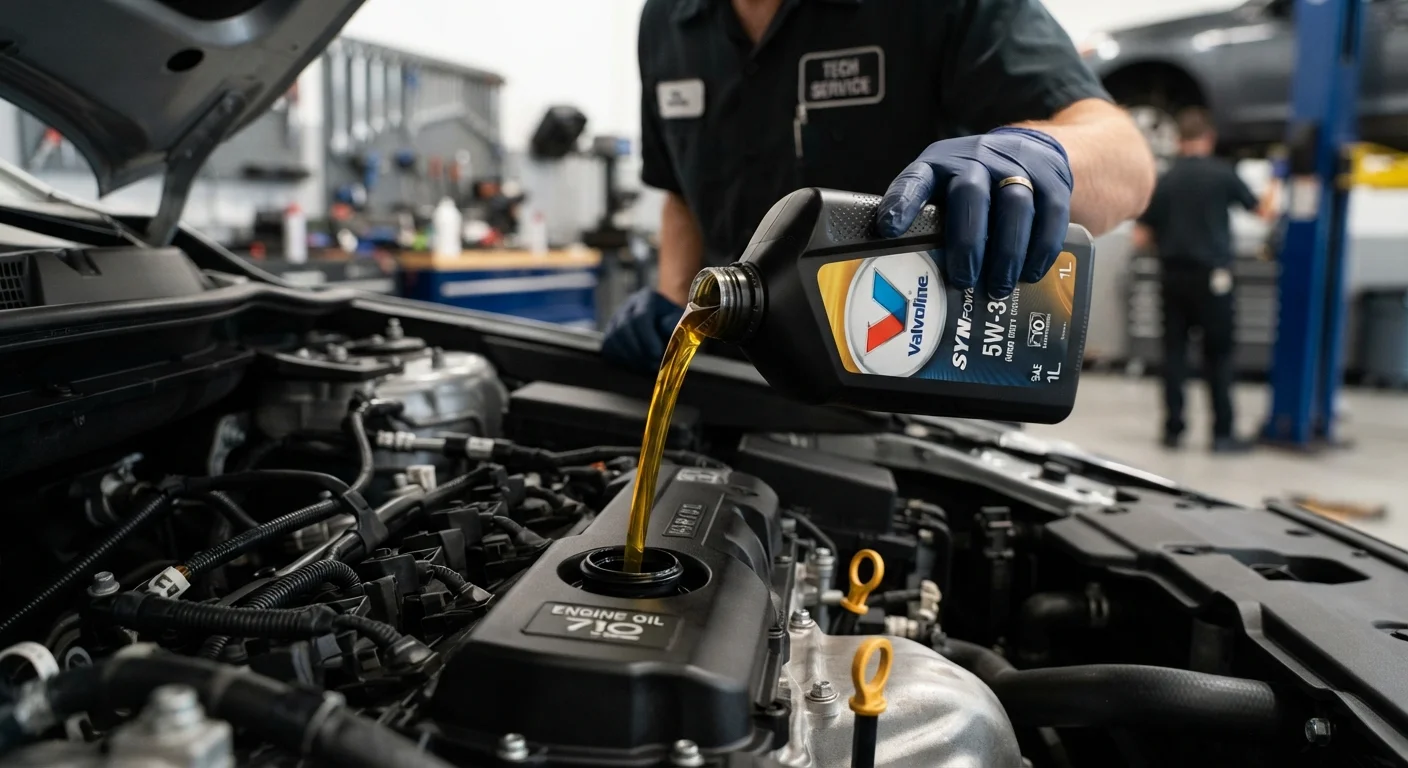
Why the 3,000-Mile Rule No Longer Applies
Walk into almost any quick-lube shop and you'll likely see a windshield sticker suggesting your next oil change in 3,000 miles. That number has roots in an era of older engine designs and conventional oil formulations. Today's engines are built to tighter tolerances, and oil chemistry has advanced considerably. Most manufacturers now recommend intervals ranging from 5,000 to 10,000 miles - and some specify up to 15,000 miles under normal conditions with full synthetic oil.
The single most reliable source for your interval isn't a sticker, a service advisor's recommendation, or a general rule of thumb. It's your vehicle's owner's manual. Manufacturers engineer oil change schedules specifically for each engine's design, operating temperatures, and oil specification. Using that number as your baseline is non-negotiable. Understanding how synthetic and conventional oils differ can also help clarify why your manual may specify longer intervals than you'd expect.
5,000-10,000 mi
Typical modern oil change interval
Most current vehicle manufacturer recommendations fall in this range for standard driving conditions, significantly beyond the old 3,000-mile guideline.
Up to 15,000 mi
Maximum interval for some full synthetic specs
Certain manufacturers specify extended intervals for vehicles using full synthetic oil under normal, predominantly highway driving conditions.
1 year
Time-based change limit regardless of mileage
Many manufacturers recommend an annual oil change even if the mileage threshold hasn't been reached, accounting for chemical degradation over time.
What Your Dipstick Actually Reveals
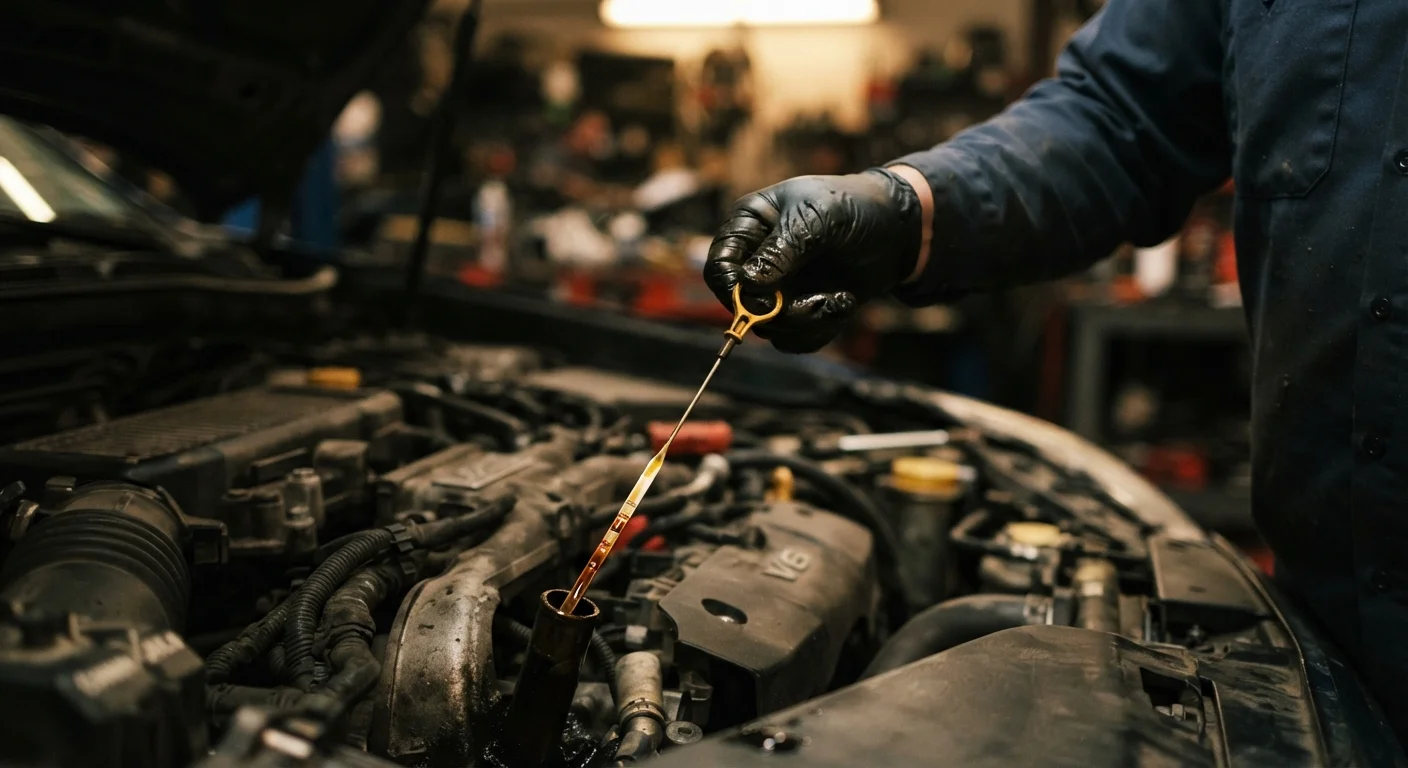
The dipstick is a two-reading instrument: it tells you both the oil level and gives you a rough sense of oil condition. Pull it out, wipe it clean, reinsert it fully, then pull it again and read where the oil film sits between the minimum and maximum marks. Running below the minimum mark isn't just an oil-change problem - it can cause immediate engine damage and deserves prompt attention.
As for condition: oil color darkens naturally as it works, trapping combustion byproducts in suspension. A coffee-brown or dark color is normal. What warrants attention is oil that looks milky or foamy (possible coolant contamination), has a sharp burnt smell, or feels gritty between your fingers. These are signals that something beyond a routine interval may be wrong. For a broader look at fluid monitoring, see our guide on fluid checks every driver should know how to do.
Check Your Oil Level Monthly
Even between oil changes, a quick dipstick check once a month takes less than two minutes and can catch low oil level or early contamination signs before they become serious problems. Some engines consume small amounts of oil between changes - especially older or high-performance engines - and running low between services causes real damage. Make it part of your routine when you fill up fuel.
How Driving Conditions Shift the Equation
Manufacturer intervals assume what engineers call "normal" driving - predominantly highway miles, moderate temperatures, and a fully warmed-up engine. If your driving pattern looks different, your effective interval is shorter.
- Short trips under five miles: The engine never fully reaches operating temperature, so moisture and fuel vapor accumulate in the oil rather than burning off.
- Stop-and-go city traffic: Prolonged idling and frequent acceleration cycles increase heat load and accelerate oil oxidation.
- Towing or hauling: Higher engine loads generate more heat, breaking down oil faster.
- Extreme climates: Both high summer heat and deep winter cold stress oil viscosity and accelerate degradation.
- Dusty or unpaved environments: Airborne particles can contaminate oil more quickly, even with a functioning air filter.
Many owners' manuals list two schedules: one for normal conditions and a shorter one for severe conditions. Be honest about which category your daily driving falls into. Everyday habits that accelerate engine wear are often more significant than drivers realize.
Two Schedules in One Manual
Many owner's manuals include both a 'normal' and a 'severe' maintenance schedule. Severe conditions typically include frequent short trips, towing, extreme temperatures, and dusty environments. If your driving regularly involves any of these, the severe schedule is the appropriate one to follow - not the longer normal-condition interval. When in doubt, ask a qualified mechanic to evaluate your typical driving pattern.
Oil Life Monitors: Useful, But Not Infallible
Many vehicles built in the past decade include an Oil Life Monitoring (OLM) system - a dashboard indicator that estimates remaining oil life based on real operating data: engine load, temperature swings, RPM patterns, and mileage. When it hits a threshold (often 15-20% remaining life), it alerts you to schedule a change. These systems are generally more precise than fixed mileage stickers because they adapt to how you actually drive.
That said, OLMs are algorithms, not chemical sensors. They don't directly measure oil degradation - they model it. If your engine has an oil leak, is consuming oil between checks, or has a sensor malfunction, the monitor won't catch it. Regular dipstick checks remain valuable even if your dashboard gives you a percentage readout. For context on how seasonal changes affect maintenance timing, see seasonal car maintenance preparation.