Why the Purchase Price Isn't the Whole Story
When you finance a vehicle, you're not just paying for the car - you're paying for the privilege of spreading that cost over time. The lender charges interest for that service, and depending on your rate and loan term, that interest can add thousands of dollars to what you ultimately spend.
Consider a straightforward example: a $30,000 vehicle financed at 7% APR over 60 months results in a monthly payment of around $594 - and a total repayment of approximately $35,640. That's over $5,600 in interest on top of the purchase price. Stretch that same loan to 72 months and the monthly payment drops, but total interest climbs further still.
For a full picture of what car ownership actually costs beyond the loan, see what first-time buyers consistently underestimate.
$5,000-$8,000+
Typical interest paid on a 60-month auto loan
Based on a $30,000 vehicle financed at rates common for mid-tier credit borrowers; exact figures vary by lender and credit profile.
~44%
Share of new car buyers choosing 72+ month terms
Longer loan terms have grown more common as vehicle prices have risen, according to industry data from Experian's State of the Automotive Finance Market reports.
3-5%
APR difference between strong and poor credit
The spread between rates offered to prime and subprime auto borrowers can add thousands of dollars in total interest over a loan term.
How Loan Term Length Shapes Total Cost
Loan term - the length of time you have to repay - is one of the most consequential decisions you'll make when financing. Lenders commonly offer terms ranging from 24 to 84 months. The appeal of a longer term is an immediately lower monthly payment, but the trade-off is paying more interest over time.
There's also a depreciation problem with long terms. Cars lose value fastest in the first few years. A 72- or 84-month loan often means you're paying off a vehicle that's worth less than your remaining balance - known as negative equity or being 'upside down.' If you need to sell or the car is totaled, you could owe money even after the insurance payout.
A 48- or 60-month term strikes a balance for many buyers: manageable payments without excessive interest accumulation. Before committing, use a loan amortization calculator (available through most banks and credit unions) to see exactly how much interest you'll pay under each scenario.
Run the Numbers Before You Sign
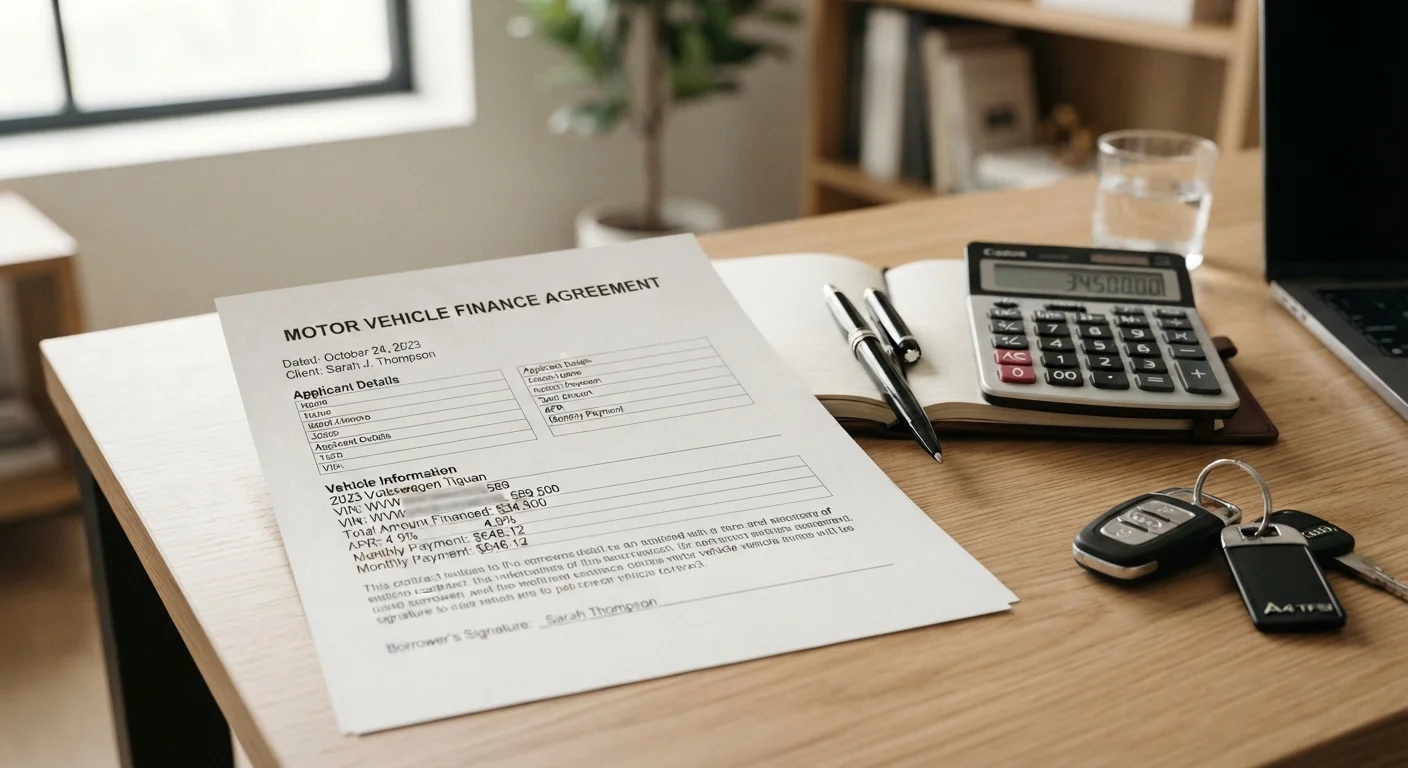
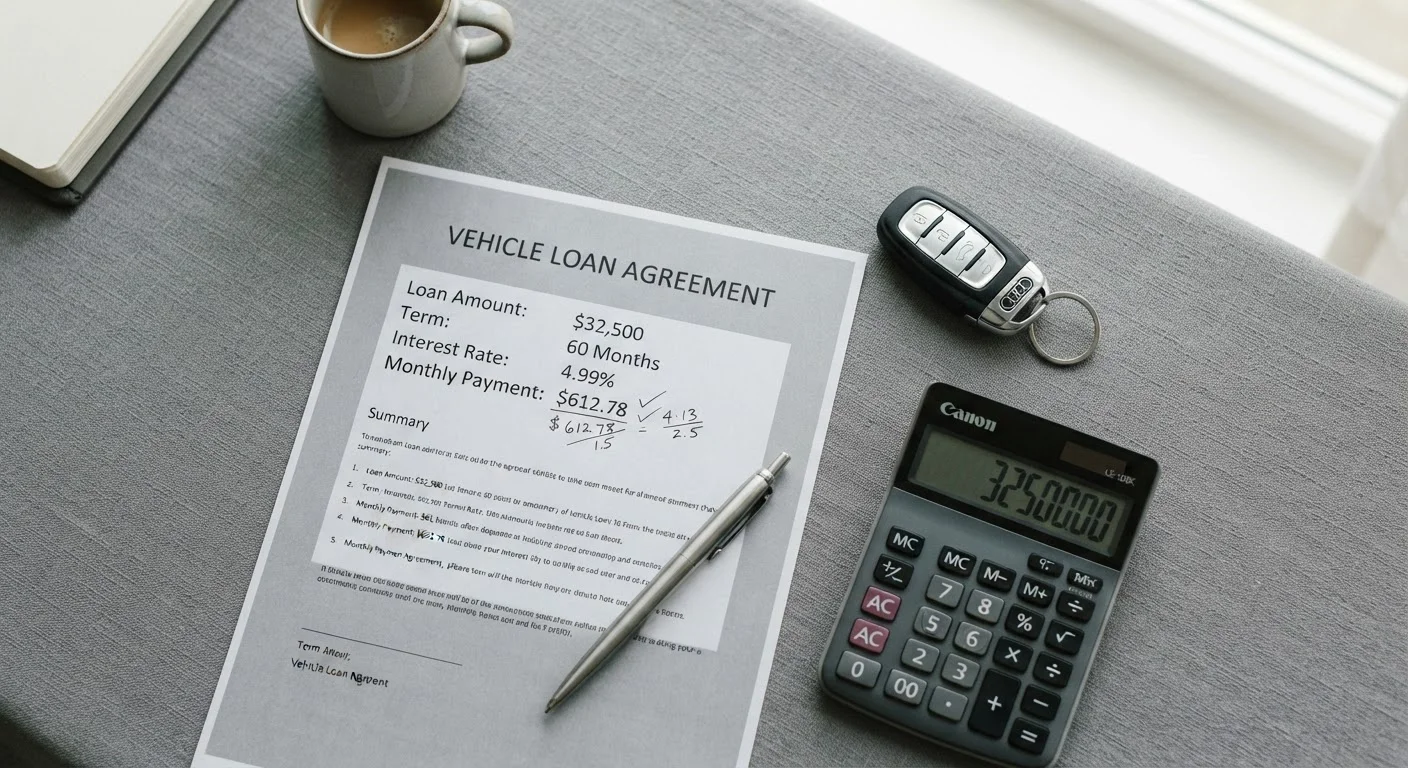
Before agreeing to any loan offer, ask the lender for the total amount repayable - not just the monthly payment. Most online loan calculators let you input principal, rate, and term to see exactly how much interest you'll pay over the life of the loan. Comparing this figure across multiple offers is more informative than comparing monthly payments alone.
The Role of Your Credit Score and APR
Your credit score directly influences the APR a lender offers you. APR - Annual Percentage Rate - expresses your total annual borrowing cost as a percentage, incorporating both the interest rate and certain loan fees. A higher credit score signals lower risk to lenders, which typically results in a lower APR and less total interest paid.
The difference between a 5% APR and a 10% APR on a $25,000 loan over 60 months is roughly $3,300 in additional interest. That's a meaningful gap worth understanding before you walk into a dealership.
If you're unfamiliar with terms like APR, principal, or amortization, our guide to car finance jargon covers them all in plain language.
“The monthly payment is one of the least useful numbers in a car loan. What matters is the total interest paid and the APR - those tell you what you're actually agreeing to.”
— Consumer Financial Protection Bureau, U.S. federal consumer finance regulator, auto loan guidance resources
Strategies That Reduce What You Actually Pay
Understanding how costs accumulate puts you in a position to act on that knowledge. Several practical levers can reduce your total loan cost:
- Put more down upfront. A larger down payment reduces your principal - the amount being financed - which means less interest accrues over the loan term.
- Choose a shorter term. If the monthly payment is manageable, a 48-month term will cost you substantially less than a 72-month term.
- Shop your rate before visiting a dealership. Getting pre-approved through a bank or credit union gives you a baseline rate to compare against dealer financing offers. See how dealership and bank financing compare for a deeper look at both options.
- Make extra payments when possible. Even occasional additional payments reduce principal faster, shrinking the interest that accrues. Confirm your loan has no prepayment penalty first.
For a complete walkthrough of the car-buying process from research through financing, the full car-buying journey covers every stage.
This article provides general financial education and is not personalised financial or lending advice. Loan costs vary based on individual credit profiles, lender terms, and market conditions. Consult a qualified financial professional for guidance specific to your situation.