Why Neighbourhood Choice in Buenos Aires Matters More Than Most Cities
Buenos Aires covers roughly 200 square kilometres and moves at different speeds depending on where you stand. A week spent in the wrong barrio can leave you fighting through tourist-oriented blocks, paying inflated prices, and missing the city's actual rhythm entirely. This isn't a city where any central hotel will do - it's a city where neighbourhood selection is effectively the first planning decision.
Unlike Paris or New York, where a metro-connected central location forgives most accommodation choices, Buenos Aires rewards specificity. The subway (Subte) network is limited, Ubers and taxis are cheap but traffic is unpredictable, and the city's best experiences are walkable and neighbourhood-specific. Below are the barrios worth understanding before you book anything - including which ones to skip if your time is genuinely short.
A Note on Safety and Neighbourhoods
Buenos Aires is a large city with variable safety across barrios and times of day. The areas covered in this article are generally considered lower-risk for travellers, but conditions can change. Always verify current travel advisories through your government's official travel website before and during your trip, and use standard urban precautions regardless of neighbourhood.
The Barrios That Actually Matter
Palermo: Know Which Sub-Barrio You're Actually Booking
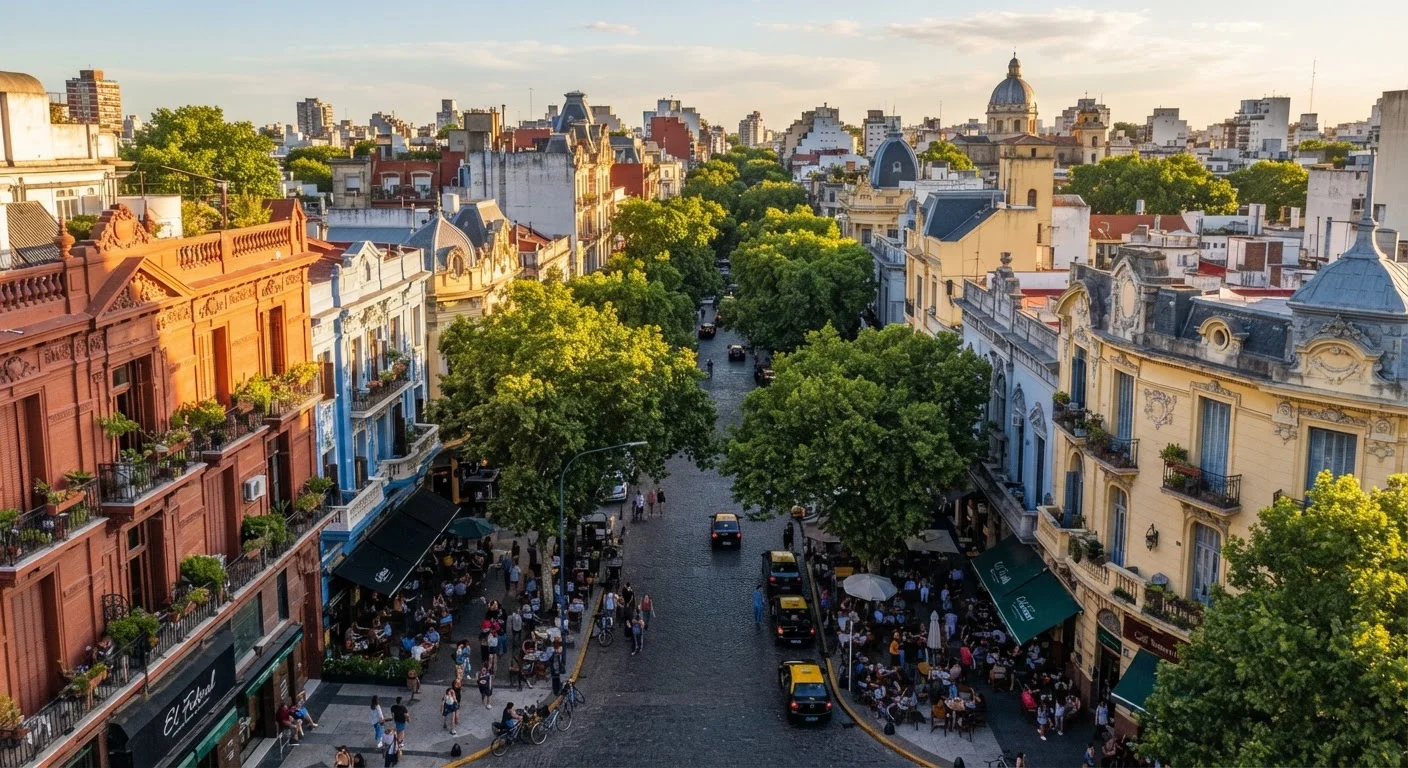
Palermo is the neighbourhood everyone recommends - and that recommendation is nearly useless without specifics. Palermo Hollywood (media industry crowd, quieter streets, good restaurant density) behaves very differently from Palermo Soho (boutiques, weekend markets, higher tourist foot traffic) or Las Cañitas (expat-heavy, sports bars, residential). Each sub-zone has a distinct character and a different walking radius to useful amenities.
For first-time independent travellers, Palermo Soho offers the best balance: walkable dining, close proximity to parks, and enough local life that you won't feel bracketed inside a tourist corridor. Book here if you want flexibility and don't want to think too hard about logistics.
Palermo Soho offers first-timers the best balance of walkability, local life, and logistical ease.
San Telmo: Atmosphere in Abundance, Practicality in Short Supply
San Telmo is the barrio that photographs beautifully and lives somewhat less beautifully. The cobblestone streets, antique markets, and colonial-era architecture are genuinely compelling - especially around the Sunday market at Plaza Dorrego. But the accommodation stock in the central blocks can be uneven, and the area adjacent to the market gets crowded and chaotic on weekends.
Treat San Telmo as a day or evening destination, not necessarily a base. If you do stay here, choose blocks closer to Brasil or Estados Unidos rather than the immediate market zone. Noise, uneven pavement, and limited Subte access are real considerations for anyone with early flights or packed schedules.
San Telmo works better as a day destination than a primary base for busy itineraries.
Recoleta: Safe, Beautiful, and Somewhat Sealed Off
Recoleta is where Buenos Aires presents its most European face - grand boulevards, the famous cemetery, refined cafes, and a relatively low density of the chaos that characterises other barrios. For solo travellers or those who prioritise personal safety and comfort, it's a reliable choice.
The honest caveat: Recoleta can feel like a city within the city, insulated from Buenos Aires's fuller personality. It skews older and wealthier, and its restaurant scene trends formal. Stay here for comfort; plan deliberate excursions elsewhere for anything resembling a local experience. It's excellent for a night or two at either end of a trip.
Recoleta is reliable and polished but requires deliberate effort to connect with the city's real energy.
Villa Crespo: The Barrio That Rewards the Slightly More Curious
Villa Crespo sits directly west of Palermo Soho and shares its walkability without its price premium. The neighbourhood has a dense cluster of independent clothing designers, vinyl record shops, and a café culture that leans local rather than tourist-facing. It's quieter at night without being dull.
Practically, Villa Crespo is one of the best-value bases in the city for professionals who want to cover ground efficiently. The Malabia and Angel Gallardo Subte stations provide reasonable access to other barrios, and the neighbourhood's own street-level offerings - particularly around Thames and Gurruchaga - justify unhurried evenings without going anywhere.
Villa Crespo gives you Palermo-adjacent quality without the tourist pricing or foot traffic.
Chacarita: Where the City's Actual Creative Scene Has Migrated
Over the past several years, much of Buenos Aires's genuine creative energy has shifted into Chacarita - the barrio just north of Villa Crespo. Natural wine bars, independent bookshops, small live music venues, and design studios have clustered here as Palermo's rents and tourist volume increased. The neighbourhood is centred on Federico Lacroze station, which keeps it connected.
For a short visit, Chacarita is best as a dedicated evening out rather than an accommodation base - hotel infrastructure is thinner than in Palermo or Recoleta. But any independent traveller who skips it entirely is missing where the city's most interesting current chapter is being written.
Chacarita now hosts Buenos Aires's most credible creative and food scene - don't skip it.
Plan Your Base Around Your First Full Day
Before booking accommodation, map out the two or three experiences that anchor your trip. Then choose the barrio closest to the majority of them. Buenos Aires traffic can turn a 3km journey into a 40-minute ordeal during peak hours - reducing transit friction on day one sets the tone for the whole visit.
Making the Right Call for Your Trip
If you have five days or fewer, pick one primary base and resist spreading yourself thin. The travellers who leave Buenos Aires underwhelmed are usually the ones who tried to tick every barrio off a list rather than sinking into one or two. That pattern shows up in city breaks generally - if you want a broader framework for why short urban visits go wrong, see our breakdown of city breaks that disappoint first-timers.
For most independent travellers, the honest answer is: base yourself in Palermo Soho or Villa Crespo, use Recoleta for an afternoon, walk San Telmo on a Sunday, and save Las Cañitas or Núñez for a return trip with more time. Buenos Aires is a city that reveals itself slowly - respect that, and it delivers.