The List That Never Ends
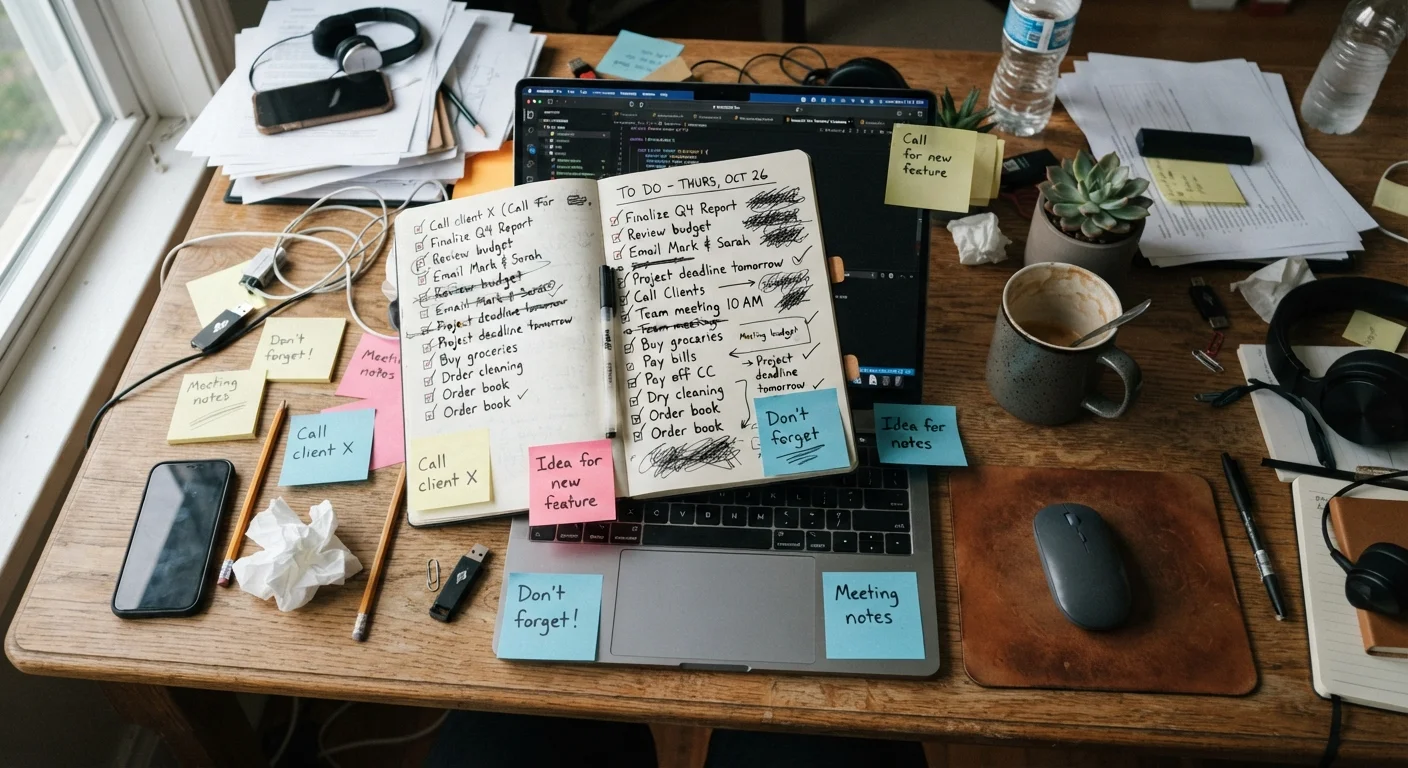
Most productivity advice tells you to write everything down. That's solid guidance - but incomplete. Without an equally consistent habit of deciding what to do with what you've captured, every new entry just adds to the pile. The result is a list that reads more like an anxiety inventory than a work plan.
Understanding why this happens is more useful than downloading another task app. The problems are almost always behavioural, not technological. Here are the most common mistakes that keep to-do lists growing - and what you can do instead.
Using your list as a capture dump with no processing step.
Why it happens: Writing tasks down feels productive in the moment, so people equate capturing with managing. The inbox fills but is never sorted.
Writing tasks too vaguely to act on (e.g., 'deal with project').
Why it happens: When a task feels large or ambiguous, it's easier to name it loosely than to think through the actual next step. That vague entry then sits undone because your brain doesn't know where to start.
Never removing or deferring tasks - only adding.
Why it happens: Deleting a task can feel like admitting failure or losing track of something important, so people let outdated items accumulate.
Treating all tasks as equally urgent.
Why it happens: Without a prioritisation filter, everything on the list competes for attention at the same level, which creates decision fatigue and often leads to completing easy, low-value tasks first.
Maintaining multiple, disconnected lists across apps, notebooks, and email.
Why it happens: Tasks get captured wherever it's convenient in the moment - a Slack message starred here, a notebook scribble there - leading to no single source of truth.
Building a System That Actually Shrinks
The goal of a task list isn't to hold everything you might ever do - it's to surface what deserves your attention today. That distinction changes how you use the tool entirely.
More Tasks Listed ≠ More Work Done
A longer list can create the illusion of productivity while actually increasing paralysis. When every item looks equally urgent, it becomes harder - not easier - to choose where to start. Pruning your list regularly is not procrastination; it's an essential part of managing your workload honestly.
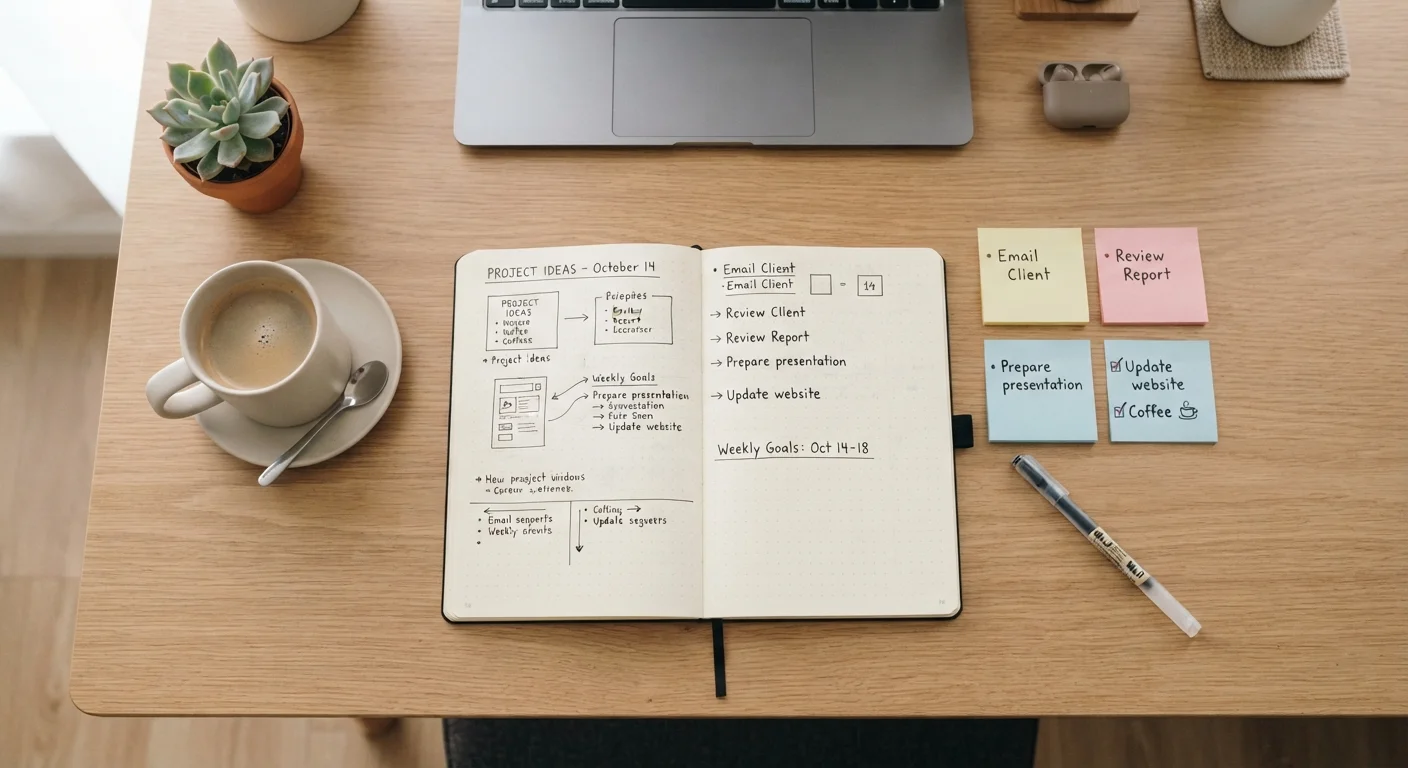
A sustainable routine combines three habits: a trusted capture method (one place where tasks land), a daily prioritisation step (choosing the two or three things that genuinely matter), and a weekly review to clear, defer, or delete the rest. A structured weekly review is particularly powerful - it's the moment you audit your list before it audits your mood.
If you want to go further and design a coherent workflow around these habits, building your first productivity system gives you a practical starting point. And if you find yourself perpetually multitasking between items, single-tasking may be the complement your list management needs. You might also consider time blocking as an alternative structure - sometimes the format of your planning matters as much as the content.
41%
Tasks on to-do lists never completed
Research by iDoneThis found that roughly 41% of tasks added to to-do lists are never completed, highlighting the gap between capture and follow-through.
~23 min
Time lost recovering focus after a task switch
Studies from the University of California, Irvine found it takes an average of around 23 minutes to fully regain focus after an interruption or context switch.
Overfull task lists and overspent budgets share the same root cause: good intentions without a review loop. The same pattern that breaks a monthly budget after week two - adding commitments without removing others - breaks a to-do list too. Sustainable productivity isn't about doing more; it's about being deliberate about less.