
Where the Model Came From
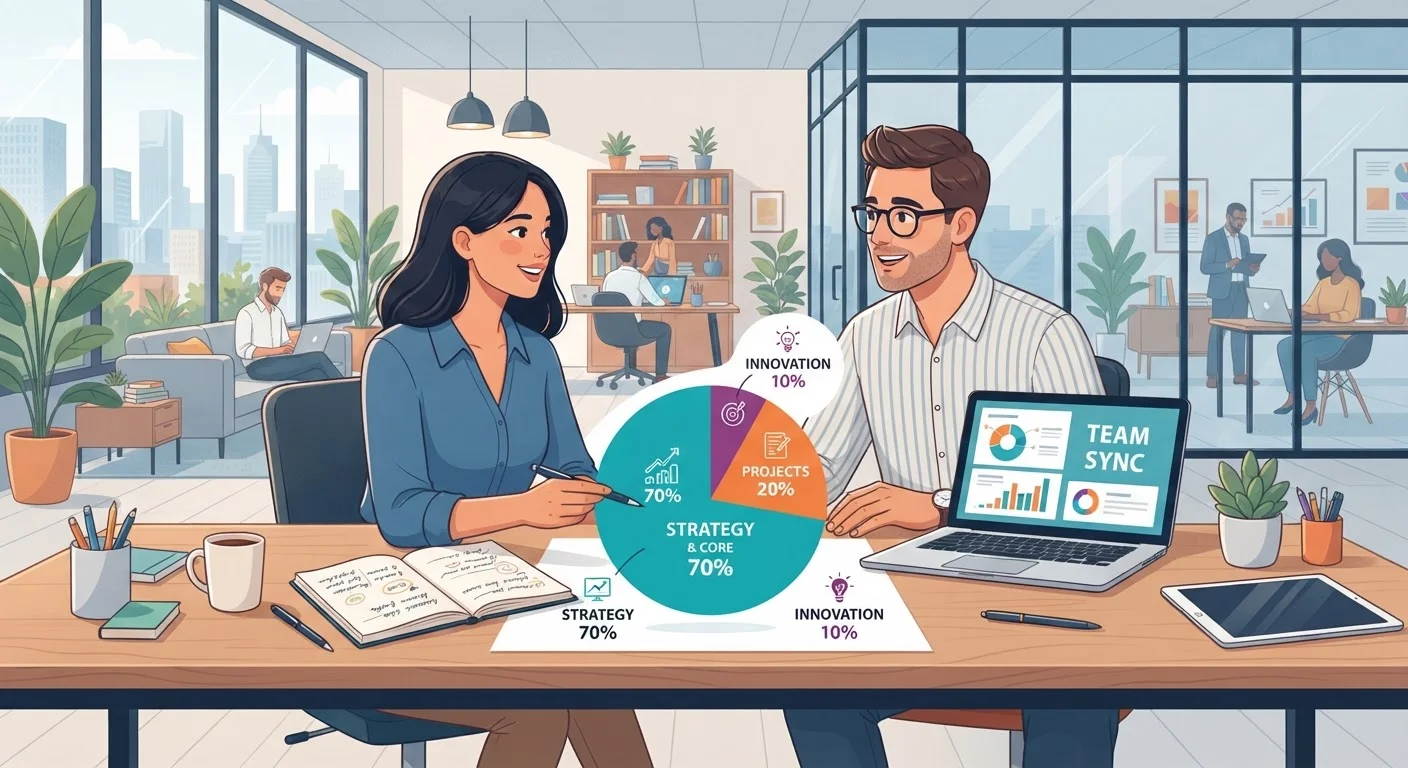
The 70-20-10 framework emerged from research conducted at the Center for Creative Leadership (CCL) in the 1980s. Morgan McCall, Michael Lombardo, and Robert Eichinger asked successful executives a simple but powerful question: looking back on your career, where did your most significant development come from? The consistent answer was that formal training played a minor role compared to challenging assignments and learning from other people.
The resulting framework was never intended as a hard rule. Its original purpose was to challenge organizations that funneled most of their learning budgets into classroom instruction - and to make the case that development happens continuously, across the entire work experience. That insight remains just as relevant for individual professionals navigating their own growth today.
The Ratios Are Approximations, Not Rules
The 70-20-10 percentages were derived from executive self-reports, not controlled studies. Different roles, industries, and career stages may call for different distributions. Use the proportions as a directional guide - a reminder that experience and relationships matter more than most formal training budgets suggest - rather than a formula to follow precisely.
Breaking Down Each Component
70% - Experiential Learning
The largest share of professional development comes from doing: stretch assignments, new responsibilities, leading a project outside your comfort zone, recovering from a setback, or stepping into an unfamiliar domain. This type of learning is powerful because it is immediate, contextual, and tied to real consequences. You don't just understand a concept - you feel its implications.
To make the most of experiential learning, actively seek assignments that push your current skill ceiling. Reflect deliberately on what each challenge is teaching you - this is where journaling, after-action reviews, or a structured personal learning system can turn raw experience into retained knowledge.
20% - Social Learning
Observing how skilled colleagues handle difficult clients, getting honest feedback from a manager, or being mentored by someone who has already navigated your career stage - these interactions account for roughly a fifth of meaningful professional development. Social learning is often informal and easy to undervalue precisely because it doesn't look like learning.
Deliberately cultivating these relationships matters. If you want to understand the difference between a mentor, sponsor, and coach - and how each relationship serves your growth - this guide breaks down what each one actually offers.
10% - Formal Training
Courses, certifications, workshops, and structured programs are valuable - but the research suggests they're most effective when they reinforce skills you're already applying at work. Isolated training without on-the-job application tends to fade quickly. The 10% bucket is not unimportant; it's just most effective as a catalyst, not the main engine.
70%
Of executive development from challenging work experiences
Based on retrospective surveys of executives conducted by the Center for Creative Leadership in research published by McCall, Lombardo, and Eichinger.
10%
Of development attributed to formal training programs
The CCL research consistently found structured courses and workshops contributed the smallest share to reported leadership development.
~50%
Of training content forgotten within an hour without reinforcement
Research on the 'forgetting curve,' associated with work by Hermann Ebbinghaus, suggests retention drops sharply without practice or review shortly after learning.
Common Misreadings of the Model
The most common mistake is treating 70-20-10 as a time-allocation formula - as if you should spend exactly seven hours per week learning from experience and one hour in formal study. That misses the point entirely. The model describes where learning tends to originate, not how to schedule your calendar.
A second misreading is using it to dismiss formal training altogether. Structured learning still matters - especially when you're entering a new field, building technical skills, or preparing for a significant career transition. The habits that hold professionals back in online learning often have less to do with the format and more to do with how passively people engage with it.
Use the Model as a Development Audit Tool
At the end of each quarter, list three skills you've developed and identify which bucket each came from - experience, relationships, or formal learning. If the list skews heavily toward one source, that's a signal to rebalance. This simple review takes under 20 minutes and builds self-awareness about how you actually grow.
Think of the model as a diagnostic: if you're pouring resources into courses but not landing stretch roles or investing in relationships, your development mix is likely out of balance.
Putting It Into Practice
A practical application starts with an honest audit. For the past three to six months, ask yourself: What have I actually learned, and where did that learning come from? Most professionals discover they're either over-indexed on formal training (checking certification boxes without changing behavior) or under-investing in social learning (avoiding feedback or neglecting mentoring relationships).
From there, use the model to make deliberate choices. Volunteer for the project that stretches your current skills. Schedule a monthly conversation with someone whose judgment you respect. When you do take a course, pair it with an immediate application opportunity at work so the knowledge has somewhere to land. For broader context on how development evolves across career stages, see the complete career development overview.
If budget is a constraint, recognizing that 90% of your development can come from experience and relationships - rather than paid programs - is itself liberating. The trade-offs between free and paid development pathways are worth understanding before you spend a dollar on another course.