Why Your Brain Is Selective About What It Keeps
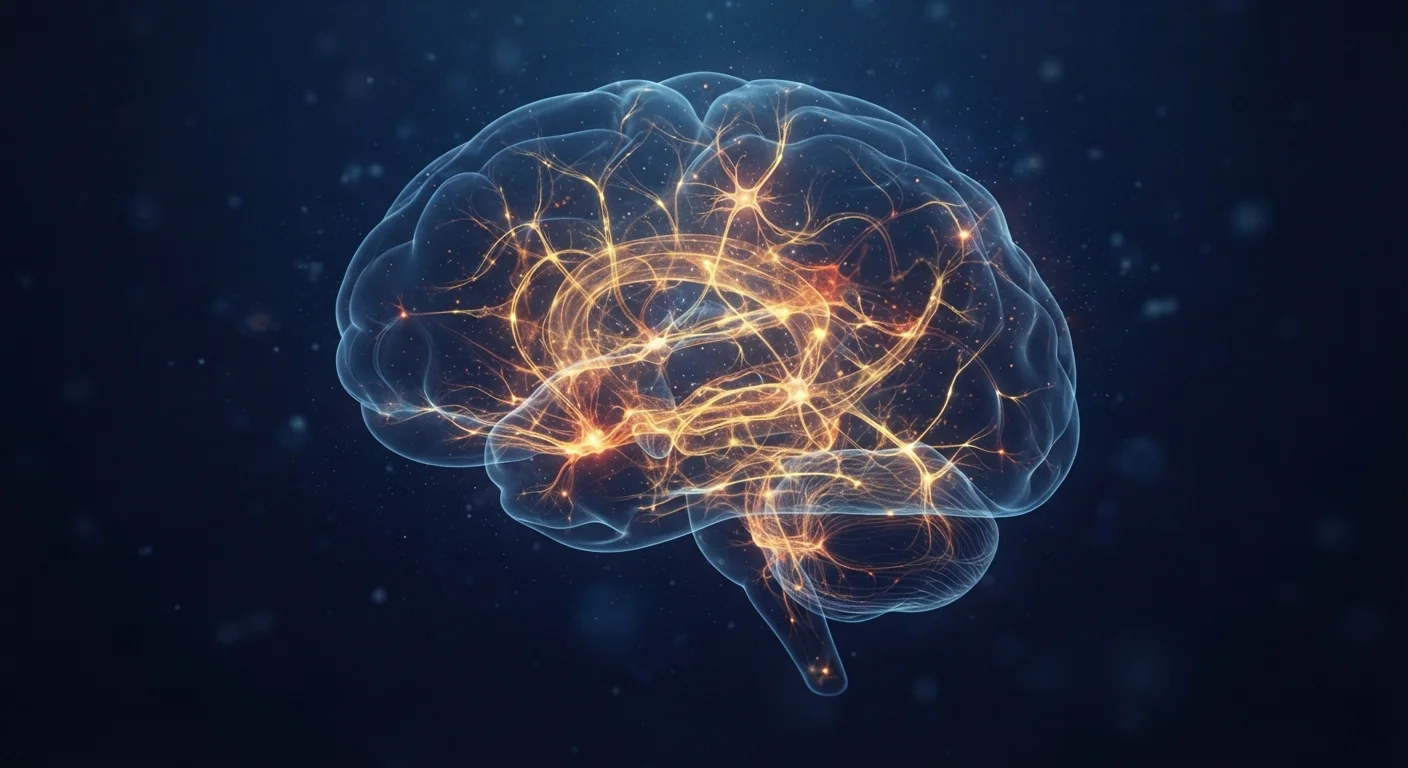
Your brain processes roughly 11 million bits of information per second, yet conscious awareness handles only a tiny fraction of that. The filtering isn't random - your brain prioritizes information that is novel, emotionally relevant, or meaningfully connected to what you already know. Everything else is quietly discarded.
This selectivity is rooted in survival. For most of human history, remembering which berries were poisonous or where a predator hid mattered far more than retaining abstract facts. Modern professional learning hasn't changed the underlying hardware - which means understanding how that hardware works is essential if you want to retain what you study.
The first bottleneck is attention. Without deliberate focus, information rarely makes it past working memory. Multitasking - checking notifications while reading a report, for instance - systematically undermines encoding before it begins. For a grounding in the key terms involved, see the Learning Strategy Quick Reference.
Levels of Processing: Shallow vs. Deep Encoding
In the early 1970s, psychologists Fergus Craik and Robert Lockhart proposed what became known as the levels of processing framework. Their central argument: the depth at which you engage with information predicts how well you'll remember it later.
Shallow processing - noting what a word looks like or how it sounds - produces weak, short-lived memory traces. Deep processing - thinking about what something means, how it connects to other concepts, or why it matters to you - produces significantly more durable encoding.
“The key to good memory is not a special talent - it is the deliberate effort to process information at a deeper level by connecting it to what you already know and care about.”
— Fergus Craik, Cognitive psychologist and co-developer of the levels-of-processing framework
Practically, this means that highlighting text or re-reading notes creates an illusion of learning without producing strong memory. In contrast, activities like explaining a concept aloud, teaching it to someone else, or applying it to a real problem all drive deeper encoding. This is sometimes called the generation effect - information you actively produce is better remembered than information you passively receive.
The Role of Prior Knowledge and Emotional Salience
Memory doesn't form in isolation. New information gets anchored to existing mental frameworks - what cognitive scientists call schemas. The richer your existing knowledge in a domain, the more hooks you have for new information to attach to. This is one reason experts in a field can absorb new developments in that field faster than novices: they have dense, well-organized schemas ready to receive and connect incoming details.
Emotion is a second powerful amplifier. The brain's amygdala modulates memory consolidation in the hippocampus, and emotional arousal - whether from curiosity, surprise, or personal relevance - can significantly boost encoding strength. You don't need a dramatic event; even mild interest or a sense of personal relevance to your career goals can meaningfully improve retention.
Use Personal Relevance as an Encoding Trigger
Before studying a new concept, take 60 seconds to ask: how does this connect to a challenge I'm currently facing at work? Even a loose connection activates existing schemas and emotional relevance, both of which deepen encoding. This simple habit can measurably improve how much you retain from any learning session.
This also explains why storytelling is such a durable teaching format. Narratives provide emotional context, causal structure, and personal stakes - all of which engage deeper encoding pathways than bullet-pointed facts.
Retrieval, Sleep, and the Long Game of Memory
Encoding is only half the equation. Memory is also strengthened - or weakened - by what happens after initial learning. Two factors stand out most clearly in the research.
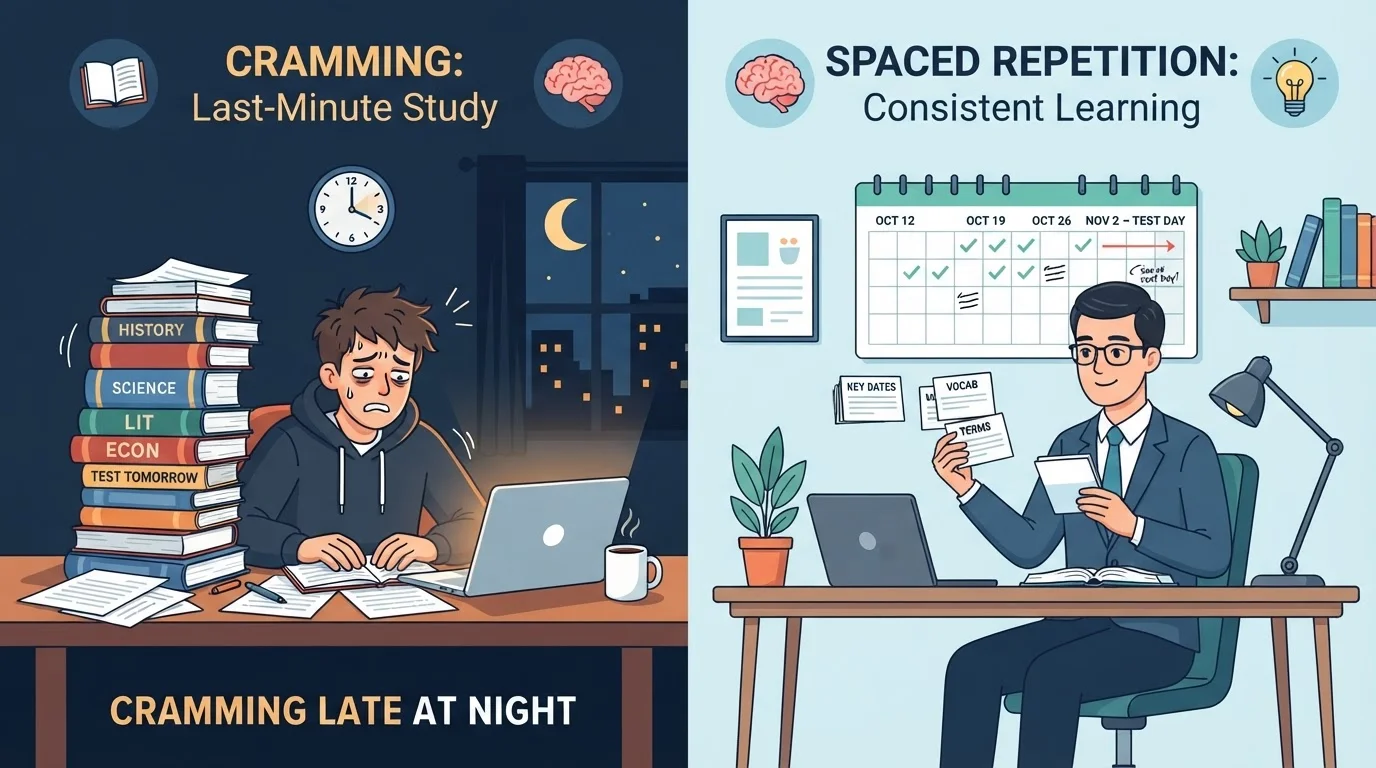
Retrieval practice: Every time you successfully retrieve a memory, you don't just read it back - you reconsolidate it, slightly modifying and strengthening the trace. This is why testing yourself, using flashcards, or writing a summary from memory produces dramatically better long-term retention than passive review. Research by cognitive psychologist Henry Roediger and colleagues has demonstrated this testing effect across a wide range of learning contexts. For a deeper look at how scheduling shapes retention, see Spaced Repetition vs. Massed Practice.
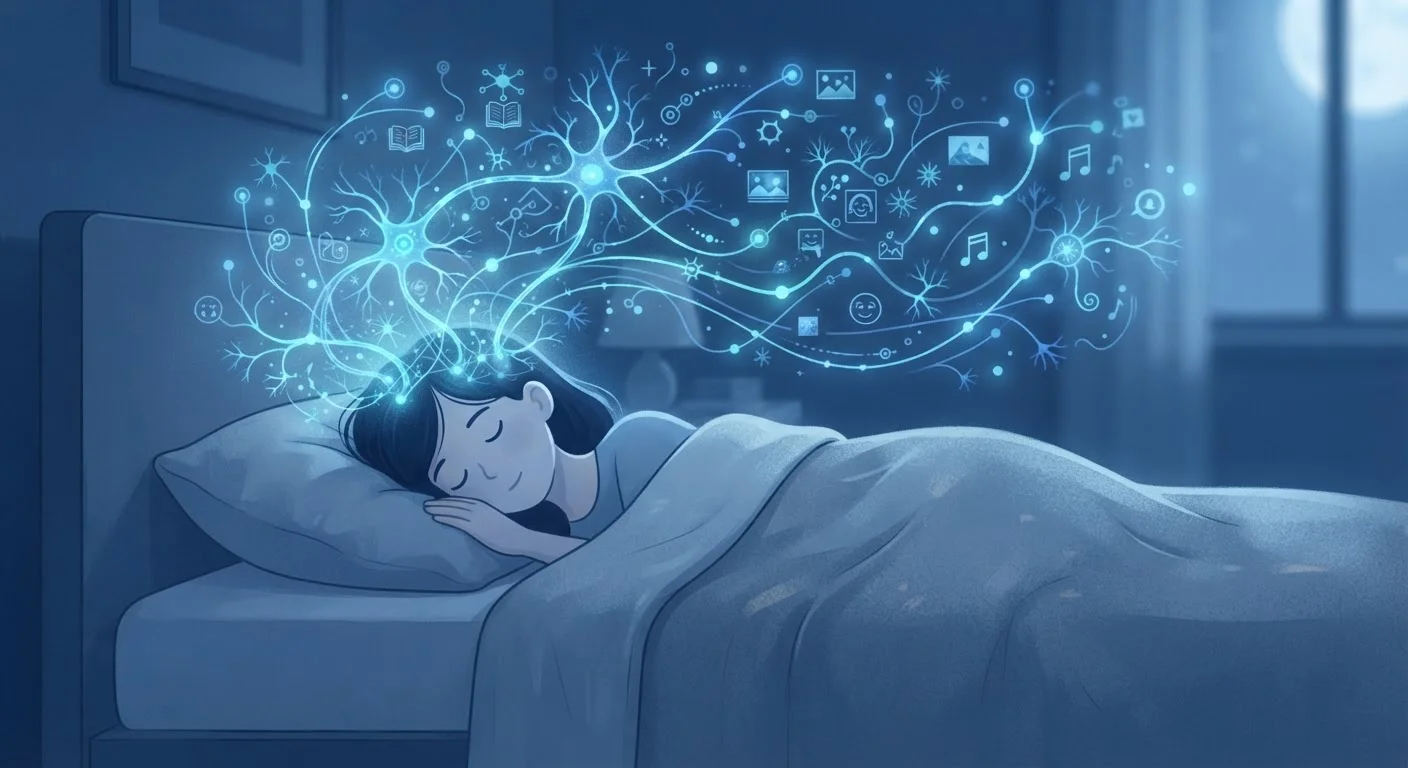
Sleep: Memory consolidation - the process by which newly encoded information is stabilized into long-term storage - happens primarily during sleep. The hippocampus replays recent learning during slow-wave sleep, gradually transferring it to the neocortex for more permanent storage. Pulling an all-nighter before a high-stakes presentation doesn't just leave you tired; it actively undermines the consolidation of everything you studied. Explore this further in Sleep and Learning.
~50%
Information forgotten within one hour without review
Based on Hermann Ebbinghaus's foundational forgetting curve research, which showed rapid decay of newly learned material without reinforcement.
1.5x-2x
Retention advantage of retrieval practice over re-reading
Multiple studies by Roediger and Karpicke (2006) found that students who tested themselves recalled substantially more on delayed tests than those who re-studied the same material.
20-40%
Estimated memory consolidation loss from sleep deprivation
Research published in sleep and neuroscience literature suggests that inadequate sleep after learning can significantly impair how much of that learning transfers to long-term memory.
Together, these mechanisms suggest that how you structure the time around learning matters as much as the learning session itself - spacing practice, sleeping consistently, and testing recall are the levers most likely to make information genuinely stick.