
Why Saving Feels Hard (And Why That's Normal)
If you've ever told yourself you'll start saving "next month" - and next month became six months - you're not uniquely undisciplined. Behavioral economists have documented repeatedly that humans naturally prioritize present spending over future security, a tendency sometimes called present bias. Combined with rising rents, student loan payments, and the sheer noise of financial advice online, it's easy to feel like saving is something other people do once they have their lives figured out.
The truth is more useful: saving is a skill, and like any skill, it's learned through repetition rather than motivation. This guide strips out the jargon and the overwhelm so you can take a concrete first step today - even a small one.
Permission to Start Small
There is no minimum amount that makes saving 'count.' A $20 monthly transfer builds the habit just as effectively as $200 - and habits, once established, are far easier to scale up. Focus on consistency first; the dollar amount can grow over time as your income or budget allows.
The Core Concept: What Saving Actually Does
Saving is simply the act of setting aside a portion of your income rather than spending it immediately. But what makes it powerful is what happens when that money sits in the right place over time.
Compound interest
Interest calculated on both your original deposit and the interest already earned. Over time, this causes your balance to grow faster than simple interest would.
APY (Annual Percentage Yield)
The real rate of return on a savings account over one year, accounting for compounding. A higher APY means your money grows faster.
Emergency fund
A dedicated pool of savings set aside to cover unexpected expenses or income disruption, typically sized to cover three to six months of essential living costs.
Liquidity
How quickly and easily you can access your money without penalty. A savings account is highly liquid; money locked in a long-term investment is not.
FDIC insurance
A federal guarantee that protects deposits at insured U.S. banks up to $250,000 per depositor, per institution, if the bank fails.
Present bias
A natural human tendency to prefer immediate rewards over future benefits, which can make consistent saving feel counterintuitive even when we know it's smart.
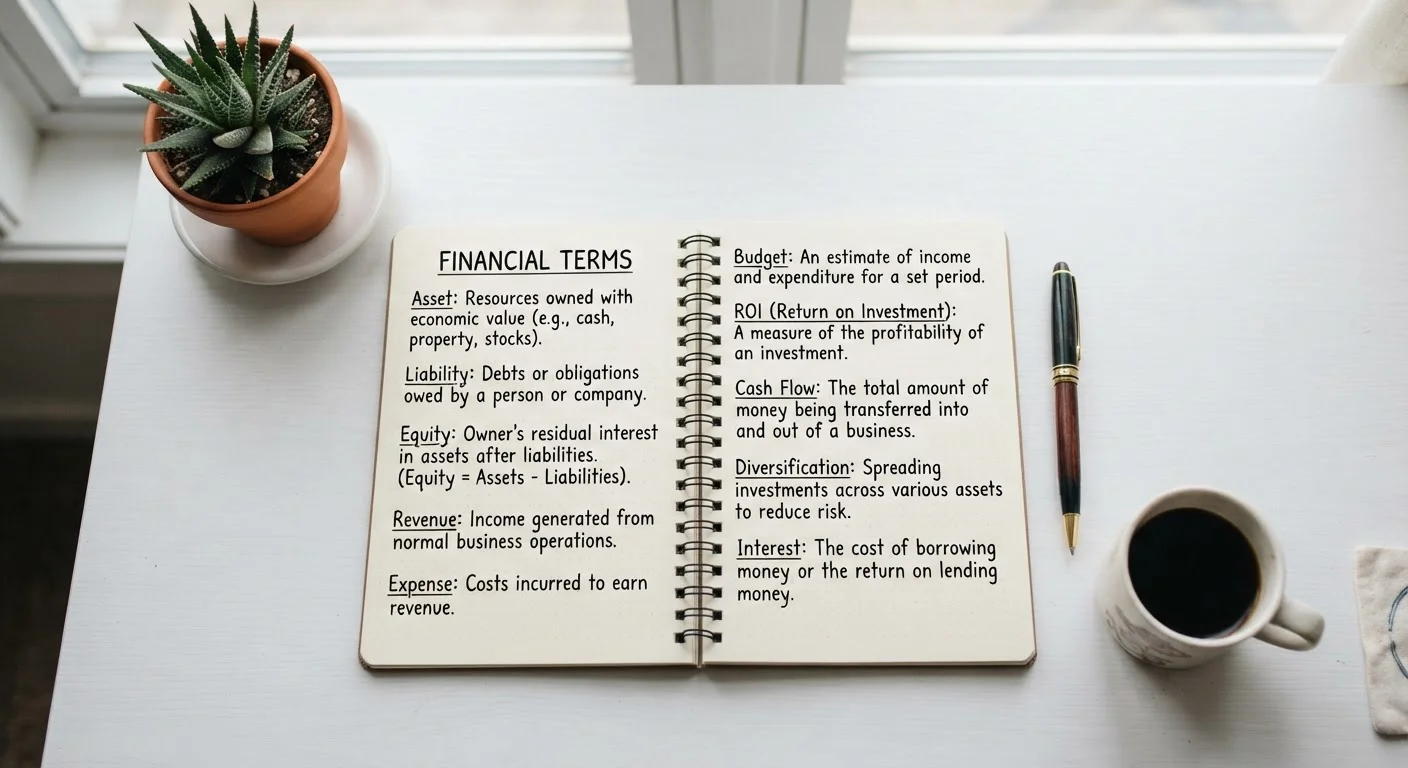
When you deposit money in an interest-bearing account, your balance earns a return - and with compound interest, that return builds on itself. Over years, even modest contributions can grow meaningfully. For a deeper look at the vocabulary behind these mechanics, see key savings terms explained in plain language.
Beyond growth, saving creates something just as valuable: options. A savings buffer means a flat tire doesn't require a credit card. It means you can leave a job that isn't working without panic. Financial resilience isn't about wealth - it's about having a cushion between you and your worst-case scenario.
Setting a First Goal That Sticks
Vague intentions don't survive contact with a paycheck. "I want to save more" is not a goal - it's a wish. A useful savings goal has three qualities: it's specific, it's measurable, and it's achievable given your current income.
A widely recommended starting point is a starter emergency fund of $500 to $1,000. This threshold is small enough to reach in a few months on almost any budget, but meaningful enough to absorb the most common financial surprises - a medical co-pay, a car repair, an unexpected bill. Once you hit that milestone, you can set your sights on a full emergency fund (typically three to six months of essential expenses, per guidance from the Consumer Financial Protection Bureau).
After your emergency fund is in place, savings goals become more personal: a vacation, a down payment, a career transition fund. The structure remains the same - pick a dollar amount, estimate a realistic monthly contribution, and work backward to a timeline. Understanding your monthly cash flow first makes this far easier. See our introduction to budgeting if you haven't mapped your spending yet.
Where to Keep Your Savings
Where you park your savings matters. Leaving money in a standard checking account earns little to no interest and makes it easy to spend accidentally. The most practical options for beginners are:
- High-yield savings accounts (HYSAs): These are savings accounts - typically offered by online banks - that pay a higher annual percentage yield (APY) than traditional savings accounts. They remain FDIC-insured up to $250,000 per depositor, per institution.
- Standard savings accounts: Offered by most banks and credit unions, these are widely accessible and safe, though they typically offer lower interest rates than HYSAs.
- Money market accounts: Similar to savings accounts but sometimes offering check-writing privileges. Interest rates vary by institution.
For most beginners, the priority is keeping savings separate from everyday spending money and in an account that earns at least some interest. The specific account type matters less than the discipline of leaving it untouched.
Savings Account Limits to Know
Federal regulations previously limited certain savings and money market accounts to six withdrawals per month (Regulation D), though the Federal Reserve suspended this requirement in 2020. Individual banks may still enforce their own limits or charge fees for excess withdrawals. Check your account's terms so you're not caught off guard.
Making It Automatic: The Single Best Habit
Waiting until the end of the month to save whatever is left over almost never works - because rarely is anything left over. The more reliable approach is to treat savings like a non-negotiable expense: transfer it out the day your paycheck arrives.
Most banks allow you to schedule recurring automatic transfers between accounts. Set one up for the day after your regular payday - even $25 or $50 - and saving stops requiring a decision. Research in behavioral economics consistently shows that automatic defaults outperform willpower-dependent strategies over time.
For a full breakdown of how to structure this habit, including how to handle variable income, see how automatic transfers beat willpower.
Don't Save Money You Need for Bills
Automating savings is powerful, but be careful not to over-automate before you've mapped your essential monthly expenses. Transferring too much before rent or utilities are covered can trigger overdraft fees or force you to pull money back - undermining the habit. Know your fixed costs first, then automate what's genuinely surplus.
Your Next Steps After the Basics
Once you've set a goal, chosen an account, and scheduled an automatic transfer, you've done the foundational work. From here, the natural progression is to build out your budgeting system so your savings goal is reflected in how you allocate every dollar each month.
After your emergency fund is solid, many financial educators suggest exploring investing as the next step for longer-term goals - because savings accounts generally won't outpace inflation over decades the way a diversified investment portfolio may. Investing fundamentals for beginners is a natural next read when you're ready.
The most important thing right now isn't perfection - it's starting. A $30 automatic transfer set up today does more for your financial future than a perfect plan you never execute.
This article is for general informational and educational purposes only. It is not personalized financial, investment, tax, or legal advice. Please consult a qualified financial professional before making decisions based on your individual circumstances.