
How Each Framework Actually Works
The 50/30/20 rule, popularized in personal finance literature, divides your monthly after-tax income into three categories: 50% toward needs (housing, groceries, utilities, minimum debt payments), 30% toward wants (dining, entertainment, subscriptions), and 20% toward savings and debt repayment. The appeal is its simplicity - you classify spending, not itemize it. Review your bank statement at month's end, sort transactions into three buckets, and check whether you stayed within range.
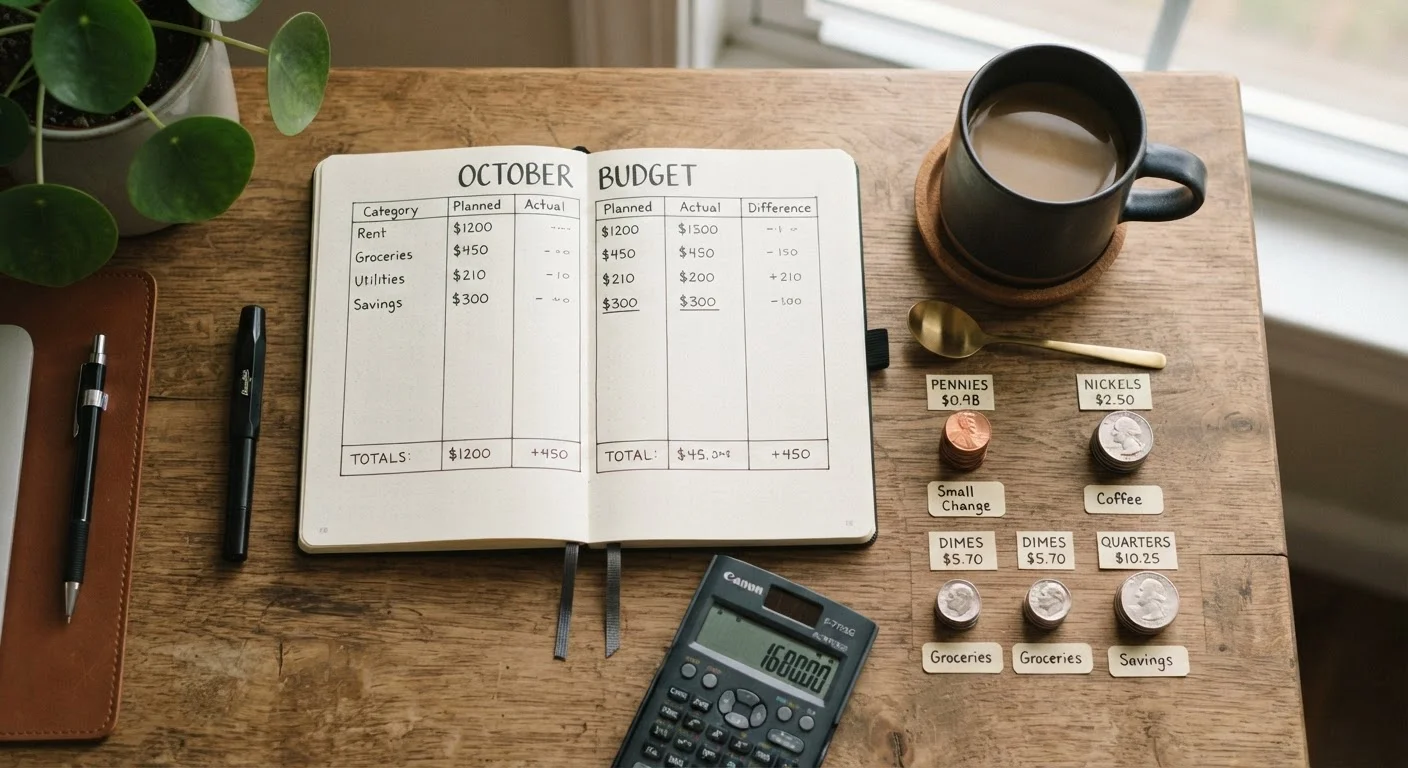
Envelope budgeting works differently. Before the month begins, you decide exactly how much to allocate to each spending category - groceries, gas, dining out, personal care - and either place physical cash into labeled envelopes or use a digital equivalent. When an envelope is empty, spending in that category stops until the next cycle. It's a zero-tolerance system for category overruns, which makes it more demanding but also more precise.
For a fuller look at a related category-level approach, see our overview of zero-based budgeting, which shares envelope budgeting's philosophy of assigning every dollar a purpose.
| Criterion | 50/30/20 Rule | Envelope Budgeting |
|---|---|---|
| Setup complexity | Low - three categories only | Higher - requires category planning |
| Tracking requirement | Monthly review sufficient | Active tracking throughout month |
| Variable income adaptability | Moderate - percentages shift with income | High - envelopes set from actual income |
| Overspending control | Broad - catches category-level drift | Granular - stops individual category overruns |
| Savings visibility | Explicit 20% savings bucket | Savings envelope among many |
| Best mindset fit | Hands-off, big-picture thinker | Detail-oriented, category-aware spender |
Variable Income: Where the Two Methods Diverge Most
For salaried professionals, the 50/30/20 rule is straightforward - the math stays constant each month. But for freelancers, commission earners, or anyone with variable pay, applying a fixed percentage to an unpredictable base can feel abstract. A month where you earn $3,200 and a month where you earn $5,500 both technically work with 50/30/20, but the discretionary gap between them is enormous.
Envelope budgeting handles variability more directly. At the start of each month, you total confirmed or conservatively estimated income, then fill envelopes based on that actual number. In a lean month, envelope amounts shrink. In a strong month, the surplus can be intentionally directed - into savings, an emergency fund, or debt. This aligns well with guidance from the Consumer Financial Protection Bureau (CFPB), which encourages households with irregular income to build budgets from a conservative baseline rather than an average.
Consult a licensed financial professional before restructuring your budget around significant income changes, particularly if you carry variable-rate debt or are navigating tax obligations as a self-employed earner.
56%
Americans without a monthly budget
A CNBC/Acorns Invest in You survey found that roughly 56% of American adults did not follow a formal monthly budget, highlighting how common unstructured spending is.
3-6 months
Recommended emergency fund size
The CFPB generally recommends maintaining three to six months of essential expenses in a liquid savings account as a financial safety baseline.
If you're unsure which saving approach complements either framework, the Saving & Emergency Funds hub outlines how to layer budgeting systems with savings goals effectively.
Practical Trade-Offs to Consider Before You Choose
The 50/30/20 rule's main limitation is its bluntness. Grouping all "wants" together means a streaming service and a weekend trip count the same - you only know if you overspent in aggregate, not where specifically the money leaked. For young professionals prone to lifestyle creep, that ambiguity can erode the savings bucket over time.
Envelope budgeting's main limitation is setup friction. Creating 10-15 spending categories, estimating each one accurately, and checking envelope balances mid-month takes active effort. Research in behavioral economics consistently shows that high-friction systems get abandoned - which is why the method works best for people who find the constraint motivating rather than burdensome.
Digital Envelopes Are a Valid Option
Physical cash envelopes aren't required for envelope budgeting to work. Many budgeting apps replicate the same logic digitally, allowing you to set category limits and track balances without handling cash. The core discipline - stopping when a category is empty - transfers directly to digital tools. If cash management feels impractical for your lifestyle, a digital envelope system delivers the same behavioral structure.
A useful middle path: use 50/30/20 as your macro structure, then apply envelopes only inside your "wants" category where overspending tends to occur. This hybrid preserves simplicity at the top level while adding guardrails where you need them most.
For a balanced look at when rigid structures help and when they backfire, explore our article on what strict budgeting gets right and where it falls short. And once you've chosen a framework, the Monthly Budget Review Checklist gives you a structured way to evaluate and refine it each month.
This article is for general informational and educational purposes only and does not constitute personalized financial, tax, or investment advice. Consult a qualified financial professional before making decisions based on your individual circumstances.