The Core Distinction: State vs. Practice
The confusion between mindfulness and meditation is understandable - they're deeply related and frequently mentioned together in wellness conversations. But treating them as synonyms causes people to misapply both, and miss what makes each one useful.
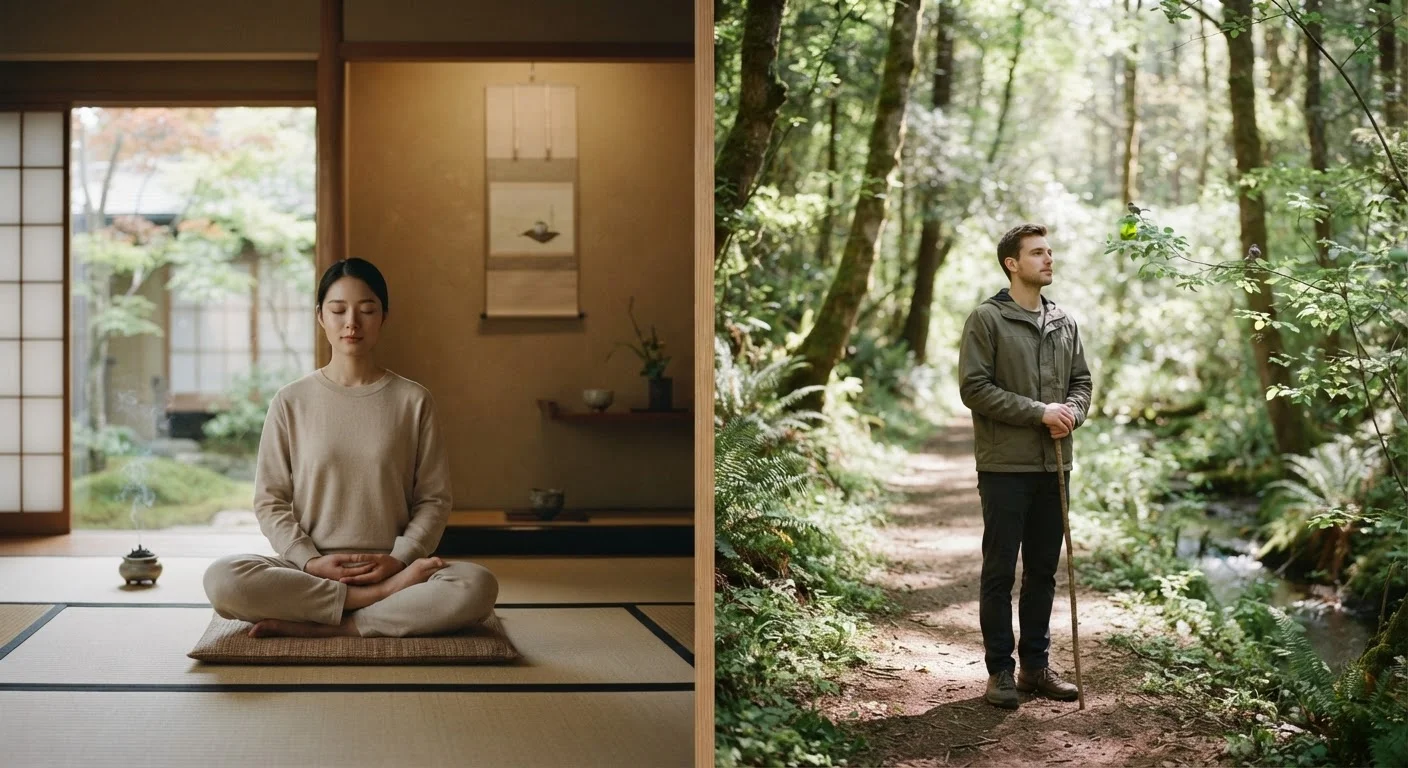
Mindfulness is a mental quality: a deliberate, non-judgmental awareness of what's happening in the present moment - your thoughts, sensations, and environment. It's something you can bring to virtually any activity. Meditation, by contrast, is a structured practice - a scheduled activity in which you deliberately train the mind, often using specific techniques like focused attention, open monitoring, or loving-kindness exercises.
A useful analogy: mindfulness is like fitness - a capacity you develop and apply throughout the day. Meditation is the workout session that builds that capacity. You don't have to meditate to practice mindfulness, but meditation tends to strengthen your ability to be mindful.
| Criterion | Mindfulness | Meditation |
|---|---|---|
| What it is | A mental quality or awareness state | A structured, formal practice session |
| When it happens | Anytime, during daily activities | Scheduled, dedicated time block |
| Time required | No extra time needed | Typically 10-20 minutes per session |
| Setting | Anywhere - office, commute, meals | Quiet, low-distraction environment preferred |
| Primary mechanism | Present-moment, non-judgmental attention | Deliberate mental training techniques |
| Evidence base | Growing but methodologically mixed | More extensively studied in clinical settings |
| Learning curve | Low barrier to entry | Requires technique guidance initially |
What the Research Actually Shows
Both practices have accumulated meaningful scientific support, though the evidence is not equally distributed. Structured meditation protocols - particularly MBSR, an eight-week program developed at the University of Massachusetts Medical School - have been studied in controlled settings for decades. Research published in journals such as JAMA Internal Medicine and Psychological Science has associated MBSR with reductions in self-reported anxiety, depression, and pain, though effect sizes vary and individual results differ.
Mindfulness as a general practice has a solid body of support too, particularly in occupational and educational psychology research, where brief mindful-awareness interventions have shown measurable effects on workplace stress and cognitive flexibility. That said, study quality in the broader mindfulness literature is uneven, and researchers like those involved in the 2018 meta-analysis in Perspectives on Psychological Science have called for stronger methodological standards.
~30%
Reduction in psychological distress
A widely cited meta-analysis of mindfulness-based interventions found roughly a 30% average reduction in anxiety and depression scores across multiple studies, though individual outcomes varied considerably.
8 weeks
Duration of standard MBSR program
Mindfulness-Based Stress Reduction, developed at UMass Medical School, uses an eight-week structured format that remains the most-researched mindfulness intervention in clinical literature.
~14%
Of U.S. adults practice meditation
According to the CDC's National Health Interview Survey, approximately 14% of U.S. adults reported meditating in the previous year - nearly tripling from a decade earlier.
The bottom line: both practices carry real promise, but neither is a guaranteed fix. Framing them as complementary tools - rather than competing alternatives - aligns best with current evidence and your professional reality.
Practical Differences in a Busy Schedule
For young professionals, the most operationally relevant distinction is time cost. Mindfulness practice requires no calendar block. You can practice it during a morning commute by shifting attention to your breath and surroundings instead of scrolling. You can apply it during a tense meeting by noticing physical tension before reacting. The case for single-tasking overlaps here: directing full attention to one task at a time is, functionally, an act of applied mindfulness.
Meditation asks more of your schedule - typically 10 to 20 minutes of uninterrupted time. The payoff for that investment is a more systematic mental workout. If you're interested in building a sustainable mindfulness habit, starting with short, formal meditation sessions is often the most effective foundation before expanding to informal mindfulness throughout the day.
Meditation Styles Are Not Interchangeable
Focused-attention meditation (concentrating on breath), open-monitoring meditation (observing thoughts without attachment), and loving-kindness meditation each train different cognitive skills. If one style doesn't resonate, that's not evidence meditation doesn't work - it may simply be the wrong technique. Exploring multiple approaches before drawing conclusions is generally worthwhile.
The key is not which is superior, but which fits your current constraints - and how you might build toward both over time.
How to Start Using Both Effectively
You don't need to choose one practice exclusively. A realistic integration for a busy professional might look like this: a short formal meditation session in the morning to anchor your attention, followed by deliberate mindful moments woven through the workday - a mindful pause before a difficult email, full sensory attention during lunch, a brief body scan before a meeting.
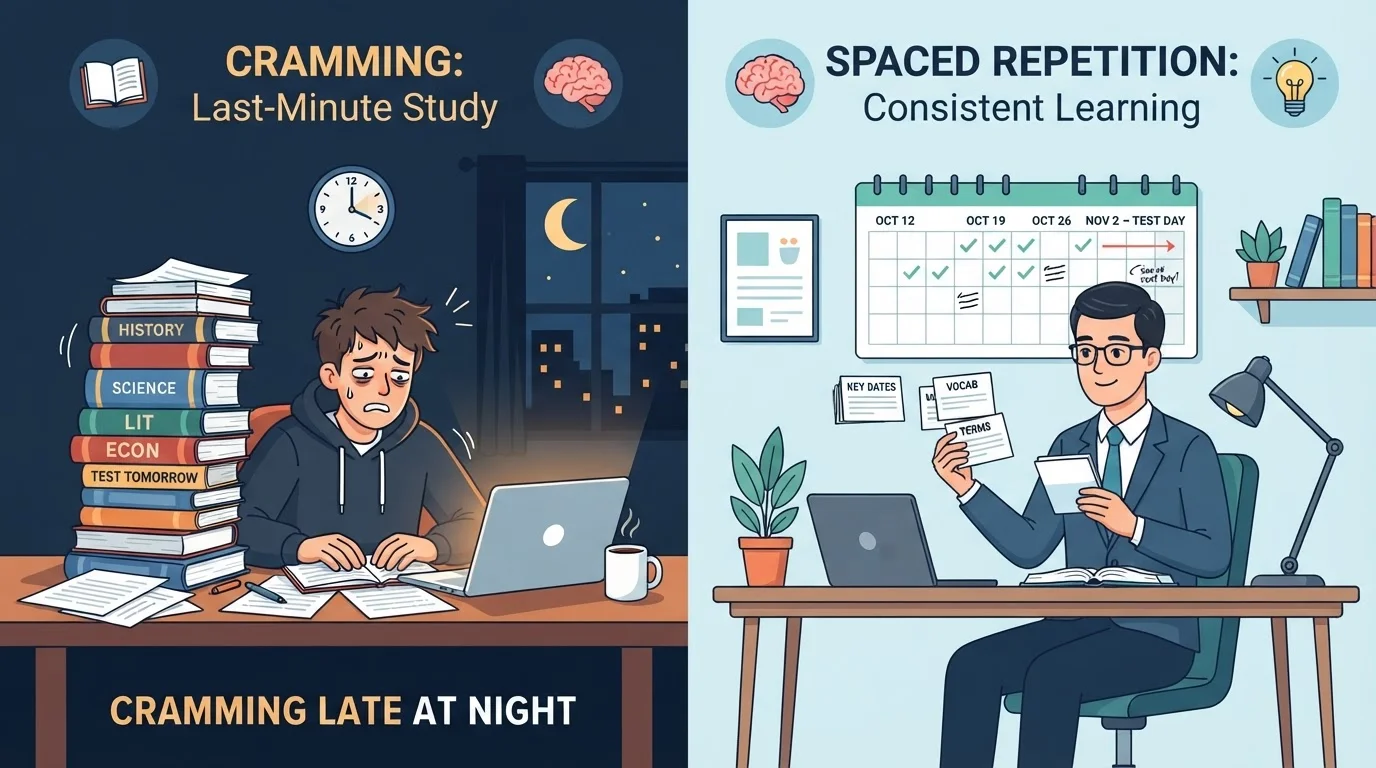
The same logic that applies to comparing two approaches rather than forcing a single answer applies here. Just as the difference between spaced repetition and massed practice matters for how you study, the distinction between mindfulness and meditation matters for how you build mental wellness habits that actually hold under professional pressure.
Start small. Consistency outperforms intensity. And if stress, anxiety, or low mood are persistent concerns, these practices work best as complements to professional care - not substitutes for it. This article is for general informational and educational purposes only and does not constitute medical or psychological advice. Please consult a qualified healthcare professional for guidance specific to your circumstances.