Why Your Engine Generates So Much Heat
A typical gasoline engine converts only about 30-40% of the energy in fuel into motion. The rest becomes heat - and that heat has to go somewhere. Combustion temperatures inside cylinders can exceed 4,500°F momentarily with each firing cycle. The metal surrounding those cylinders, the pistons, valves, and gaskets, are all engineered to handle this - but only within a specific operating temperature range, typically 195-220°F for most modern engines.
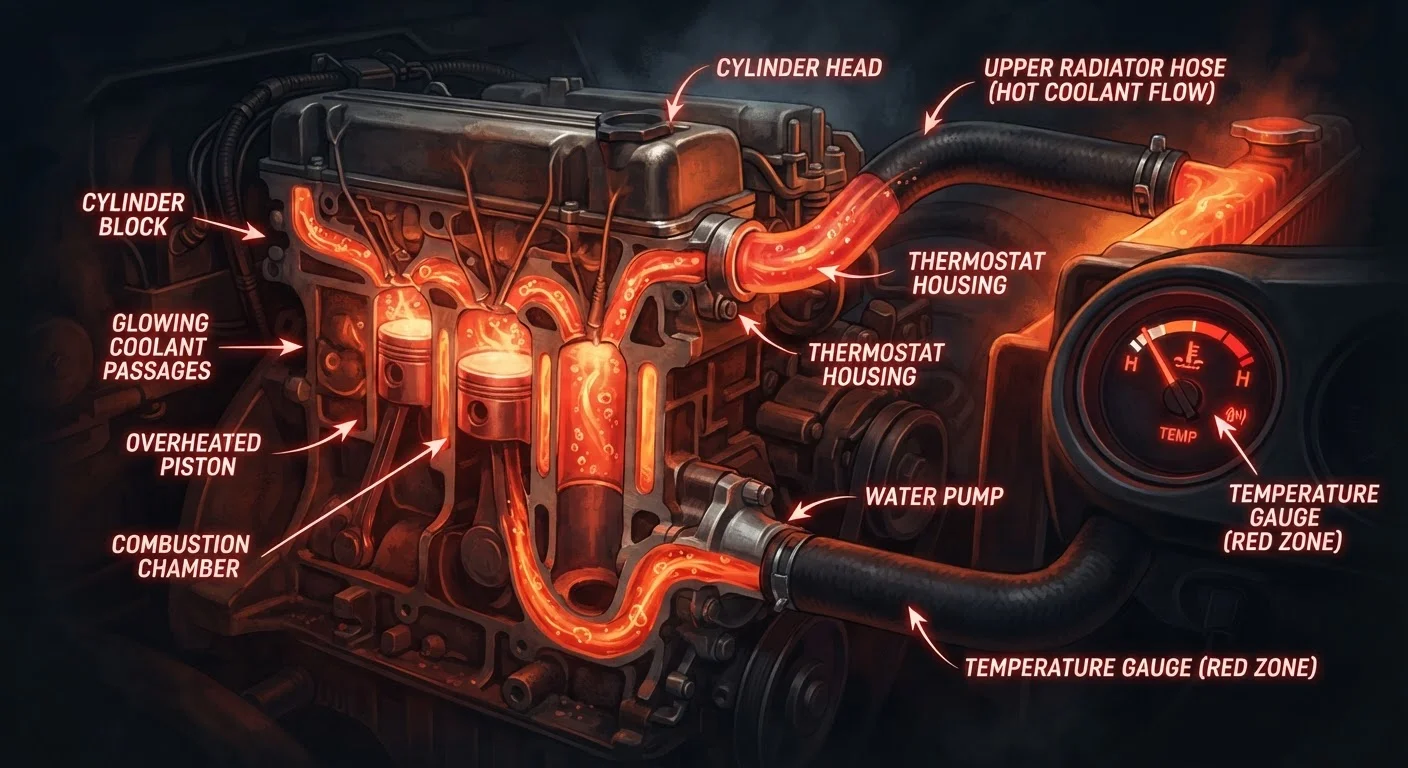
Coolant is the system that keeps those temperatures stable. It flows through passages cast directly into the engine block and cylinder head, absorbs heat, travels to the radiator, sheds that heat into the passing airstream, and returns to do it again. Remove adequate coolant from that loop and the heat has nowhere to go.
195-220°F
Normal engine operating temperature range
Most modern gasoline engines are designed to operate within this band; sustained temperatures above this range accelerate component wear.
~30-40%
Fuel energy converted to motion
The remainder becomes heat that the cooling system must manage - underscoring how essential coolant circulation is to normal engine function.
2-5 years
Typical coolant replacement interval
Recommended intervals vary by coolant type and vehicle; always verify the schedule in your owner's manual rather than relying on general rules.
What Overheating Actually Does to Engine Components
When coolant levels fall too low, heat builds faster than it can escape. The sequence of damage tends to follow a predictable path:
- Cylinder head warping: The cylinder head sits atop the engine block and is made from aluminum alloy in most modern vehicles. Aluminum expands significantly when overheated. Even a single severe overheating event can warp the head enough to break its seal with the engine block.
- Head gasket failure: The head gasket seals the junction between the cylinder head and engine block. Once warped surfaces compromise this seal, combustion gases leak into the coolant system - or coolant leaks into the cylinders. Either situation accelerates engine wear dramatically and is one of the most labor-intensive repairs a mechanic can perform.
- Piston and bore damage: At extreme temperatures, pistons can expand beyond their design tolerance, scoring the cylinder walls. This reduces compression and leads to oil consumption and power loss that worsen over time.
- Water pump and thermostat damage: Sustained overheating degrades seals and impellers in the water pump, and can cause the thermostat to stick - compounding the original cooling problem.
Pull Over Early - Before the Gauge Hits Red
If your temperature gauge rises noticeably above its normal position, don't wait for a red-zone reading before acting. Turn off the air conditioning (which adds engine load), pull over when safely possible, and let the engine cool with the hood open. Opening the hood speeds heat dissipation and lets you assess whether there's visible steam or fluid loss.
The Warning Signs Drivers Often Miss
The temperature gauge is the most direct indicator, but many drivers rarely glance at it during a routine commute. Other signs that cooling may be compromised include:
- A sweet, slightly syrupy smell from the engine bay - burned or leaking coolant has a distinctive odor
- White smoke or steam from under the hood, especially after parking
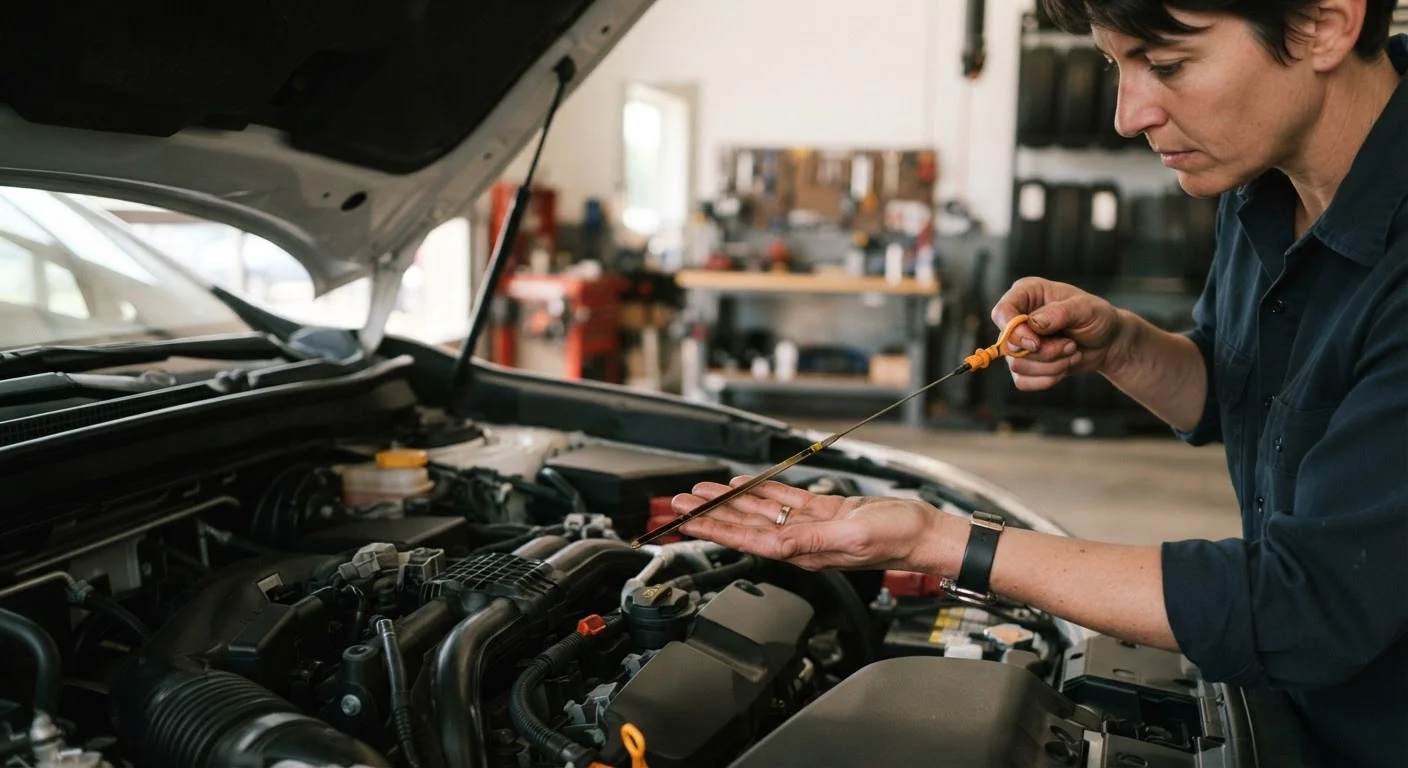
- Milky or foamy oil on the dipstick, which can indicate coolant mixing with engine oil through a failing head gasket
- Repeated need to top up the coolant reservoir without any obvious puddle under the car
It's worth noting that some vehicles have low coolant warning lights, but not all do - and sensors can fail. Physical checks remain the most reliable method. Our guide on fluid checks every driver should know how to do walks through the process clearly.
Never Open a Hot Radiator Cap
The cooling system is pressurised. Opening the radiator cap - or the coolant reservoir cap on some vehicles - while the engine is hot can release scalding fluid under pressure, causing serious burns. Always wait until the engine has cooled completely, typically at least 30-45 minutes after shutdown, before inspecting or topping up coolant.
Prevention Is Straightforward - and Inexpensive
Checking your coolant level requires nothing more than locating the translucent plastic reservoir in your engine bay - it typically has MIN and MAX lines visible from the outside - and confirming the fluid sits between them. Do this only when the engine is cold.
Beyond level checks, the coolant itself degrades over time. The corrosion inhibitors break down, the pH shifts, and what remains can actually begin to corrode the metal passages it was designed to protect. Following your manufacturer's recommended flush interval - found in your owner's manual - is one of those low-cost preventive steps that avoids high-cost consequences.
If you're skeptical about which maintenance tasks genuinely matter versus which are overstated, car maintenance myths that cost drivers money separates real needs from inflated service recommendations.
This article is for general informational purposes only. For concerns about your specific vehicle, consult a qualified mechanic.