
Why Competence Alone Isn't Enough
Most ambitious professionals operate on a straightforward assumption: do excellent work, and advancement will follow. Research on workplace dynamics consistently challenges this. Organizational psychologists have found that performance evaluations are heavily shaped by how well a manager knows an employee's work - not just its quality. If the right people don't know what you're contributing, those contributions carry less weight at promotion time.
This isn't cynical. It reflects how organizations actually function. Managers responsible for dozens of people make advancement decisions under cognitive constraints. The professionals who come to mind most readily - those whose work is most legible and memorable - hold a structural advantage. Visibility, in this sense, is a professional skill, not a personality trait.
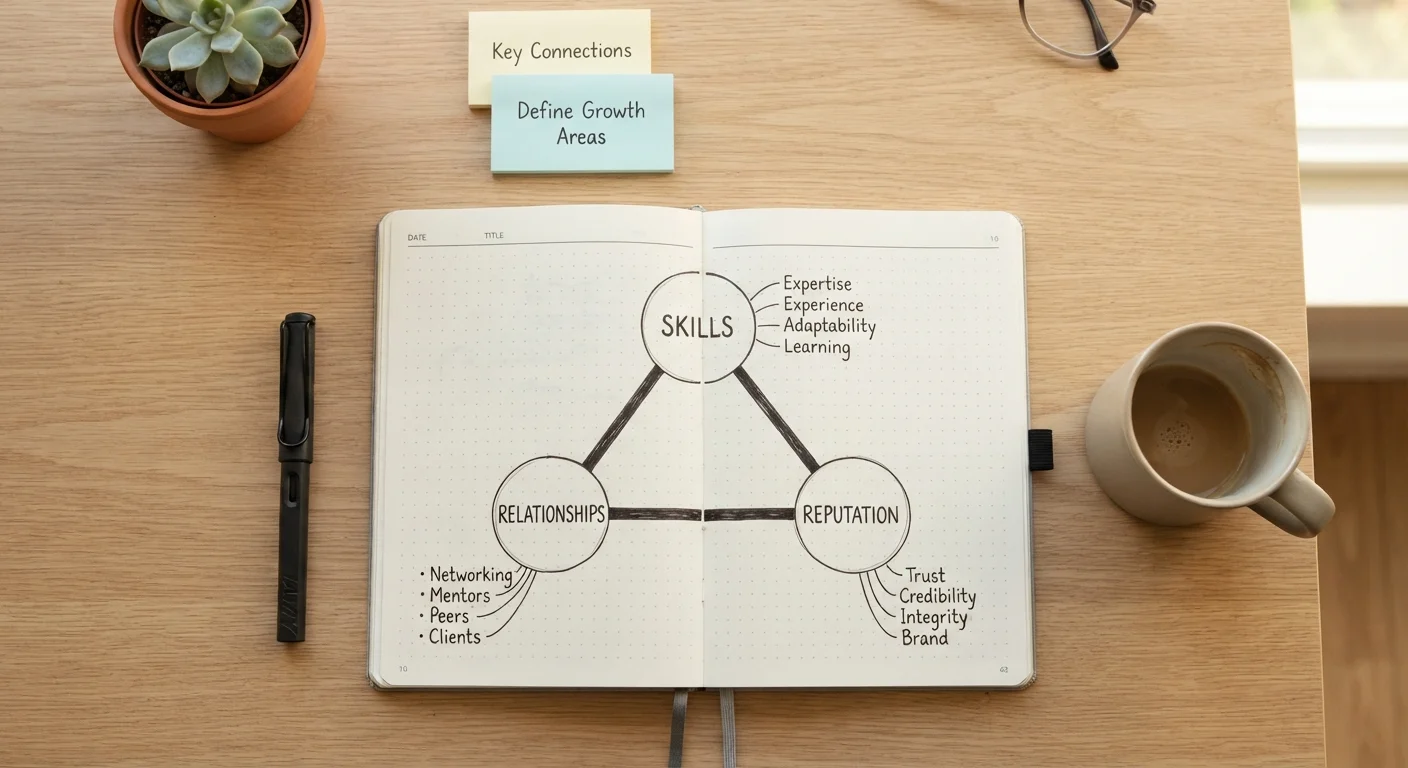
Understanding this distinction matters because it reframes the goal. You aren't trying to seem more impressive than you are. You're making sure your genuine work is understood by the people in a position to act on it. For a fuller picture of how this fits into your overall professional assets, see Mapping Your Career Capital.
Core Practices for Building Authentic Visibility
The following practices reflect what career researchers and experienced managers identify as effective - and sustainable - approaches to raising your professional profile without overstepping or appearing self-serving.
Share progress updates, not just final outcomes
Managers and stakeholders often lose track of ongoing work between formal check-ins. Regular, brief updates keep your contributions visible throughout a project, not just at completion. This also gives decision-makers more data points to draw on when assessing your impact.
Volunteer for cross-functional initiatives
Working alongside colleagues from other teams dramatically expands the number of people who have direct experience of your capabilities. This builds a broader internal reputation and surfaces opportunities that rarely reach people known only within their immediate team.
Speak up in meetings with substance, not volume
Consistent, thoughtful contributions in meetings signal competence to a room of peers and leaders simultaneously. Quality matters more than frequency - one well-framed insight is more memorable than several filler comments.
Build deliberate relationships across seniority levels
Visibility that only flows upward is fragile. Peers, junior colleagues, and leaders in adjacent functions all contribute to your internal reputation. Sponsorship and advocacy often come from unexpected directions when relationships are broad.
Document and communicate the impact of your work
Effort is invisible; outcomes are not. Translating your work into concrete results - time saved, revenue influenced, errors reduced - gives others a clear and memorable way to understand your value. It also equips your manager to advocate for you in rooms you're not in.
Quick Wins You Can Act On This Week
Visibility doesn't require a major career pivot. Several high-impact moves can be made immediately, within your current role and relationships.
Visibility Is Not the Same as Self-Promotion
There's a meaningful difference between making your work legible and simply broadcasting your achievements. Effective visibility is typically outward-facing and contribution-oriented - it's about helping others understand the work, not positioning yourself as exceptional. Professionals who conflate the two often generate resentment rather than recognition. The practices above are designed to keep the focus on impact, not ego.
Visibility in the Context of Career Advancement
Visibility is not an end in itself - it functions as a multiplier on the other investments you make in your career. A strong track record becomes more promotable when it's legible to decision-makers. A lateral move can open unexpected doors when your broader network already understands your capabilities. Consider how visibility intersects with lateral versus upward moves as you plan your next step.
89%
Managers who say visibility affects promotion decisions
According to a survey by LinkedIn on workplace advancement, the vast majority of managers report that an employee's visibility to leadership directly influences promotion considerations.
3x
More likely to be considered for stretch roles
Organizational research consistently suggests that employees known across multiple teams are significantly more likely to be tapped for high-visibility stretch assignments than equally qualified but less-known peers.
Performance reviews are also a structured moment to make your contributions visible. Rather than waiting to be evaluated, you can shape the narrative in advance. Turning your review into a career conversation is a concrete skill that pairs directly with the visibility practices above.
“It's not enough to do good work. You have to make sure people know you're doing good work - and that requires intention, not arrogance.”
— Herminia Ibarra, Professor of Organizational Behaviour, London Business School, and author on career transitions
For those considering asking for a promotion, visibility work done consistently in the months beforehand builds the evidence base that makes that conversation credible. See how to frame a promotion case before you feel ready for practical framing strategies.