
How Cortisol Works: The Basic Mechanism
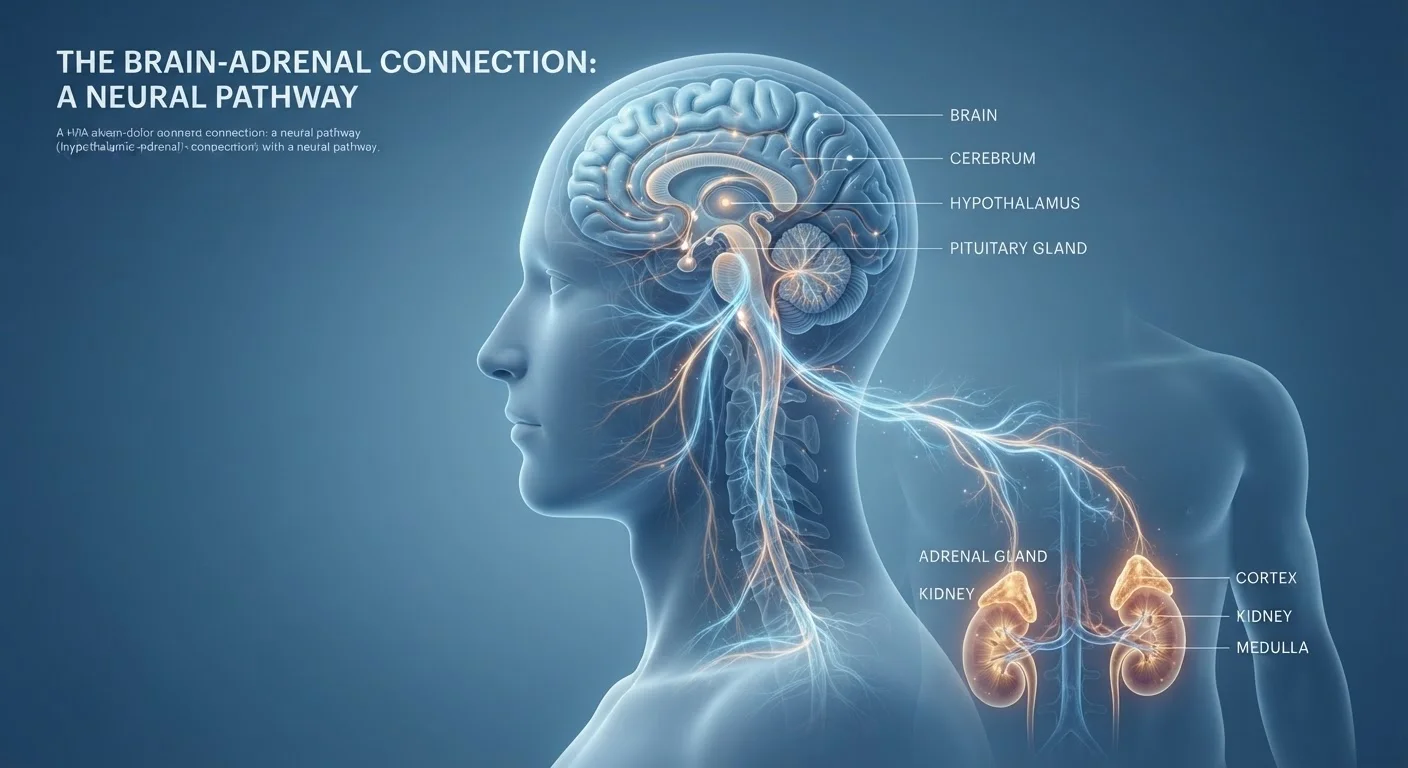
When your brain perceives a threat - a looming deadline, a difficult conversation, or a sudden noise - the hypothalamus fires a chemical signal to the pituitary gland, which triggers the adrenal glands to release cortisol. This cascade, known as the HPA axis response, happens in seconds.
Cortisol's immediate job is to make energy available fast. It raises blood glucose, increases heart rate, and redirects blood flow toward muscles and the brain. Simultaneously, it dials down processes deemed non-urgent in a crisis: digestion, reproductive function, and immune activity all get temporarily suppressed.
Once the stressor passes, a healthy HPA axis detects elevated cortisol and signals the system to stand down. This negative feedback loop is what keeps the stress response self-limiting - under normal conditions.
Cortisol Has a Natural Daily Rhythm
Under healthy conditions, cortisol follows a predictable pattern called the cortisol awakening response (CAR) - peaking within 30-45 minutes of waking and declining gradually through the day. This rhythm supports alertness in the morning and allows for restful sleep at night. Chronic stress, shift work, and irregular sleep schedules can flatten or distort this curve, with cascading effects on energy, mood, and cognition.
When Cortisol Helps: The Case for Acute Stress
Cortisol isn't the villain it's often made out to be. In controlled bursts, it's directly responsible for some of your sharpest mental moments. Research shows that moderate, short-term stress can enhance memory formation and improve focus - a phenomenon sometimes called eustress, or beneficial stress.
Athletes rely on cortisol-driven arousal before competition. Presenters often perform better under a manageable level of pressure. The cortisol spike that accompanies a challenging project can drive the alertness and motivation that carries you through.
The critical variable is duration. Acute stress that resolves - and allows the body to return to baseline - is fundamentally different from the slow, grinding activation that defines modern professional life.
33%
Adults reporting extreme stress levels
According to the American Psychological Association's Stress in America survey, roughly one-third of US adults report living with extreme stress on an ongoing basis.
50%
Increased illness risk linked to chronic stress
Research published in health psychology literature suggests that chronically stressed individuals show meaningfully higher susceptibility to viral infections, including the common cold.
60-90 min
Typical duration of acute cortisol spike
Under normal HPA axis function, cortisol levels following an acute stressor generally return to near-baseline within 60 to 90 minutes, according to endocrinology research.
Chronic Elevation: Where the Damage Accumulates
When stressors don't resolve - when work pressure is constant, sleep is poor, and recovery never fully happens - cortisol stays elevated. The body essentially gets stuck in a low-grade emergency state.
The downstream effects are well-documented. Chronically high cortisol is associated with:
- Impaired memory: The hippocampus, which consolidates short-term memory into long-term storage, is particularly sensitive to cortisol. Prolonged exposure disrupts this process and may reduce synaptic density in that region.
- Weakened immunity: The immune suppression that's briefly protective in acute stress becomes harmful when sustained, increasing susceptibility to illness.
- Disrupted sleep: Cortisol naturally spikes in the morning and tapers by evening. Chronic stress can flatten or invert this rhythm, making deep sleep harder to achieve.
- Increased appetite for calorie-dense foods: Cortisol signals the body to replenish energy stores, particularly driving cravings for fat and sugar.
For professionals managing heavy cognitive demands, cortisol's effects on working memory and decision-making are especially relevant. See our guide to cognitive load and productivity for more on how mental strain compounds these effects.
“The body's stress response is one of its most elegant survival systems - the problem is that it was designed for short-term threats, not the persistent, low-grade pressures of modern work and life.”
— Robert Sapolsky, Neuroendocrinologist and author of 'Why Zebras Don't Get Ulcers'
Practical Pathways for Regulating Cortisol
Managing cortisol isn't about eliminating stress - it's about restoring the rhythm of activation and recovery. Several evidence-supported strategies work directly on the HPA axis:
- Consistent sleep: Sleep is when cortisol resets. Even one night of poor sleep measurably elevates next-day cortisol. Prioritizing 7-9 hours is one of the most direct interventions available.
- Aerobic exercise: Regular moderate-intensity exercise trains the HPA axis to respond more efficiently, lowering baseline cortisol over time. Muscles recovery also matters here - see our explainer on rest and recovery for context on why downtime is part of the equation.
- Mindfulness and controlled breathing: Slow diaphragmatic breathing activates the parasympathetic nervous system, which counteracts the HPA axis. Even brief daily practice shows measurable effects in multiple studies.
- Social connection: Positive social interaction is associated with oxytocin release, which blunts cortisol reactivity.
Understanding your cortisol patterns is the foundation. From there, stress relief techniques ranked by evidence strength can help you choose what to prioritize. And if you're navigating high-pressure environments, it's worth knowing the common traps professionals fall into when managing stress.
Build Recovery Into Your Workday
You don't need a meditation retreat to regulate cortisol. Short recovery windows - a five-minute walk, a few slow breaths between meetings, or stepping away from screens at lunch - give the HPA axis a chance to reset. Consistency matters more than duration. For building longer-term resilience, see our article on emotional resilience in the workplace.
This article is for general informational and educational purposes only and does not constitute medical advice. If you are experiencing persistent or significant symptoms related to stress, consult a qualified healthcare professional.