What App-Based Mental Wellness Tools Actually Are
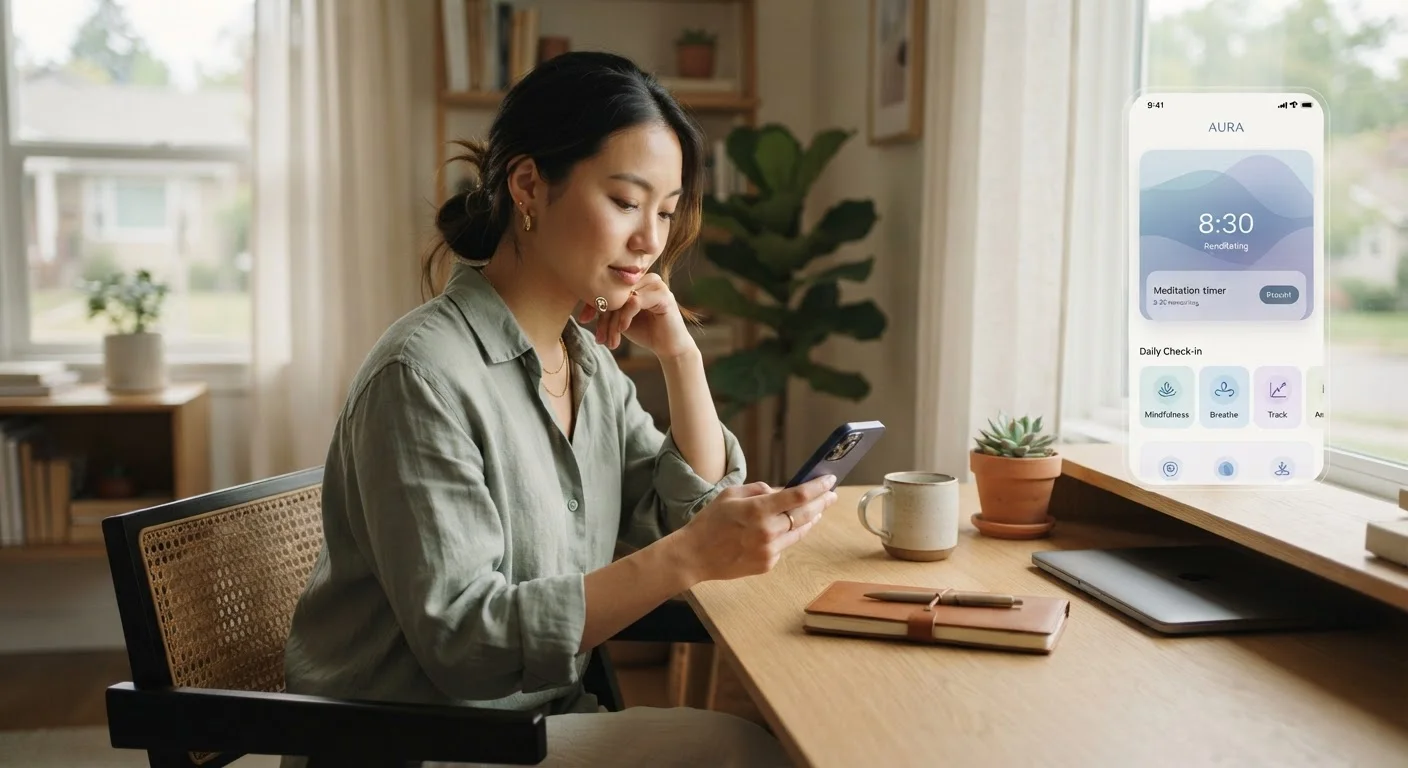
Mental wellness apps encompass a wide range of digital tools: guided meditation platforms, cognitive behavioral therapy (CBT)-informed mood trackers, sleep programs, breathing exercises, journaling prompts, and psychoeducation modules. They are not equivalent to mental health treatment platforms - a distinction that matters both clinically and practically.
Most reputable wellness apps draw on established behavioral science frameworks. CBT, for example, teaches users to identify and reframe unhelpful thought patterns - a process many apps translate into interactive exercises and reflective prompts. Mindfulness-based stress reduction (MBSR), another research-supported approach, underpins many meditation features. Understanding what a given app is actually built on helps you use it more intentionally. For a plain-language breakdown of terms like these, see the professional mental wellness glossary.
If you're newer to the mental wellness space altogether, this foundational framework for busy professionals covers the core concepts before you add any digital layer.
The Genuine Benefits
Available anytime without scheduling or waitlists
Unlike therapy, which can involve weeks-long waits, app-based tools are immediately accessible at any hour - a meaningful advantage for professionals with demanding or unpredictable schedules.
Grounded in established behavioral science frameworks
Many leading platforms build features around CBT, MBSR, and acceptance and commitment therapy (ACT) - approaches with substantial peer-reviewed support for reducing stress and improving emotional regulation.
Supports habit formation through low-friction daily practice
Short, structured micro-practices are more sustainable than longer, occasional interventions. Apps make it easier to stay consistent, which is often the key variable in behavioral change.
Can reduce cost and geography barriers to mental wellness support
In-person therapy remains inaccessible to many due to cost, location, or stigma. Apps lower the entry point for engaging with evidence-informed wellness strategies.
Useful adjunct between therapy sessions
For people already working with a therapist, apps can reinforce skills - mood tracking, thought records, breathing techniques - practiced in session, supporting continuity between appointments.
The accessibility argument for wellness apps is strong and evidence-supported. A 2021 review published in npj Digital Medicine found that app-based mindfulness and CBT interventions produced statistically significant reductions in self-reported stress and anxiety symptoms in non-clinical populations. That's a meaningful finding for professionals managing day-to-day pressure rather than diagnosable conditions.
Consistency is another genuine advantage. Short, low-friction daily practices - a five-minute breathing session, an end-of-day mood log - are more likely to compound over time than sporadic, high-effort interventions. Apps reduce the activation energy required to begin. Pair a daily app check-in with a structured self-check routine like the one outlined in the daily mental health audit for working professionals.
75%
Adults who say mental health app use reduced their stress
According to a survey published in JMIR Mental Health, approximately three-quarters of respondents reported perceived stress reduction after consistent use of mindfulness-based apps over eight weeks.
~4%
Apps with independent clinical validation studies
Research published in npj Digital Medicine estimated that fewer than 5% of mental health apps available in major app stores have been evaluated in peer-reviewed, independent clinical trials.
The Real Limitations
Cannot diagnose or treat clinical mental health conditions
Wellness apps operate outside the clinical care system. They are unequipped to assess, diagnose, or treat conditions requiring professional intervention, and should never substitute for such care.
Evidence quality is highly variable across platforms
Many apps reference "research-backed" features, but the studies behind them often lack methodological rigor - small samples, no control groups, or developer-funded designs that introduce bias.
Risk of substituting for professional care in serious cases
The self-directed nature of apps means users may delay or avoid seeking professional help when symptoms warrant it. This substitution effect is one of the more documented concerns in digital mental health research.
Privacy and data handling practices deserve scrutiny
Mental wellness apps collect sensitive personal data. Privacy policies vary widely, and not all platforms apply healthcare-grade data protections - a meaningful concern for users sharing emotionally sensitive information.
Engagement tends to drop off sharply over time
Studies consistently show that retention for wellness apps is low - many users disengage within weeks. Without external accountability, the tools' benefits depend heavily on sustained self-motivation.
The most important limitation is clinical scope. Wellness apps are not regulated as medical devices in most contexts, are not staffed by licensed clinicians, and cannot assess, diagnose, or treat conditions such as major depressive disorder, anxiety disorders, PTSD, or bipolar disorder. Using an app in place of professional care for a clinical condition is not just ineffective - it may delay necessary treatment.
Evidence quality is also inconsistent. Many apps claim research backing, but their studies often use small samples, lack control groups, or were funded by the app developer. The gap between "we ran a study" and "this intervention is clinically validated" is wide. For a comparison of stress-management techniques by actual evidence strength, see stress relief techniques ranked by evidence strength.
When to Seek Professional Support
Wellness apps are designed for general stress management and self-care - not clinical intervention. If you're experiencing persistent low mood, significant anxiety, sleep disruption that isn't resolving, or any thoughts of self-harm, please reach out to a licensed mental health professional or contact a crisis support line. No app is a substitute for that level of care, and seeking help early is consistently associated with better outcomes.
Integrating Apps Into a Broader Wellness Strategy
The most productive framing is additive, not substitutional. Think of a wellness app as one layer in a broader strategy that may include adequate sleep, physical activity, social connection, and - when appropriate - professional mental health support. Apps are particularly well-suited to maintaining momentum between therapy sessions, building awareness of personal stress patterns, and practicing skills introduced in a clinical setting.
Before downloading, evaluate: Does this app cite its methodology? Is the research independent? Does it actively direct users to professional care if symptoms worsen? These questions cut through marketing language and signal whether a platform was designed with user welfare as a genuine priority. For a broader view of how mental wellness needs evolve across a career, the comprehensive career-stage mental wellness guide provides useful context for where these tools fit at different professional stages.
This article is for general informational and educational purposes only and does not constitute medical or mental health advice. If you are experiencing significant psychological distress or symptoms of a mental health condition, please consult a licensed mental health professional.